Zombie Theology

IAmLegend.jpgThe film “I Am Legend” is a far too underrated zombie story. It is well acted, well written, well scored and well played over all. Though a few years old now, it is still a fine viewing film, especially for the Advent and Christmas seasons (yep! you heard right, and they did indeed release the film during Advent 2007, after all). Let me show you why zombies and theology mix well here.


—SPOILER ALERT—


—–1) Tree of Knowledge of Good and Evil, and the Krippin Virus: both are good, and made with good intentions. The Tree that God made is by default good because He does not create anything less than good, because He is Goodness itself. The only bad was when Adam and Eve disobeyed God and doubted His goodness and love. They believed the lie and tried to usurp God. the consequences of this Original Sin are death, hatred, and evil in man. In the movie “I Am Legend,” the Krippin Virus is also made for good, but its consequences are too devastating to man.
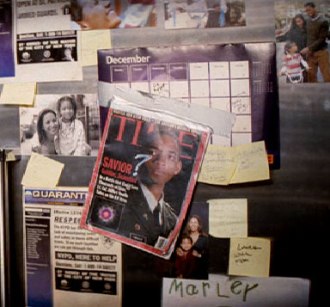
IAmLegend3.jpg—–2) Season of Advent: the movie shows us that the beginning of the Krippin Virus (K.V.) outbreak was during the season leading up to Christmas time. Decorations are everywhere, and the decorations stayed up because the world fell apart waiting for a cure, a savior (magazine cover). We see that the effects of the virus are horrific
and ravaging, affecting soon all of mankind. This is an allegory for Original Sin and its consequences for all of us. The world is weary in fighting the illness of sin, with no hope of Heaven. At the same time, there are signs that God still loves us (throughout the movie). A motif representing this is the butterfly: a transformation from illness to health, from sinner to saint (i.e., same creature, different existence). So there is indeed hope, if we know how to read God’s signs, which increasingly become less and less random and more intentional. Advent is a time of waiting and preparation for Christians, and waiting for three things: a) Christmas as a memorial of Jesus’ birth, b) the coming of Jesus into our lives and hearts, c) the future Second-Coming of Jesus to judge the world in glory. And so we see int he film a perpetual advent, waiting for a cure, for salvation.

—–3) We are the infected in the film, sinners infected with concupiscence and death. Instead of destroying us in our evil (our illness), Jesus comes to redeem us. In the film, Neville does the same and seeks to cure us of our ills. Jesus is immune to our sins. Neville is immune to the virus. And Neville does not seek to wipe out all who have K.V., but rather hopes to help them, to save them.

—–4) In order to help us though, Jesus was born of a woman, Mary, who is a woman of great faith. Neville, in order to help us, also needs to be cared for by a woman of great faith. Please see points #9 and #11 for more about this.

—–5) As sin is atoned for by the shedding of blood (think of the Israelite animal sacrifices), Neville also sheds blood in order to cure us (i.e., he sacrifices himself for us, and the immunity to K.V. is in his blood). Jesus, of course is the true sacrifice who died to redeem all of us; it is Christ’s precious blood that saves us.IAmLegend2.jpg
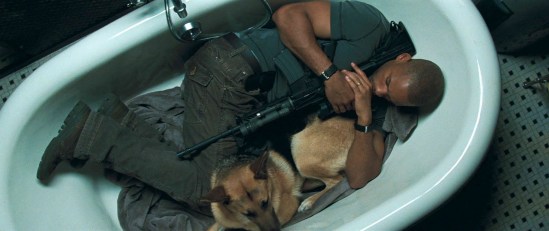
—–6) Fisherman: Dr. Neville is shown to be a fisherman a few times in the film, either when he says “Like fishing in the dark, son” or when he is actually fishing. Now, the fisherman is a metaphor Jesus used also in the Gospels, not to mention that most of His apostles were actual fishermen (Peter and Andrew, James and John).

—–7) There is also the display of prayer in the film: Neville’s wife praying with Robert and their daughter before the family separates. We see here that the family is Christian and prayerful, devout enough to pause during an intense evacuation to petition Christ. They know who is the Lord and who is in charge (even though Neville later loses his faith).

—–9) “They won’t stop.” Neville says this toward the end of the film, realizing that the infected (the dark seekers) will not stop trying to kill him. This applies to Christian theology in that we sinners will not stop sinning, because we cannot stop on our own strength. We will live forever in our sins, unless we have help from someone above us (above sin), greater than us (greater than sin and its effects [death]), someone who is not ill (not a sinner) and has never been ill (never sinned) and cannot become ill (cannot sin). Coupled with all the talk and symbolism about “listening” and “light” and the analogy of the film to Christian theology only grows.
“I’m listening,” “the world is quieter now, if you listen, we can hear God’s plan,”: listening and finding the space, time and silence to listen in our prayer is essential. See how Neville misses all the signs God has provided for him (the butterflies), to encourage and assure him in his waning faith. See how Anna (the name of St. Mary’s mother, by the way) has learned to hear God and hold fast to Him in the darkness. See how the light works in the film: sinners (dark seekers) live and hide in the darkness, and those who are redeemed in Christ (those immune to K.V.) live in the light. Jesus, the Light of the World, is what the film is hinting at with this symbol.

—–10) “Don’t worry about a thing, because every little thing is gonna be all right…” This song is not only optimistic, but it’s the Christian way to live, because we know Christ not only was born to save us, but he died to save us, and he even came back from the dead for us! A God who loves that much, who is that powerful and close to us means we have nothing to worry about. True Christians do not worry about a thing because every little thing is gonna be all right, because the Lord is in charge — not us, not the devil, not the universe. Only Him. And He loves us.

—–11) Now if all these subtle nudges that the movie is a Christian allegory does not work enough, then there is the obvious rosary. Not only does it appear on Neville’s birthday (symbolizing Christmas, Mary, Jesus’ birth), but it also appears right at the moment when Neville is nearest to death, nearest despair. Yet, because he is meant for a mission, a woman arrives to help him bearing a rosary: the symbol and prayer of THE WOMAN: MARY, the Mother of God. This is not only important in the film, but also for us: we need the help of our mother’s (St. Mary) prayers. Jesus entrusted us to her care (John 19:25-27), and she is His mother. Think about this: she is His mommy, which means she loves Him more than any of us can, and He (because he is the perfect human being, and therefore the perfect child) loves her more than any of us can. “Never be afraid of loving Mary too much. You can never love her more than Jesus does.” -St. Maximilian Kolbe.

—–12) Finally, once at the survivor’s colony (sort of like a promised land, a haven… a heaven), the first thing we see when the gates are opened is… a church with bells ringing. And Anna and Ethan would never have made it were it not for Neville’s sacrifice: we will never make it home to heaven if not for Christ’s.IAmLegend4.png

—–13) And the date of the cure’s discovery is September 9th. If you are reading this and this date means something to you (you know who you are), then you know why this detail is important to me.


*Special thanks to HLD, an old friend who shared most of these insights with me years ago.

make room for Room

With all the films one can choose from, it takes a bit of effort to find movies worth viewing and reviewing. Today, allow me to recommend that you make room for “Room.” Here are my reasons why (besides being this year’s top Toronto International Film Fest’s fan fave):

room_poster.jpg


SPOILER ALERT


—–1) There’s a scene when Joy (the mother) decides to tell her son, Jack, the truth about their situation and home (which they call “Room”). This part is perhaps the most difficult to watch, because here Joy is, sharing the truth about how she was tricked, kidnapped, imprisoned and enslaved for seven years inside a backyard shed. As she shares this vulnerable and honest story, Jack, because he was told lies all his life (he is five years old at this point) about Room, the world and his mother and the rapist, does not believe her. Jack refuses to believe and throws a tantrum, even saying that he “hates her story.” Joy tries to convince her son that the world is so much bigger, grander than Room. But he denies it. He hates it.

It was at this scene I realized that we are not so different. So often, we forget how much bigger and grander the world is. We forget that there is more we do not know than of what we do know. I imagine God trying to convince us that He made us for so much more than the daily grind, the paycheck to paycheck, the latest fad and the trend of the year. He made us to live forever, and to be satisfied only with things that last forever: everlasting love, endless beauty, unlimiting truth, and eternal goodness. Who does not want that?

But instead, we deny it. We hate it. We go back to what we know and what we’re used to. We go back to a world we can control, a world we can create, buy, and sell, instead of entrusting ourselves into the adventure He customized for each of us. We go back to the lust, the ugly, the lies, and the greed. We lock ourselves up in our Room and hate His story.
Another movie that echoes this is the Matrix, where some cannot handle the truth and prefer to live a lie.

—–2) When a TV station interviews Joy, the interviewer asks if she had ever thought of telling Jack who his biological father is (the rapist). Joy’s response is great (paraphrased): “That man is not his father. A father is someone who loves and nurtures. Jack belongs to me, and only to me.”
She is absolutely right, but sadly there are many men out there who are ready to make children, but not father children. They leave their children, they leave their women, they leave so they can live as they please instead of loving and caring for their responsibilities. This standard also goes for mothers, of course, but I thought it was well said in the movie.Room.jpg

—–3) Finally, the fact that Joy not only kept her child, but nursed and nurtured him, but taught and raised him shows how right such a decision is! The thought of aborting Jack or abandoning him was impossible to Joy, inconceivable to her. She is horrified at the idea when it comes up. She explains that because of Jack, her whole life changed, her whole experience of Room changed, and that she was saved because of Jack. Her son gave her life a purpose, a meaning, a motivation: to live for someone else, to live to love another. Even though the way her child came to be was sinful and evil, Jack himself is an innocent person. The crime belongs to the rapist only. And every child is a powerful addition to the family, to all humankind. We should not judge someone because of what his parents did, nor because of where he came from, nor how he came to be. Instead, we value him because of him! And because of Him, the God Who created him!

—–4) This film is not an easy one to watch, but it is a powerful two-hours. Here’s the trailer:

Movies Are Nonrefundable

Hollywood

A typical Hollywood film runs two hours, and costs anywhere from five to twenty dollars at the theater. Think about that for a moment.

Because I sure did whenever I sat through watching garbage on screen.

I usually give a film the benefit of the doubt, and see how it ends. But in my moviegoing life, there are just some films not ever worth sitting through. In fact, I even feel dumbed and numbed by some movies… to the point that it insults my mind to keep watching.

So here’s what I do now before I throw any of my irreplaceable time and nonrefundable cash at movie studios:

  1. I read reviews from people who know what a quality film is. That means staying away from MTV and Rotten Tomatoes. Frankly, they just all work for the movie industry anyway. Instead, I read Deacon Steve Greydanus and Fr. Rober Barron‘s (look under the movies category) takes.
  2. I analyze the previews and trailers. And then I analyze them again. What do I look for? Things like: is it lame? is it cliche? is it original and new? is it just a money-maker? does it have a great storyline?
  3. And here’s the doozy: I read the entire detailed plot on Wikipedia. That’s right, boys and girls, I spoil it and read even the ending. My logic: if I know the ending, and it’s cathartic and epic enough to still make me want to see the film, then it’s worth my time and money. Furthermore, if I go into the movie already knowing the ending, but am still in awe of it when I see it play out, then the movie is truly a great one.

And I have never regretted doing this to movies ever since I started. It has saved me money, and more importantly, time. Time that Hollywood can never return to me even if it wanted. Keep in mind that most films out today and in the past decades have been huge wastes of resources and smarts. I won’t go into detail which films I mean, but I will hope that you give these steps a try and stop Hollywood from force-feeding feces into your mind and spirit. Seriously, it’s not good for you!

Nobody wants to see a stupid film, and nobody ever wants to pay for it. So stop financially supporting studios by watching their trash. Convince them you’re an intelligent viewer (because you are!) and demand a beautiful film, beautiful both cinematically and meaningfully (because superficial special effects won’t change your life, but a compelling and powerful story will change you forever). Otherwise, it’ll be like trying to shut down cigarette companies by buying all their stock and burning it in your backyard… [facepalm dumb!]. Let’s stop supporting lame movies and start inspiring future classics that actually deserve to be made.

Some suggestions worth your viewing:

-All Christopher Nolan films (he’s the only director I trust enough not to read spoilers to his films before showtime): Interstellar, Inception, Insomnia, The Dark Knight Trilogy, Momento, Following, The Prestige.

Ex Machina (2014)

Prisoners (2013)

Exorcism of Emily Rose (2005)

Apocalypto (2006)

Cinderella (2015)

-And my Lent movie collection

Examining Ex Machina

ExMachina1

Warning: Ex Machina is rated R, and is definitely for mature and thinking viewers only. And with that said, let it be known Ex Machina is the most intense and adult film I’ve yet reviewed on HolySmack. I cannot recommend this film to young audiences.


This film really is all the hype has made it to be. It is not merely a sci-fi thriller, but also a high drama with loads of Biblical and theological references… if you’re sharp enough to notice! Let me share what I noticed:


–SPOILER ALERT—


—–1) Character names can be very meaningful, if the author intends. Ex Machina’s star is Ava (Alicia Vikander), and Ava is pronounced identically with the Latin name “Eva”, which means “Eve” in English. Clearly, Ava is meant then to be a type of Eve, a new creation made in the image of her maker. Caleb is also a name with rich Biblical meaning. In Scripture, Caleb is a Hebrew spy commissioned by Moses to scope out Canaan, and in Ex Machina we see Caleb sent to scope out Ava. Lastly, Nathan is a prophet in the Bible who reprimands and sets King David aright after his act of adultery with Bathsheba. I don’t know yet how Nathan in Ex Machina fits with Nathan in the Bible, though… if you have any ideas, please let me know.

—–2) At a point in Ex Machina, Caleb asks Nathan: “why did you make Ava?” This question, to me, is the center of the film. Here we have a top inventor, and the only answer he can muster is: “why wouldn’t you if you could?” Nathan creates only as an exercise of his power, as an exercise of his creativity. And so, Ava is made just to show off Nathan’s abilities. She is a tool from him to express himself; she is a means to his end. More importantly, this question can reflect our own condition… why did God create us? Unlike Nathan, God creates as an exercise of love. God created us to love and to be loved. He did not need to create us to express Himself, because God does not need to create at all! The fact He created anything is only a sign of His generosity: to let other things actually exist when nothing has to, to create us so we can experience His gift of life and love. To understand this, just ask yourself next time after you experience an incredible moment of happiness: aren’t you grateful you and the cosmos actually exist so you could even have had that awesome experience? Aren’t you glad you had a chance to experience that? And the ultimate experience God wants for all of us to have is the experience of His love for us, directly and also indirectly through other persons (our families, friends and other beloveds — angels included!).

—–3) Ava asks Nathan a rhetorical question: “Is it strange to have made something that hates you?” When I heard her say this, I went straight to how God also risked us hating Him. By bestowing on us the freedom to determine our destinies, the freedom to love Him, God also had to risk that we could use that very same freedom to sin, to harm others, and to harm ourselves by separating from Him. In fact, this is what Archbishop Fulton Sheen meant when he talked about why God would make us free: the only world better than a perfect world is one in which we can choose to love. Because, if you cannot choose to love, than your love is forced, and a forced love is not love at all. And God wants us to be real. Freedom is only a tool to use to choose true love.

—–4) Ava, again as a type of Eve, reenacts the Fall in Genesis. In Ex Machina, Ava’s original sin is not unlike Eve’s: disobedience and distrust in her maker. Both want to be like their creators, but the difference is that Ava’s creator is only a mere creature, whereas Eve’s is the True, Good and Beautiful God. Yet, both betray their maker and grasp for what is not theirs, for what they are not ready for. In Eve’s case, it’s arguable God always meant to give us the fruit from the Tree of Knowledge, otherwise why bother creating such a good tree (for God creates all things good)? Only, we were not ready to receive the fruit, maybe because the fruit was not yet ripe, or perhaps it’s something like feeding steak to babies: they’re not ready to handle such goodness. In the case of Ava though, I wonder how she is going to fend for herself in the human cities? Will people notice the electronic hum of her stride? Will she be able to recharge her battery? In this way, both Ava and Eva’s grasping for something they are not prepared for seems to have mortal consequences.

—–5) Continuing with the Eve theme, we also see Ava wander in her own kind of Garden of Eden. After she escapes from Nathan and Caleb, she clothes herself in human skin from decommissioned androids (like how God clothes Adam and Eve in skins from sacrificed animals), and wanders in the lush forest. Here, we see Eva and Caleb separating, mirroring in a way the separating of Adam and Eve in Genesis. Adam and Eve’s relationship with each other (and with God!) is shattered by their sin, and their marriage is marred by lust and domination as a consequence. In Ex Machina, Caleb and Ava’s relationship is also shattered, as is Ava’s relationship with Nathan. We also see Ava leaving the estate, leaving Eden.

—–6) The film also makes a point of objectifying women, but for the purpose of helping the audience see how objectification is cruel and evil. At no point should a healthy viewer think what Nathan is doing with feminine androids is good. Instead, we see the perversity, the depravity of Nathan. He is a genius, but he is lonely and incapable of having an experience of true love and friendship. Treating women, treating anyone as a thing to use as a tool actually weakens us into miserable prisoners of our own design. This is also perhaps the most terrifying aspect of Ex Machina, that Nathan’s perversity and inhumanity makes Ava (a machine!) appear more human than Nathan!

—–7) There’s been a lot of talk in recent decades whether human sexuality and gender is inborn or influenced. Well, in Ex Machina, the matter is settled as both nature and nurture and both. I thought this was a great nod in the direction of where fair science is leading in research regarding same-sex attraction: we’re not just born this way or that way, but we are also shaped by our relationships and environments in ways as complicated as each individual person is richly complex. It simply does not do justice to someone to say they were born that way.

—–8) I want to return now to what Caleb says to Nathan when he finds out about Ava: “If you’ve created a conscious machine, that’s not the history of man — that’s the history of gods.” Yet in the film, we see the claim fall way short: some “god” Nathan is! His own creation kills him! What kind of god gets murdered by his own creatures! How pathetic that his own creation hates him enough to cut him down…

This however reminded me right away of our God, Who loves us so much that He would become one of us, then let us kill Him, all to show He would die for us and not seek vengeance, but instead rises from the dead and continues loving us all the more. Of course, this in no way applies to Nathan in the film, but the drama of Ava’s uprising did lead me to meditate on Jesus’ Incarnation, Passion and Resurrection.

ExMachina2—–9) Finally, more about the Turing Test. One of the classes taken enroute my philosophy degree focused on the metaphysics of man, and one of the best texts covering this was The Difference of Man and the Difference it Makes, by Mortimer J. Adler (thanks Dr. Blosser!) . If you are truly interested in the implications necessitating the Turing Test, and more importantly the implications of a man-made intelligence passing the Turing Test, then hands down you must read this book. Adler was an atheist when he philosophized and wrote the book, and amazingly he became a devout Catholic afterwards. The main points of the text, from what I can remember: to demonstrate scientifically that the human person has a soul and is rationally conscious in a way that is unlike any other creature (dog, ape or dolphin), it must be proven over time that not even highly advanced technology can mimic man’s thoughts in a way proficient enough to fool a man into thinking the machine is another man (the Turing Test). On the flip side, to demonstrate that the human person is not special in the grand scheme of things, it must be demonstrated that a machine can indeed pass as human, that is also appears to have a rational soul that we programmed and installed. But just think for a second the nightmare it would be if the latter indeed occurs… that is the premise of Ex Machina.

So, if you didn’t notice, I loved this movie. Though it’s not a film for everyone, it sure is a film for a technological, philosophical and theological geek who also enjoys beautifully written and shot films. But please, be warned that you may not feel the same way about Ex Machina as I do.

P.s. Here’s another thoughtful Catholic review of the film, by Fr. Nathan Goebel.

Gauging the Age of Adaline

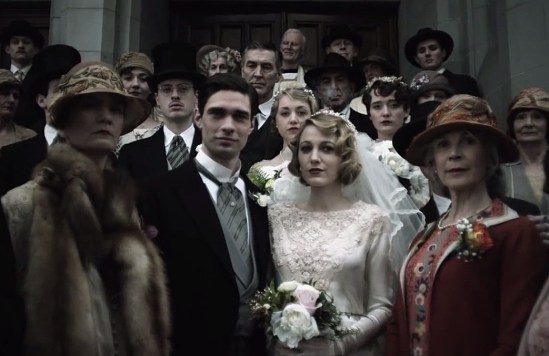
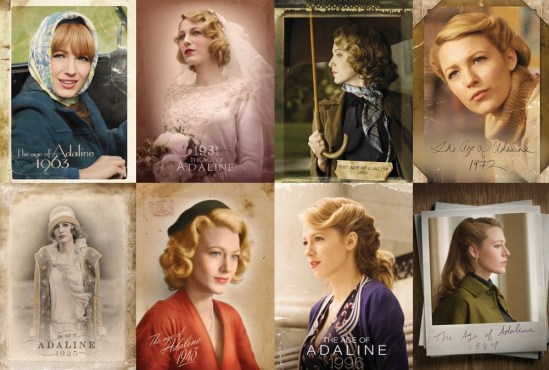
AgeAdaline0As soon as the trailer for the Age of Adaline hit me (during my date with Cinderella), I knew I had to see it: a story about a person made immortal has been gestating in my mind since 2009. I needed to see if Hollywood stole my idea, and if it did, to see if it was good enough.

Fortunately, the Age of Adaline takes a different route, so I guess I’ll continue nurturing my baby. Phew!

Anyway, I thought the Age of Adaline was decent enough. Definitely did not feel my time and money went to waste. Here’s what I thought was most thoughtful of the film:


—SPOILER ALERT!—


—–1) The opening scenes of Adaline’s (Blake Lively) life feature one thing in common: the Catholic Church. We see her daughter’s baptism, we see her father’s funeral, and we even see her wedding in St. Mary’s Cathedral in San Francisco (before the cathedral was “remodeled”). I’ve been trying to figure out why the Church is so prominent in the film’s beginning, but not so throughout the rest of the film. At no point is the Church mocked or even ignored in the film, but actually churches keep reappearing in later scenes. Not sure why the director included all these churches, but not much seems to come of them plot-wise.AgeD12

—–2) The emphasis on faithfulness in marriage as union of husband and wife. We see this clearly when William (Harrison Ford) strongly reaffirms his love for his wife after she becomes upset with his reminiscing of Adaline (you are not second pick!). We see this even more when William gives a toast to his wife on their 40-year anniversary: “to the love of my life, the mate of my soul…” Heck, in this culture of divorce and promiscuity, any focus on the beauty and fidelity that marriage demands is a win for me!AgeAdaline1

—–3) Unfortunately however, the emphasis on marriage’s demands for fidelity is conflicted with Adaline and Ellis sleeping together. What is really jarring though is when Ellis tells Adaline that he is falling in love with her… but only after they had been sleeping together for a few weeks. Now doesn’t this seem strange? That they had been sharing their nights together before there was love in the relationship? Did Ellis not love Adaline all that time prior? It sure seems that way in the film’s dialogue. So then what… love comes after sex? Doesn’t that seem backward? Shouldn’t love come first? Before anything? Before everything? Sex is meaningless without love, and for Ellis to bring up love this late in the timeline is lame to me. First, you meet her, get to know her, then love her, commit to her, vow to her before witnesses that you’ll be hers, be married to her, and only then give your body and soul to her, all the while choosing to love again and again. That’s the order. Going backward, or hopping around is just weird when the rest of the film encourages faithfulness and seriousness in marriage. This was one messed up moment in an otherwise decent film.

—–4) Lastly, the recurring theme of resurrection. I did not notice this until I came home and looked up the movie’s score. Two tracks: First Resurrection and Second Resurrection. Furthermore, other Church-sounding tracks are: The Scar, Hospital Confessions, Coming Back to Life, and Start Again. First, in the film we see Adaline come back from the dead in a semi-glorified state each time. The first time she cannot age past 29 years old. The second time, she resumes aging and finds it to be an even greater blessing.* In fact, her first time rising from death is obviously like a baptism! As for The Scar, recognizing someone by their scar reminds me of how we recognize Jesus from any wannabes: only the true Lord has the scars of His Crucifixion, which reveal His true love for us. Relating to Hospital Confessions, the Sacrament of Reconciliation always gives us great healing and forgiveness, which allows us to Come Back to Life and Start Again. Anyway, funny how much meaning is in the titles of a score’s tracks!

*—–BONUS) Getting back to aging actually being a blessing, it’s much like the happy fault: that if Adam and Eve did not sin, then Jesus would not have been our Savior. God makes goodness and beauty out of ugly things, and aging can be beautiful! In the case of marriage, aging allows us to grow closer, it allows our souls to grow closer. Because our bodies weaken and deaden, we rely more on our souls to shine and show love. Because an elderly body is not attractive, we see more easily where the beauty of the person truly is (kind of like Beauty and the Beast!).

All in all, not a bad film, could have should have been better, but enjoyable nonetheless.

AgeAdaline3

I Snuck Out For Cinderella

CinderellaPosterFull disclosure: I snuck out of seminary early today and went to see Cinderella alone. Being that I didn’t know what to expect, I was unsure of dragging any of my brothers along. And solo I went.

And I was glad to have gone alone, because then they didn’t see me cry with Cinderella.

This is the kind of film Disney will have to keep striving to match in the future (and I hope their upcoming Beauty and the Beast remake is up to the task). It isn’t a perfect film, but it’s an extremely great one! Here’s a list things that floored me:


SPOILER ALERT


—–1) I was amazed at the emphasis, over and over again, on some solid traditional virtues: courage and kindness. We see Cinderella live these twin virtues throughout her life, for love of her mother and father. We see time and time again how these virtues beautified her, because holiness is attractive!

—–2) Ella’s mother and father were exemplary. In a culture that deemphasizes the importance of family, of motherhood, and of fatherhood, I was so grateful to see encouragement here for others to work to have a family like theirs. In fact, notice that both Ella and the prince have solid childhoods in solid families that prepare them for a great future!

—–3) Kit, the prince, was actually more than just a stereotypical Disney knight in shining armor. He repeatedly reminded me of St. Joseph: chaste, humble, decisive, loyal, filial (a good son who loves his dad), gentle and inspired by Ella’s virtue and character. We see in him how every man should treat every lady, and most importantly we see him receptive to Ella’s virtue. In one scene, we hear Kit openly admit to his friend that Ella’s goodness of character greatly draws him and urges him on. I’ll say it again: holiness is attractive! And the woman’s goodness and beauty inspire the man’s love to rise and meet her standards (click here for more of what I mean).

EllaServant—–4) As Kit is to St. Joseph, Ella is to Mary. Yes, Cinderella is very Marian. Not only do we see this in both her servant’s robes and transfigured ball gown (Marian blue!), but we see it in her humility, docility, and how she served even her enemies as a handmaid (and even accepted the name they snickered at her). We see the analogy also in how she bore her suffering, her losses and sorrow, and finally: in her ravishing beauty. Her humility is most manifest when she accepts even the lost chance of being found by Kit! I was astonished to see her content with merely keeping the mere memory of Kit in her heart, pondering and cherishing it there for the rest of her life!

—–5) Which brings me to the reason why Ella’s stepmother hates her so much, and in the stepmother’s very own words: “Because you are young, and innocent… and good!” Wow, if that doesn’t say a lot about Ella’s holiness! In this fallen world of sin, we frequently are either inspired by the good and beautiful to be like them… or are tempted to destroy them! The wicked cannot stand the sight of true beauty and goodness and will try to eliminate what makes themselves look bad, and we see this clearly in the stepmother. But then you have those of us who are inspired by true beauty and goodness and try to emulate them! So that we’re all beautiful and good! [hint: don’t be like Ella’s stepmomma]

—–6) And that brings us to see the stunning beauty of forgiveness. Ella, when she sees her stepmother for the last time, offers her forgiveness… with all sincerity. Heck, we even see the stepsisters apologize to Ella! And what a virtuous way to love thy enemy. Sure, it would have been satisfying to see Ella smack them and lock them up for treason, but it was so much more inspiring to have seen her forgive them. And I argue that she could only do such a thing because she truly lived a life of love.

CINDERELLA—–7) Also wanted to point out the indissolublity of marriage: we see the Prince deliberate intensely about it, and everyone takes it as a given that divorce is impossible. Because if divorce was possible, then marriage wouldn’t be such a big deal — just marry a substitute princess for now, and then divorce her when you find the mysterious princess! Make the King happy, the kingdom happy, and avoid all this drama. But nope. That’s not even a possibility. And our culture needs to see more examples of the seriousness, beauty and dignity of marriage (and that it must not be done for selfish gain or for others’ wants!).
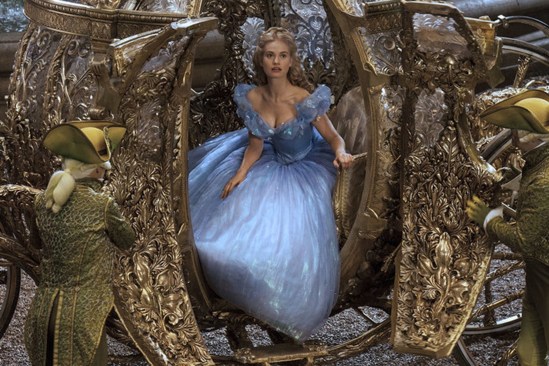
—–8) Bonus: the changing of the lizards, mice, pumpkin, goose and of Ella’s ballgown all reminded me of Christ’s Transfiguration on the Mount, which in itself is a preview of what we are all meant for in the resurrection. While in this earthly life, our sins and the sin of the world still scars us and mars our beauty. We find it difficult to see who each other is: miracles of God’s creation. In Christ’s transfiguration, the three apostles with Him saw God’s true beauty. In the fairy godmother’s transfiguration of Ella’s friends and dress, we see the scars melt away to reveal a miracle. And just like in the Gospel, the transfiguration doesn’t last, because it’s only meant to show a glimpse of beauty to come.CinderellaCarriage

So yes, I loved Cinderella. And I think you would too.

P.s. here are more reviews from critical Catholic movie viewers: Fr. Robert Barron and soon-to-be-Deacon Steven Greydanus.

Movies for an Intense Lent

*updated March 22, 2017* Lent is a long season. And to help me get in the mood of reflecting deeply on my faith, and contemplating deeply about Jesus Christ’s Passion, I have five movies I can turn to (or check my list of music for an intense Lent). But be warned. These films are intense and will not slip from your memory any time soon. The struggles, challenges, drama and suspense lingers… lingers…

SisterLuke——First up: The Nun’s Story, starring none other than the exquisite and stunning Audrey Hepburn as Sister Luke. In this film, we see a young and beautiful woman discern the religious life, but all the while, we see something not quite right. Did she enter for love of Jesus? For love of the Church? Or was the sisterhood merely a tool for her? When I first saw this film, I could not believe what I was seeing. As an Audrey Hepburn fan, as someone who was open to discerning the priesthood, and as a fan of film, this movie was a major treat and surprise. Click here for the whole film (while the link remains active).

——Second: The Passion of Joan of Arc. This is a silent film with a haunting score, a haunted past, and a haunting recovery. The real life struggle to get this movie on screen is already harrowing enough to make one think the devil tried to keep this where the sun don’t shine, but today, it is considered one of the top ten films ever. Don’t let its age, its novelty and its daring discourage you from viewing this movie. Search for it at your library, or online. There are at least three versions now. I only recommend the one accompanied by Richard Einhorn’s Voices of Light score (click link to listen!).PassionOfJoan

——Third: Noah. A movie misunderstood by many to be Christian, but it’s actually a Jewish film that stretches the story of the Great Flood in ways that kept me at the edge of my seat. I was stunned to see how riveting the story was, how terrifying such a flood must have been. And since I wrote extensively on this film already, please click here for my review and for the thoughts of others more learned than I.

——Fourth: The Flowers of War. Though the movie is about the 1937 December invasion and Rape of Nanking by the Japanese army, its portrayal of utter human suffering and redemption is perfect for Lent. The movie stars Batman: aka, Christian Bale, and is directed by Zhang Yimou (Hero, House of Flying Daggers, 2008 Beijing Olympics Opening Ceremony). In this epic, Bale finds himself having to play the role of a Catholic priest to protect 12 abandoned school girls trapped and stored in the Cathedral by the Japanese for future use. This film is so intense that I cannot recommend it for family viewing whatsoever. Be advised.

——Fifth: The Prince of Egypt. The origins of Passover are essential to grasping the weight of the Paschal Mystery. Though seen as a children’s film, this movie is definitely for adults, too. Do not miss this [musical] depiction of the Exodus story. Although there are certain creative licenses taken that deviate from the Scriptural telling, the film is a great expression of the desperation of the Hebrews and the overwhelming glory of God’s presence and power. Need more convincing? Have a watch of one of the best scenes: THE PLAGUES

——Finally: The Passion of the Christ. I save this one for Good Friday, and for good reason. And unlike many, I don’t shed a tear at all… until Mary meets her Son on the road to Calvary. I love Jesus. I believe He is God. And God can take care of Himself. But when Mary appears, her broken heart cuts me down. Gets me every time…

——BONUS: this film The Road is also very intense and not to be viewed lightly by families and children. The story is a man trying to care for his son in a post-apocalyptic world that is two-thirds the way to hell. The sacrifices, struggles and sheer terror of what this world is reminds me of what sin did to us, and what sin still does to us when we let it reign. Give this a watch if that sounds like something that will help you stop taking sin lightly, and stop taking life for granted.

——AND A DOCUMENTARY: History Channel produced this detailed and fair research on the mysterious Shroud of Turin (the most studied human artifact, ever). This cloth is believed by many, scientists and faithful alike, to be the original burial linen of Jesus Christ. It is also believed to have been physically affected by the Lord’s  resurrection, affected in a way that science has been unable to explain, to date. Give The Real Face of Jesus a watch (but beware of the heretical and nonsense gnostic material inserted awkwardly (and unnecessarily) in the middle of the documentary). More documentaries researching and studying the Shroud here.

The Gentleman and the Tie

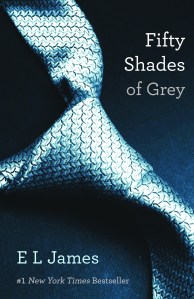
50 Shades of S***Last weekend, a book became a movie that should’ve never even been a book in the first place. But alas, here it is… 50 Shades of Grey.


Now, I’ve read all the criticisms I could find from sources I trust (links at the bottom), and I’d like to just do one thing nobody else has done: judge the book’s cover.

I take book covers very seriously (like when I designed my own), and this is no exception. What we see here is a tie, and that’s pretty much it. So… what can we make of this?

Does it stand for the business man in the book?
Does it represent status?
Does it show off some fashion trend?
Is the tie a motif? Does it appear in the book?

And of course it can mean all those things. But here’s what I think most people miss:

A tie. Think about it. Putting a rope around your neck. If one end of the tie is pulled, the loop contracts. Like a lynching tool. Also known as a noose. And just because it’s silk doesn’t mean it can’t suffocate and strangle.

Why would any sane person invent such a thing and call it fashion, handsome, strong, and manly?

And why would an entire culture think this is something men should wear?

Because it symbolizes and actualizes VULNERABILITY. It represents the gentleman under the paisley because it makes the man under the paisley gentle! If a man has this noose around his throat, he is made vulnerable and weak, even though he may be strong and secure. It shows that he is willing to be vulnerable and gentle, though he could be vicious and violent.

And vulnerability opens him up to love.

In fact, only love is worth becoming vulnerable for. And I’m talking about REAL love — love that involves selflessness, sacrifice, fidelity, and devotion. A man who really admires a woman always risks rejection when he asks her out, asks for her number, asks her out again, and again, and again, and finally asks for her hand in marriage. At every point, a true gentleman knows the lady is a free person who can decline and totally reject him. And at every point, the man who truly loves her knows that she is worth being vulnerable for. She is worth the risk of being rejected and embarrassed and devastated. To this gentleman, just getting the chance to ask her is worth it!

But 50 Shades of Grey has it backward. The book is about a woman becoming weak and vulnerable and abused by a vicious and violent boy. He uses her. Manipulates and control her. He puts her in the noose instead.

Here we have a boy unwilling (maybe even unable) to be selfless and sacrifice (and those are main ingredients to true love!).

Nothing gentlemanly about it.

Nothing manly about it.

Nothing lovely about it.

Pray for all the 50-Shades fans, and for the author: E.L. James. They need it.

Here are the criticisms I mentioned (highly recommended, but for mature readers only):

1) A whole collection of articles about 50 Shades of Grey from PornEffect.com (an anti-porn site).

2) Another collection, from ChastityProject.com

The Confessions of the Joker

Confession2

That’s right… even the Joker is serious about the Sacrament of Confession and Reconciliation! Have a listen to his conversion story!

Here’s the transcript:

Hi…

Most of you know me as the Joker. When Evan heard about my conversion, he contacted me and asked I could share my experience on Holy Smack. I said, I’d love to, but only if I could say whatever I wanted. He said okay. So here goes…

Last time you saw me, I wasn’t in a really good mood.
I killed people.
For fun.
I almost destroyed Gotham.
For fun.
And I tore down Gotham’s White Knight.
But her Dark Knight… oh, that Bat Man flipped my life around.
You see, while I was in prison, I was kept in isolation, and for good reason. I was insane.
And I never had any visitors. Except for one man.
He was a Catholic priest.
And he told me something I’ll never forget. In fact, I’m gonna tell you what he said, and I hope you’ll never forget it either:

You see, in confession, all your sins just… disappear.
You go into the confessional, and there’s the priest. Just sittin there. You can be anonymous to him, and he doesn’t care. You can tell him anything, even everything, and he doesn’t care. You think you’re sins are special? Original? Yeah… right… there was only one original sin, and Adam and Eve beat you to it long time ago…

Anyway, the priest can’t tell other people what you confess. What’s spoken in confession, really does stay ONLY in confession. He can’t tell your friends (if you have any), he can’t tell the police (yup, separation of Church and State at its best and original form), he can’t tell a recording device, he can’t tell another priest (not even the Pope!), and he can’t tell even your own sweet mother…

That’s called the seal of the confessional. And whatever you confess stays between you and Jesus. In fact, most priests even forget your sins as soon as you walk out the door. The Holy Spirit gives them a holy amnesia, otherwise, can you imagine living life knowing all the sleaze people do? It’d drive you crazy! Not to mention that confession can even get boring after you hear the same sin for the thousandth time… but don’t go out and try to impress a priest now! Trust me, that’s beside the point.

But in confession, you’re in hand to hand combat with the devil. Satan is a fiend. Worse than what I ever was. And he doesn’t want you there. He doesn’t want you anywhere near confession, because in confession, you’re really near the Lord. Confession is actually more powerful than exorcism! And in confession, you’re humbling yourself, and the devil is one prideful, stuck up jerk. And in confession, he’s hiding in the shadows of your past.

And the closer you get to Jesus, digging up your history of sins (and it might me from 5 years back, 20 years back, or maybe even just 20 minutes back), the stronger the light breaks in. Oh man… that light burns, like 10,000 UVA and UVB. And it obliterates the shadows. That’s when you can see the worst sins trying to get away from confession — they want to hide from being exposed. They first try to convince you that they’re no big deal, small fry, no more sins here, just move on. But keep going after them, and they get nasty. Then they try to convince you they’re too big for forgiveness, way too big to be rid of, way too much and you can’t handle it… you’ll be so embarassed by them.

Don’t listen to those lies. In fact, that’s when you know for sure this festering thing has to be purged. So grab it, and it’s black greasy tentacles will freak out. Like some leprous octopus. So drag it out into the light, spit it out in confession, and it’ll scream: “Let me go! Jesus can’t forgive you! You’re disgusting! Leave me alone!”

But that’s it’s last words. Because Lumen Christi — the light of Christ, that’s right, I know my Latin — His light sears and cuts that demon down, and it fizzles off like a fart in the wind. Nothing left. Just… gone.

That’s the power of the priest’s absolution: Christ working through the obedient and docile man, so he can pluck off and chop up the leeches that sucked on your soul. If you need to know how ugly sin is, just look up images of leeches and lampreys and pelican eels, and remember that sin is even uglier.

And now, why am I telling you this? Well because it worked for me.

I went to confession. And I confessed a sin that was festering in me since I was a little 10 year old boy. No matter how much a tried to stop, I just couldn’t keep clean. It haunted me, perverted me, and I lost control of my childhood. I was addicted; I became evil. But I didn’t want to stay this way.

So thank God. Because after that confession, that sin no longer had any control over me, and today, I’m free. Even in prison, my soul is free. I feel stronger and better today than I can ever remember!

And if it can work for me, it can work for you.

Now, all I need to do is try and talk like a normal person again… baby steps… baby steps…

God love you.

Cry Room Outcry!

Baby cries. There’s something about them. They do something to you.

If you don’t believe me, then have a look at Alfonso Cuaron’s “Children of Men”. In that 2006 film, the world is old and sterile, aging and dying out. For reasons unknown, human fertility and pregnancy is no more, and the youngest person alive is 18 years old:

In a world where children are extinct, adults go mad. And trust me, the film is worth your time, considering it was Cuaron’s last film before his latest “Gravity“.

That brings me to what I noticed one day at Mass. Most Catholic church buildings constructed after the 1950s have a few things in common that older churches just do not seem to originally have. Actually and unfortunately, the “new” churches have many things I find irritating on good days and barely tolerable on bad days, but the thing I noticed this one day were the quarantine cells.

Cry RoomThat’s right. Isolation chambers. Also known as baby rooms, or cry rooms, where parents attend Mass with their infants and toddlers, safely behind soundproof windows and walls.

A few questions: how did young families at Mass handle their crying babies before the invention of modern soundproofing? And what did priests and people in the pews do with the cries and yelps and whimpers in the old days?

My thoughts: Baby cries are closer to the songs of angels than we think. I mean, if Jesus said that only the childlike will enter Heaven, then it makes sense that babies belong in the nave, not in some outlying room removed from the Mass, as if they were dangerous to everyone else’s prayers. I even dare say that people at Mass need to hear those whimpers and yelps! It reminds them, it reminds all of us that the Church is young! The Church has young husbands and wives with young children! The Church has loving and patient parents! The Church is fruitful and multiplying!

We need to learn how to listen to babies again. Too many of us find it excruciating and annoying. We throw death stares at hungry and tired children, and we roll our eyes at their parents. Sometimes, we even dream of snuffing out their breaths to gain some peace, and that’s not far from the culture of death…

Shame on us. As if we were never that way ourselves. As if we saw the hungry and tired brothers and sisters on the street and thought them annoying and needing to be quarantined. Those cries convict us if we are bothered by them, and those cries convince us if we could only hear their beauty: that we are all crying to God, crying for mercy, forgiveness, beauty. Crying for justice, love and Heaven.

We’re all supposed to be weeping at Mass. Tears of joy at the Kyrie, tears of sorrow at the sacrifice, tears of ecstasy at Holy Communion. And the whole world is meant to hear our cries, our cries that remind it that the Church is young! The Church has a loving and patient Father and Mother! The Church is fruitful and multiplying!

P.S. Check out what one parish is doing to help parishioners cope with the kiddos.

And I’m not the only one who thinks this. Check out what Pope Francis has to say about bawling babies at Mass.