I Love La La Land

942e8cfb6448873d60ac9821b77b44e5La La Land got me as soon as its trailer came out the past summer. It’s not the usual fare that I like to chew on and sift for Catholic Christian insights, but it is what I love to enjoy: a well-made film with great score and music. Yet, here are a few highlights it made me think of (no spoilers):

——1) I smiled during much of the musical. It was so happy (except for the sad parts, of course). It reminded me of a particular philosopher’s (Peter Kreeft, to be exact) speculation on the after-life. Paraphrased quote goes:

The language we speak in Heaven is music.

And I agree wholeheartedly. Song is super expressive, universal, personal and social, and every time we sing, it comes out new. Even the angels sing for eternity. St. Thomas Aquinas lays bold claims that music is the highest and most spiritually-tuned of all arts, and St. Augustine says:

He who sings well prays twice [as much].

Meaning that when we sing our prayers well, the prayer becomes worth double! (Which is why the Church always prefers Gregorian Chant [or similar] in her liturgies). And this leads me to my own speculation that when God said “Let there be light…” He did not just say it–He sung it. God sang creation into being, into reality. God sings us into existence. This makes sense to me because if we, who are His children, love music so much… then how much more does God Himself, since He created music and our ability and capacity to recognize it, appreciate, love, and create it. Answer: infinitely more.

And think about this: music is just highly organized noise. The order of the sounds is what makes a song, and nobody teaches us how to recognize a song as different from a pandemonium of noise: we’re just created with this capability to hear it, conceived ready to love it.

——2) Speaking of our creation: God did not make us to sit an offices and push papers. He did not make us so that we can stand on assembly lines, or wait in waiting rooms, or slave over tiresome toil. God made us to sing! To dance and to play! To live lives of music! The world was meant to be our playground and dance floor, but our sins (i.e., Original Sin) made us forfeit it all. So watching musicals like La La Land remind me that we who make it to Heaven will find an incredible musical experience waiting for us. An eternity of play and dance, enjoying what God meant us to be and to do: exploring His creation, meeting His creatures, and wandering His infinite creativity and love.movies_imgs_431478241912

——3) As for dance, the numbers in the film remind me of what a truly great dance between a man and a woman should do. Quoting myself from Just Too Beautiful:

A woman’s beauty and a man’s beauty are not the same, not equal, not interchangeable.

A woman is as different as she can be from a man – and still be 100% human. A man is as different as he can be from a woman – and still be 100% human.

Anyone who believes a man can become a woman must also believe that the night sky can become the stars, that the frame can become the painting, the page can become the story, the dress can become the body.

But no matter how similar the two – it is impossible for one to become the other, because the one is meant for the other, and the other for the one…

Because when man holds woman – he supports the stars, he protects and presents the painting, he carries the tale, he embraces the beautiful body. He gets to hold beauty, gets to be with beauty. He gets to care for beauty. He gets to love her.

la-la-land-movie-soundtrack——4) Finally, the prolonged car horn in the musical tells me something. The first time we see and hear Sebastian honk the car horn, it’s out of his hatred for Mia. He is disgusted with her and insults her.

But later, as they learn to love each other, the car horn becomes a sign of love. In fact, each time we hear the horn again, the love is at a higher level, until it becomes an even sacrificial love to care for the other person even if the “feeling of love” is absent (meaning only a pure love based on selfless concern remains).

And that wraps up by first impressions of LLL. I’ll probably be savoring this musical again and will update if I see more depth in the film. But I leave you with a bonus:

——Bonus) Might be a stretch, but Sebastian’s name originates from St. Sebastian, a Roman martyr who competed in life as an athlete and died when he refused to abandon his love for Jesus. Kind of reminds me of how Sebastian in the musical competed and refused to abandon his dreams and Mia’s, also. He urged Mia to not give up and not give in, and they encouraged each other when the other started stumbling. This is exactly how fellow Christians should encourage each other! Never give up faith, hope and love. Never give in to sin. Always reach for the dream of Heaven.

I Saw Hacksaw

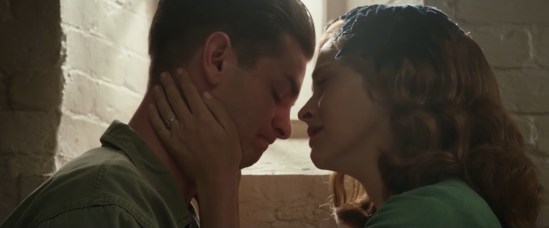
imgNot many directors have my full trust in their story telling; besides Christopher Nolan, there is only Mel Gibson. After a decade of recovering and rehabilitation from his downfall, Gibson’s first film since Apocalypto and The Passion of the ChristHacksaw Ridge (based on a true story)—is very telling, even if I did not like it as much as I thought I would.

—SPOILER ALERT—

——1) Heroes are not spotless, they have pasts and histories, and Desmond Doss (Andrew Garfield) is a fine example. His youth is peppered with violent, even homicidal episodes, and he exemplifies this famed quote well: Every saint has a past, every sinner has a future. And most importantly, a saint is someone who starts on the path of sainthood again and again, never staying down, never giving up. If you apply this to Gibson, or to St. Paul, or to St. Peter, St. Mary Magdalene, then you see what I mean. And if you apply this to yourself, then you have found the path to Heaven.

——2) Of all the things she could give Desmond before he ships off to war, his beloved Dorothy gives him her tattered Bible. They share their faith with one another, and in this love for God, their own mutual love grows. If couples do not ground the roots of their love in the infinite Love, into infinite Life, then how can they hope their love will survive? If you do not believe in something greater than yourself, then you will never have anything greater than yourself. And if you do not anchor your love first in eternal love, then your love does not get any greater: it will not survive when you die (and we all eventually die).327

——3) Speaking of death, we see also the jarring juxtaposition of two cultures with clashing values: one that tries to preserve and save life at the risk of one’s own (the devout Christian West), the other disregarding life and glorifying death through suicidal kamikaze tactics and seppuku  (the Japanese). In today’s culture we see a similar struggle: one that strives to honor all human life from conception to natural death, the other advocating that life is only valuable if we want it to be. In other words, the Christian rooted cultures know each life to be of infinite worth and not to be given up on lightly, whereas certain cultures see human life as expendable as if it were a mere resource. Most importantly, if human life is only a resource, only valuable if we decide so, then who is the judge for whether another life should be ended? Who is so “enlightened” and “fair” that they can decide who lives or dies? And who says that judge has to be yourself? It can easily be someone else… in fact, if it is not God, then it very well might be someone else much less loving and merciful.maxresdefault

——4) Love for enemies is never easy, but here in the film we see Doss even extend mercy toward the enemy soldiers. He treats them as his own, only hesitating because of fear they would attack him, not because he hates them. In fact, we do not see Doss express any malice toward the Japanese troops! For a war film, it was strange to see such little animosity from the protagonist against the foe. But there we see the point of the story: the primary foe is not the Japanese military: the foe is Desmond Doss himself.

——5) The foe is Doss himself because we are waiting to see if he will drop his promise. We are watching to see how committed he is to non-violence, how long he will go before picking up a rifle and shooting the Japanese. We expect to see him cornered, desperate, and succumb to breaking his vows. We wonder how much will it take before he snaps. Yet, he does not. His resolved conscience is so solid that we are forced to think whether we ourselves are that resolved on anything!

——6) It is there the film reaches out to us, Doss reaches out to us, to challenge us whether we have the courage to keep our promises, to stay faithful, to try over and over, praying God helps us one more time, and always one more time, no matter what came before, which reminds me of a prized quote from St. Paul (so prized I made a meme for it):


Malice and Maleficence

MALEF_001A_G_ENG-SG_70x100.inddRecently, a dear friend of mine requested I should view and review one of her favorite films. At first I was reluctant, because I had heard negative reviews about Maleficent, and I also secretly dislike Angelina Jolie as an actress (yes, she bores me). But after giving the film a look, here are the really powerful moments of the tale:

—SPOILER ALERT—

—–1) The reviews I tend to read before considering an unknown film saw Maleficent as a poor remake of the original Sleeping Beauty. Now I am not a fan of the original, so this gave me even more reason not to see the remake. However, seeing Maleficent as a standalone (isolated and without memory of the original) film is the perspective I am sharing from, and from this point of view, let me continue…

—–2) “Don’t curse in the first place! You will spend your lifetime regretting it.” In the film, we see Maleficent take revenge on the selfish Stefan by cursing Stefan’s most loved one: his daughter Aurora. As the film progresses, we see that Maleficent seeks to undo the curse, but it is impossible.

This reminds me of some advice from St. Philip Neri about gossip (and other sins we commit). The story goes: Once a woman came to confess her sins, and the priest gave her a penance to help her make better choices in the future. He told her, “Take a pillow filled with feathers, and climb to the highest point in the city. From there, shed all the feathers from the pillow and let the wind catch and scatter them across town. Afterwards, climb down to the ground and collect every feather, stuff them back into the empty pillowcase. This is to show you that when you sin, even when merely gossiping, your sins and malicious words spread out and cause evil everywhere. And you can never undo and unsay everything.”maleficent536acd244e2df

—–3) From this tragic and irrevocable curse, we see that it is never right to punish a child for the sins of the parent! NEVER. So what Maleficent does is unacceptable, is evil, and malicious (hence, her name). This may seem obvious, but there are many people who indeed even murder their children in order to escape the responsibilities and consequences of their actions. I wrote about this just a few weeks back, so please check it out here: Children of Crime.

—–4) Once the curse takes hold and sends Aurora into indefinite sleep, we see the metaphor: her perpetual sleep is a death, with only a glimmer of hope that is more like hopelessness. Desperate to raise the girl from sleep (think of Luke 8:40-56 when Jesus woke Jairus’ dead daughter!) but unable to because the Prince has no real love for Aurora, Maleficent (who at this point has become like a mother to the girl) kisses Aurora’s brow, saying goodnight and goodbye.

It is here where we see that true love is not necessarily romantic or sexual! In this world, so many people confuse sex and romance for love, when actually the greatest love does not depend on those things. When parents love their children, when friends love one another, when children love their parents, when God loves us and tells us to even love our enemies, none of these loves should ever be sexual or romantic, and they are all powerful examples of love, true and chaste.

Of course, the love between a husband and wife have romance and sexual aspects, but the point is that their love is not based on those aspects, that even when their is no sex or romance, their love is still true because they choose to be faithful, loyal, selfless, and generous. Love is based on how we help get each other to Heaven, not on how much we can get from each other.maleficent-kiss-aurora

—–5) Lastly, we see that despite the evil Maleficent did, forgiveness is always possible if there is love, and only if there is love. Her many sins are forgiven, for she loved much, and love makes forgiveness always possible! Evil does not win unless we let it. For a great post about this, please see: Forgiveness is For Giving.

—–End) All in all, though not a film I think everyone must see, if you do see it, it wouldn’t be a waste!

I Saw The Light Between Oceans

140672CM01B_Trp_Email_LR.pdfAn actress who has become a fast fave of mine is Alicia Vikander. When I saw she was in “The Light Between Oceans,” I knew I should see it. Coupled with Michael Fassbender, and it became something I had been looking forward to for a few months now. And so thankful am I to have not been disappointed. Here are the shining moments of the film:


—SPOILER ALERT—


—–1) As a man, it is difficult for me to relate to the experience of miscarriage. Yet, my heart was pierced and my gut was gutted when I saw the trauma in Isabelle’s (Vikander) two losses. The helplessness of both mother and father as the child comes stillborn, the vulnerability of life, the hopes suddenly spilling, all of it was so cruel and devastating. It helped me think of times my own friends endured such loss, and while I only heard the news after the fact, seeing it portrayed as it happens is terrifying.

Yet, the scene here also shows the irony of intentionally and deliberately terminating unborn children in the womb, aka: abortion. We have couples who are desperate to save their unborn children from miscarriage but are helpless and at the mercy of their infertility, yet then we also have merciless couples desperate to destroy their unborn children. And the only difference between the two kinds of couples is that one truly loves their children, and the other is inconvenienced by them.

the-light-between-oceans-michael-fassbender-alicia-vikander-rachel-weisz-002159-r_1920_1080-f_jpg-q_x-xxyxx—–2) On the note of parenthood, Isabelle shares that (paraphrasing): “When a wife loses her husband, she becomes a widow, but when a mother loses her child, she remains a mother always, even if she has no children left. I wonder if I am still a sister, since I have lost my brothers.”

This is such a profound insight that reflects the “till death do you part” vow in true Christian marriage, when spouses vow their fidelity with such determination and faithfulness that only their death might end it. Hence, a surviving wife becomes a widow, or a surviving husband becomes a widower. However, this film demonstrates the permanence of motherhood and fatherhood on many levels.

One level is that Isabelle and Tom (Fassbender) are parents, even with their loss of two stillborn children. Parents are always parents, even if all their children have gone to judgment before them (by whatever means). Parents who loved their lost children must realize however, that the children are not lost, but are waiting for them in the hereafter. Parents should then live so as to strive to be with their children again, to pray for them and ask them for prayers.

Another level is Hannah (Weisz) remains a mother too, despite her thinking her daughter is dead. And we also see that she remains a loving and devoted wife to her lost husband, revealing that though she is a widow, she remains his.

And powerfully foiling Hannah, we see that Isabelle struggles to remain Tom’s. She disowns him for surrendering to justice, and she does not allow herself to love him again until it is almost too late. Eventually, she finds forgiveness and also surrenders to the truth. I was so grateful to see this story go this way, the way of fighting to keep a marriage, to keep a love beating at the moment it has bled out.Alicia-Vikander-in-The-Light-Between-Oceans

—–3) And we see in this story (unlike in Kubo and the Two Strings) that the truth must always and will always have its day. Nothing good, not even a seemingly happy family, can be built on a lie and deception. Tom’s character, so morally formed and conscientious, cannot live with the lie, with keeping a child hidden from her true and loving mother. Tom knows the deception and must right it. Even in the end, Isabelle realizes her love, however honest it is, is flawed when founded on a lie.

In fact, the lie ages and wears down Tom and Isabelle and leaves them childless in the end. Even Isabelle yearns and hopes Hannah could forgive her for the evil she did. This film is dripping with the characters wrestling with the truth and finding out that the truth is alive and far more subtle and cunning than their greatest deceits. Lies die, and then Truth rises up alive.

Most beautifully done, however, is that we see after the truth is respected, the relationships bloom on a sure future. When truth becomes the foundation of love and relations, then it becomes easy and beautiful. The catharsis we see when Lucy-Grace (as a grown woman and mother herself) visits an aged Tom is something that could only have happened with the support of the truth.the-light-between-oceans-michael-fassbender-alicia-vikander-rachel-weisz-349486-r_1920_1080-f_jpg-q_x-xxyxx

—–4) Finally, great acts of forgiveness abound in the story; acts so great that even the police question why anyone (in this case, Hannah) would forgive the couple who is suspected of murdering her husband and kidnapping her daughter. But we see that this is how a happy and fulfilled life should be lived. Hannah remembers wise words from her husband (paraphrasing): “It’s too hard to resent, you have to think about it and remember it all the time. It’s tiring. It’s better to forgive so you can live.”

We also see, as mentioned earlier, how Isabelle forgives Tom, and thereby allows them to live a better marriage into old age. However, we must also note that Tom has forgiven Isabelle: for originally insisting they keep the baby and hide the body of Hannah’s husband, for refusing to admit the truth, and for finally revealing the truth even when it meant her conviction and imprisonment. We see here how Tom’s love led him to forgive her all these times, every time.

And that’s exactly it: only love makes it possible to forgive, and if not your own limited love, then for God’s infinite love.

—–BONUS) Two mothers fighting to keep/regain a child… sure reminds me of the case King Solomon once heard (1 Kings 3:16-28). Yet, in “The Light Between Oceans,” we see both women willing to part with the girl when they realized she was better off with the other. How beautiful a twist to put on the renowned Biblical story.

—–Note: I also appreciated the sound baptism and Christian marriage being celebrated, and the chastity portrayed in the couple’s relationship. But religiously, what caught me most was the solemn chanting of prayer in the score when Tom first encountered his daughter’s true mother, and the truth staring him down and demanding him make things right. In the background, a minister’s words about sin, and our mission to oppose it and refuse it, also adds to the theme of the story: A lasting love and family must be built on truth.

Kubo and the Two Stings

kubo-and-the-two-strings-kubo-legenda-samuraizeIt is very easy for me to critique and focus on negatives, so on Holy Smack I try my best to be positive, but sometimes exceptions must be made. This is one of those times. See what I mean here:


—SPOILER ALERT—


—–1) Kubo and the Two Strings (2016) is a movie I really wanted to not only like, but downright love. From the trailer I could tell the artistry of the film was epic. They even had animated origami, which has been a dream for me to see realized on film ever since I wrote scenes of it in Little Miss Lucifer.

But alas, despite how beautiful Kubo is visually (and it really is stunning), the film falls short of a beautiful story. The tale is generic, and lacking catharsis (a smacking-good ending that truly satisfies deep down). When the show ended, I actually could not wait to leave the theater because I was so let down (sting #1).

This taught me that a story must be as compelling and dramatic as the visual effects and cinematography, otherwise it doesn’t have a lasting effect: like a stunning sunrise on busy commuters. As gorgeous as the scene is, people just walk by and get to work as if it was nothing more than a glare off the mirror. They live the rest of the day, and repeat the next morning, with not a care at all about the sunrise, because there was no compelling story accompanying it.torontohenge-sunrise-april-2016

Imagine instead however, if the sunrise coincided with the reunion of long lost lovers, lovers who traversed all night to reunite… if that dawn meant the revival of past love, restarted after decades apart and years of loss: now that’s catharsis. Now that’s a story I want in on.

—–2) What I really liked was the dynamic between mother, father and child. In the film, we saw easily how both the mother and father are essential to Kubo, yet we also see how each contributes in different ways to raising their child. In today’s world, this uniquity of fatherhood and motherhood is being smothered with people who actually think fathers are not necessary, or mothers aren’t special. In reality, every child deserves to have a father and a mother, specifically the very mom and dad who gave them their biological being. Yet, even if this is not the case, a substitute mom and dad should be found for the child. Yes, BOTH an adoptive mom and dad should be sought, since both are vital and can offer things only a mother and a father can.19919315-mmmain

—–3) Lastly, the big lie at the end of the movie is unacceptable (table-flipping unacceptable). We see the entire village dupe Kubo’s amnesiac grandfather into thinking he is a saint, when actually he was a murderer and monster. The reason this does not work is because forgiveness and love will never last when built on a lie. Nothing lasts when it is founded on a lie! It might be nice to lie at first, but in the end, when the truth comes out (it always does), the wound gets even worse because all that friendship and love was a fraud.

This film, by ending this way, seems to be incredibly misleading. It may even think that the only way to forgive someone is to lie to their face and say that the bully, criminal, rapist or murderer is actually a great person! First, this lying does not let the evildoer learn from his mistakes, and also does not let him repent and seek forgiveness and make amends. The lie is only a soggy bandage on a festering sore.

girlboy-healing-staystrong-time-favim-com-1585818

Photo credit: Favim.com

A common line is “Forgive and Forget,” but this is actually inadequate. Imagine: it is easy to forgive someone if you completely forgot they maimed you and thought it was a falling rock instead of them smashing you with a hammer. It is easy to forgive if you forgot your friend backstabbed you with a secret that you confided in them, but instead thought that you had posted the secret online yourself. It is easy because to forget is not real forgiveness (sting #2).

Real forgiveness: you remember exactly what happened, the betrayal, the evil, but you decide to love them enough to forgive them and help them, you love them enough to give your friendship another shot, to let lost trust a chance to heal. And do I wish Kubo had that kind of ending…

—–4) For more thorough and thoughtful reviews on Kubo, please see here and here.

kubo_and_the_two_strings_desktop_backgrounds_2800x1800-1

The Conjuring is Conquering

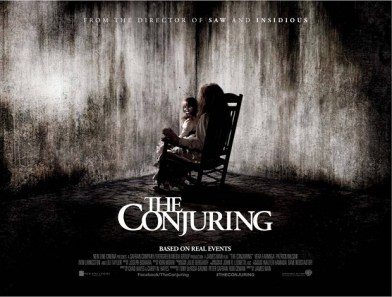
conjuring-posterWhen I first saw The Conjuring (2013) by director James Wan, I knew the film was special in its class. The sequel, The Conjuring 2 (2016), affirms the series’ uniqueness. At the end of my review, I’ll mention the standout point from the first film, but for now, let me share how The Conjuring is conquering its genre (see here for my thoughts on The Nun).
—SPOILER ALERT—

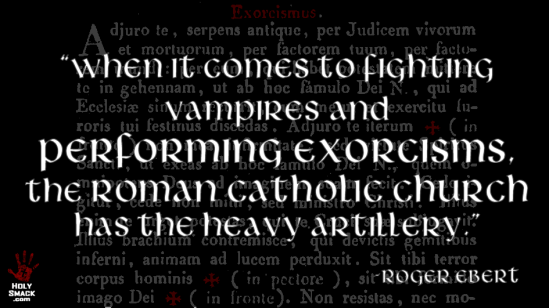
—–1) In this earlier review here, we learn that the writers for the movie series are devout Christians, and not only that, but are also devout Catholic Christians. Now although all Christians are similar in that we love and follow Jesus Christ, other Christians differ in that they broke away from the Church Jesus originally founded on St. Peter, our Lord’s first pope. Perhaps in a later post I can share more about this schism (to break away), but for now, we see in the film a few examples of why the Catholic Church stands apart from the Christian denominations that broke off from her to start their own churches. The first example is when we see Ed and Lorraine Warren discuss that any work they do must be cleared by “the Church.” And we all know that “the Church” refers to: the Catholic Church. Not the neighborhood community church, or the city central church, etc., but the Catholic Church. This reminds me of a quote from renowned movie critic Roger Ebert:ExorcismMeme

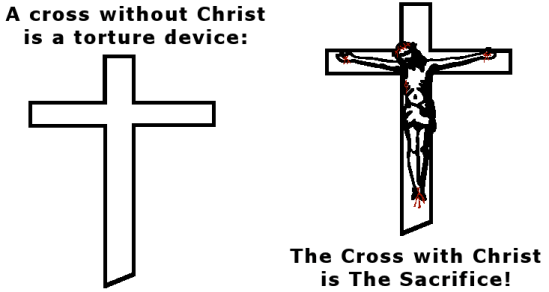
—–2) The second example of the Catholic Church’s primacy is the use and display of crucifixes in the film. Catholics and Orthodox Christians use and prefer crucifixes, and a crucifix is different from a mere cross: crosses do not have the little statue or image of Jesus affixed, but crucifixes do. In the film, we see a room covered in crosses, but the crosses are playthings to the demon. Evil does not fear two sticks glued together. However, when a crucifix comes out, especially when it comes out in the hands of a faithful and prayerful Christian, the demons freak. The key is that the crucifixion of Jesus Christ changes the mere cross into a weapon against sin and Satan. Without Jesus, a cross is merely an instrument of terrorism and torture, but with Jesus’ sacrifice, the cross becomes the beams that crush Hell. Here’s a little meme to summarize:CrossWithChrist

—–3) An extra sign of the Church’s power is in Ed’s use of Latin in his prayer to St. Michael the Archangel. We saw this in the first Conjuring (and in many other exorcism films), and it is reinforced here. To keep this short and sweet: Latin is the language of the Catholic Church, it’s the mother language of Catholics, and whether we know it or not, Latin remains our inheritance. In fact, real exorcists have claimed that Latin prayers have a extra punch to them than prayers in usual languages. Demons seem to despise Latin prayers, perhaps because the only culture that uses Latin in conversation today is the Church. In Latin prayers, the Church converses with her Lord Jesus Christ, and it’s a conversation most worthy of being had. Latin, because no other society uses it conversationally and daily, has become set aside (reserved) for the Church’s prayers. Latin, in a sense, has become holy (set apart, and in this case for serving God).

—–4) Next, it is true demons use fear to destroy us. When we fear, we tend to forget we are actually loved, actually guarded and prized by God and all Heaven. Many of us would do things exactly as the characters in the film: run, hide, scream, cry… and we should! But we should run to Christ! Hide in God’s light! Scream for the Lord’s mercy! Cry to the saints to pray with us, for us, to the Holy Spirit! Demons want us to be so afraid that we forget God, that we doubt He can help, that we dismiss His presence and focus on the demons and the crisis. Instead, we must turn to God immediately. As soon as trouble starts, and even before it starts, whip out your faith and call on Our Father who art in Heaven. In the film, we see Lorraine bust out her rosary when things get crazy. Don’t pay the demon any attention, but shower your gaze on Jesus, invite the Holy Spirit to nuke the sins and the demons. Get into the habit of using troubles as reminders to pray.Be Fearless

—–5) And at last, Janet, the star of the film, says something subtly profound at the end. After the literal Hell she has been dragged through by the demon, she believes she is so lucky! She actually says, “I’m so lucky!” and is not being sarcastic! She sees that all the terrors have been a way for God to lead her to love, to lead her to know two amazing and faithful friends in Lorraine and Ed. The evil was wicked and deadly, but God somehow knows how to work the horrors for Janet and her family’s benefit in the end. This is also true for the Warrens, when we see them realize that God has given Lorraine her gifts, and has allowed her to see the terrifying visions in order to help her save Ed and Janet from death. Most importantly, it must be said that we believe God never causes any evil, but He does permit evil to happen when we humans or when spirits (angelic or demonic) choose to commit evil out of our own free will. He might limit some of the consequences of our sins, out of His mercy, but He does permit us to use our free will, and only He knows how to set things up for our benefit. We must trust Him and do our best to do His will. To find out why God would take such a risk to let us have free will, please see this post.the_conjuring_-_uk_1757631a

—–And about the first Conjuring film: there was one line that jumped out at me. The mother in the film, after learning that the demon harassing her is the damned spirit of a woman who murdered her own child, says: “What kind of mother would kill her own children?” As soon as I heard this, I thought immediately of the millions of children aborted because their parents did not want them, did not love them enough to share life with them. The numbers are sobering: over 55 million children in America have been aborted since 1973, over 336 million Chinese babies have been aborted since the 1980s. And if you don’t really know what an abortion is and how traumatizing and violent it is for the mother and child, please see the abortion procedures here. So the question from the first film is actually pointing a finger at us as a nation, as a culture: what kind of society kills its own children?

—–The Conjuring 2 was a treat. It’s rare in film to see faith presented, the Church respected, and at the same time not in a cheesy lame way. I am grateful I got to see the film, and to share my thoughts. May God bless you and all those involved in the film in any way. Amen!

—–For a thoughtful and much more thorough review, please see Dcn. Steven Greydanus’ here.patrickwilsonconjuring2

Civil War and Sin

I’m always on the lookout in films for something bigger and deeper than the film itself on the surface. So watching the latest Avengers adventure (“Captain America: Civil War“) was no different. Here’s what I noticed:civil-war-spider-man-fan-poster


—SPOILER ALERT—


—–1) When Tony Stark visits Peter Parker, he interrogates the young Spider-Man, asking the kid why he’s been going around town in his costume doing what he’s been doing. Peter’s answer (paraphrasing): “Because if I can do what I can, but don’t do anything, and something bad happens, then it’s because of me.” In other words, Peter is concerned about sins of omission. We Catholic Christians are supposed to confess this at every Mass when we say our Confiteor (“I confess”):

I confess to almighty God
and to you, my brothers and sisters,
that I have greatly sinned
in my thoughts and in my words,
in what I have done
and in what I have failed to do,
through my fault,
through my fault,
through my most grievous fault;
therefore I ask blessed Mary ever-Virgin,
all the Angels and Saints,
and you, my brothers and sisters,
to pray for me to the Lord our God.

That’s right, it’s not just the wrongs we actively do that make us guilty, but also the good we could have fully done but actively chose instead not to do, aka: “sins of omission,” since we omitted a good we could have done. Of course, for Peter, he’s probably referring to his Uncle Ben’s death, since he could have easily stopped the armed robber earlier, but chose not to out of vengeance, which then allowed to the robber to rampage and murder his uncle, his uncle who did try to stop the robber (and avoid a sin of omission). So, start thinking, how can you too avoid the sin of omission?

This basic lesson applies to Iron Man also, in the first film when he, through negligence, allowed his weapons to fall into terrorist hands. That negligence then harmed many people, which then led to Tony creating the Iron Man suit so he could rectify his sin of omission. Which leads me to the next point from “Civil War…”

—–2) Later in the film, Steve Rogers (Captain America) tries to convince his once-brainwashed buddy, Bucky Barnes (the Winter Soldier) that he is innocent of all the murders and violence he perpetrated since he was not free to choose. He was forced under psychological conditioning, which means he was not culpable (guilty) at all. Yet, Bucky says: “But I still did it.” He knows he is still responsible in some way, and he must make amends somehow.

This hope to set things right, to fulfill justice is part of the Catholic Christian’s understanding of atonement, penance: we may not be able to right our every wrong (and we especially cannot when we insult God, since an offense against an infinite being is automatically an infinite offense), but we still want to try and offer something. This is because being forgiven prompts us to respond in gratitude for having been forgiven (see my essay on Luke 7:36-50) in the first place. We want to return the item we stole, pay for the medical care for the wound we inflicted, repair the car we smashed, apologize for the trust we betrayed, learn from our mistakes and improve ourselves for the people we love.

In Bucky’s case, he decides to have himself locked away until he can be free of his brainwashing, in order to keep people around him safe from himself. Justice is served here, though in a little way.

—–3) Finally, the end of the film sees the main villain admitting his life was lost to his seeking vengeance. His confession moves the Black Panther to realize that he also was losing his life to seeking vengeance.

That’s the ironic thing about revenge: it always harms the avenger more than it satisfies justice, always harms the avenger more than the first offender. The principle is simple: the only thing worse than being a victim is to be the victimizer. And once someone chooses to avenge, and thereby be the victimizer, then they themselves have lost–have forfeited their dignity, honor, and soul.

In the film, Black Panther drops his revenge spree and not only spares his father’s killer, but even saves the villain from suicide so that he can serve justice by the rule of law (and hopefully be rehabilitated and redeemed).

—–) So that’s the good I got out of “Civil War.” It was not a poor film at all, better than the other Avenger films of late, actually! And these moral tidbits surely saved it from being a waste.

2016-05-05-1462415681-9859308-captainamerica

The Young Messiah

messiah_1sht_3k_rgbBiblical films that surprise me and move me are the only ones I recommend, and that’s not an easy thing to do since I am a very critical viewer with a high aversion to cheesiness. But I am glad to say “The Young Messiah” was worth the admission cost and worth my two hours and months of waiting. Here’s why:


SPOILER ALERT


—–1. Imagination: films like this are a great example of what St. Ignatius of Loyola calls “contemplation”, which is none other than using our God-given imagination to picture the Scriptures and put ourselves in the Biblical scenes. Doing such dedicates our mind to God, allows the Holy Spirit to help us see something we hadn’t seen before, notice a detail we didn’t know, discover God in a deeper and more profound way. Also, contemplation helps us not waste our mental power on lowly things, or in other words: dedicating our imagination and wits to contemplation keeps us from doing stupid things with it, wasting our imagination on perversions and derogatory daydreams. Your mind was made to think about beauty, glory, endless awe and wonder, lost in the infinity of God. And movies/stories like this show us how to do it: it all starts with a question, and it can be as simple as wondering how Jesus was like when He was still growing up.

the-young-messiah03—–2. Joseph: the man we see here guarding the Holy Family is no wimp, but he lives up to one of his many nicknames: The Terror of Demons. Joseph is depicted as courageous, loving, strong, gentle, and ready to die to protect Jesus and Mary. I got to see this movie with a group of friends, and it was overwhelming for us all how inspiring Joseph was in the film, especially when he tells Mary that she should not fear anything, but that the world’s most powerful and fearsome armies should fear her instead! Think about it! She is the mother of God, and God the Father custom made her to be the mother of His Son. God even honored and respected Mary enough to let her choose! So if anything were to happen to her, all Heaven’s legions would probably swarm down on her attackers.
Joseph knows how special Mary is, and he is prepared to do anything for her and Jesus. For more about this great saint, please see my post on Not the Average Joe.

—–3. Mary: If there’s one near impossible role to play on film, it’s the role of Mary. No film has depicted her up to my standards, not even the epic “Passion of the Christ” does the Queen enough justice! But this movie actually gets pretty close, and in fact is my favorite depiction of our Lady. We see her ponder in her heart about her Son, we see how humble she is: humble enough to wonder if she can bear the suffering that is destined for her little boy. Just as we see Jesus growing and increasing in wisdom and stature, we see also His mother doing the same: growing in strength needed to surrender her child to the sacrifice He was sent to accomplish.

But perhaps what made my eyes water the most was watching Mother tell Son His story. And how she described the Annunciation, the simple beauty of the moment history changed course forever, and it changed because she said “Yes” to God’s proposal. This scene is hard to discuss anymore than that, so you’ll have to just see for yourself what I mean.home_youngmessiah

—–4. And the best for last: the boy Jesus. We see Him bursting with healing, and there was such power and desire to do good, so much but I’d like to point out two events in the film. The first is when Jesus raises a boy from the dead, and not just any boy. But a boy who bullied Jesus and wanted to hurt Him. So we see here Jesus not only forgiving His enemy, but healing him also. And when the bully rises, he continues striking Jesus, beating him from where he left off. This reminds me of us: how many times the Lord has brought us back from certain spiritual death, yet we deny Him and betray Him, abandon Him and even curse Him so we can return to our miserable sins. Truly we are a tragedy when we do so, when we reject Love Himself.

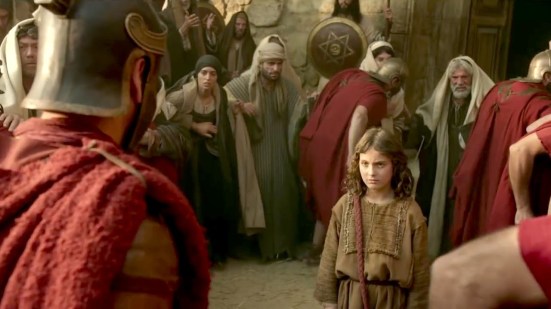
Another event is when the Roman Centurion, Severus, has caught the boy Jesus at last. There really is no escape for the Holy Family, except that Severus has seen the incredible might and goodness of Jesus. He has seen the healings, he has heard the witness accounts, and he knows that the world needs this — he himself needs this, this Jesus. You see it in Severus’ eyes that violence and death has defeated him (Severus was the one who executed Herod’s command to massacre the children of Bethlehem), and that he now wants more to life. He wants life rather than death, healing instead of killing, and goodness instead of malice. And all that life, healing and goodness was standing right in front of him.the-young-messiah-header

We should also know that by defecting on his mission to assassinate Jesus, Severus risks being reported to his superiors and then executed for treason. Severus is willing to risk his own life to let Jesus live on, and so we can see him here as a sort of first martyr for the faith!

So when we next see Severus, we see him carrying the toy camel that belonged to Jesus. It’s a relic. And it reminds Severus of the hope that this boy Jesus has brought into the world, and changed everything. Think about it: if He can bring people back from the dead, wouldn’t that change all we know about the world? If He can reverse absolute and certain death, what else can He do?! And of course we find out what more He can do at His Resurrection.

So knowing this, we also must decide if we let Jesus live, or do we kill Him? Will I let the Lord live in my life and heal me of my wounds and evils? Or will I kill Him by rejecting Him, and thereby kill myself also? Will I listen to my conscience which wants goodness and life to win, or will I listen to the Evil One and choose death and defeat?

—–BONUS: Jesus Wept. There is a scene where the boy Jesus asks an old rabbi about what happened in Bethlehem seven years ago. And when He learns of Herod’s slaughter of babies, we see tears in Jesus’ young eyes. He knows now that all those children were martyrs for Him. They were massacred to shield Him, they died so that He could bring all back to new life, and a glorious life at that. And He will make it up to them by dying for them in return, in love.

—–For a great professional and in-depth review, check Deacon Greydanus’ here.

—–More about how much Jesus knew while He was increasing in wisdom and stature.

theyoungmessiah_07-_h_2016

Risen to the Occasion

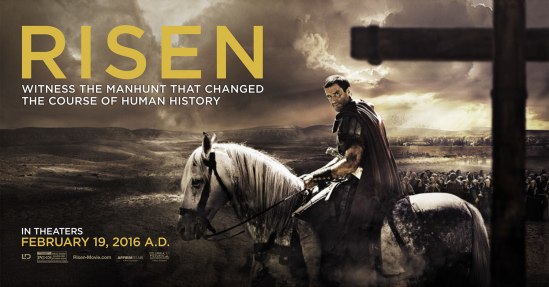
risen_posterLast week, I viewed the newest film on Jesus: Risen, and while it did not rise to the occasion of my expectations (I had great hopes for it), I did come away with a few highlights (I try not to focus on negatives). Here’s what I mean:
SPOILER ALERT

—–1. All about the Resurrection. We have a film on the Passion of Christ, and here is one about the implications of a man coming back from the dead. Many of us, Christian and non-believer alike, seem to forget that people do not do this: nobody comes back to life after being definitively dead, entombed, and decaying (you bet decay started after three days!) No near-death-experience is possible after a person’s heart is lanced and his body is wrung of blood and water.

Yet here Jesus is, alive (yes, we Christians believe this absolutely, even to the point of death), and not merely a resuscitated zombie of a corpse with gangrenous flesh. Jesus is healthy, strong, powerful, and yet still gentle and smiling. Jesus is glorified.

I don’t know about you, but if my friends abandoned and betrayed me, and my enemies tortured and massacred me, first thing I would do after my resurrection would be vengeance. Vengeance! (Be thankful I’m not God.)

But Jesus? He actually lived (and lives again) what He preached. He loves His friends and His enemies. We see this in the film especially when He even welcomes Clavius, the tribune who ordered Jesus’ heart stabbed, to join Him and His Apostles on their journey.

—–2. Which brings me to the point about Clavius when he says what he wants most in life: “a day without death, peace.” Isn’t that what we all want? A day when life kills death? When death no longer has the final say? When death is not the end? Well, that is exactly what Clavius and we have now in Christ.

Once the resurrection happened, death lost its final say: death died. It means that God is greater than death, that death is nothing, that we should not fear death since Jesus can flick it away like it was a leaf. Imagine Jesus: Oh, I’m dead… boo hoo, what can I do, what can I do… hmmm… I know — I’ll just get up!

It’s really that easy for God. And if He can raise Himself up, what makes anyone think He cannot raise others?risen-an-exclusive-movie-clip-for-tbn-youtube-370

—–3. Lastly, now that Jesus is resurrected, that also means that everything He teaches and says is true (and we gotta follow Him). He really is God. Because if He died and stayed dead, even though He said He would rise, then we would just dismiss Him as a liar or an idiot. But He actually came back. Just remember this: God not only became a human for you, not only was born for you, not only lived for you, suffered and died for you, but He even came back from the dead for you, to love you.

You must be pretty special to Him, for Him to go through all that trouble for little old you…

—–4. So go see Risen if you wanna. Nothing in it really put me off or can make me ward you off, but one thing’s for sure: once I saw it, I don’t think I’ll ever make time for another viewing. It wasn’t that special. The book is definitely better. And yet for a better and more thoughtful review, please see Dr. Taylor Marshall’s here.

mc_risen_fb

Reviewing The Revenant

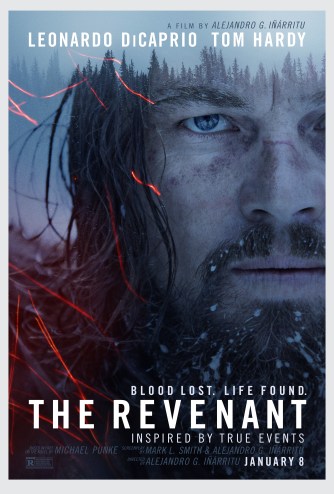
During the little blizzard today in Detroit, I got the chance to see “The Revenant“. Though the movie is set in the winter of the American Midwest, it was a film on fire. Here are three major points in the movie worth a Holy Smack about:RevenantPoster.jpg


—SPOILER ALERT—


—–1) The misuse of Christianity: we see Tom Hardy’s character (Fitzgerald) spouting the Lord’s name and calling on God for all the wrong reasons. Most of us do this when we curse God, or use His holy name as a curse, or worse! This is extremely insulting to God, Whose name is power, love, grace, life, truth, beauty, goodness, almighty. To use His name for pathetic things, for things against His will and identity, is offensive. We also see an example of this wickedness when people use God and Christianity as an excuse to do evil: American slavery’s justification that Africans are descendants of Cain (their “mark” is the color of their skin).

In the movie, we also see misuse with the “Our Father” prayer (aka: the Lord’s Prayer) when the captain forces someone to say it under distress and threat of death. Prayer is not a tool for threatening or torturing someone. Prayer is a gift we get to have to talk with God. Its use any other way is a depravity.

—–2) But then the movie shows the correct use of God’s name and Christianity, in two ways. First we see Leonardo DiCaprio’s character (Hugh Glass) approach a Catholic church in his dream. The church is in ruins, its bell is hanging on edge but still tolling away, and its icons are aged but dazzling: it’s the most colorful thing we see all film long. We see the saints, and then we see the crucifix: Jesus on the cross. We realize that it is Glass’ son, Hawk, who is in the church waiting for his father. He holds a fire to the crucifix, letting us see the Lord’s feet.Revenant2.JPG
As Glass enters the church, he finds his only son waiting for him. We also know that his only son had died for him already, earlier in the film. The connection becomes apparent: God lost His only Son, and Glass lost his only son. Glass suffers here with God the Father. At this point, we see a connection with what Glass told his son before: “You are my son”, as in “You are my beloved Son” when God speaks at Jesus’ Baptism (Matthew 3:17). The film is truly a film about a father losing his only son, and learning to suffer with God.

Another insight about this church scene: no matter how broken down the Church appears, the Church remains a place where our loved ones can be found. In the Church Triumphant (Heaven) and Church Suffering (Purgatory, enroute to Heaven), we find reunion with those beloveds we lost. They await us! They are in the Father’s home and they are waiting; we only have to go to the Church to find them. The Church is the family of God, the body of the Lord. So next time you are at Holy Mass, realize that all Heaven is there with you. All the angels, all the saints, Almighty God is there with you, for you.Revenant1.jpg

—–3) Finally, the film shows us Glass surrendering justice and revenge to God’s control. Whenever anyone is so close to a climax, so close to completing (achieving) an intense act, it takes incredible self-mastery and will power to stop. In this case, Glass stops just short of killing Fitzgerald. He remembers that his friend had also lost his family and home to murderers, and his friend said “Revenge is in the hands of the creator.” His friend’s act of letting God be God comes back to set an example for Glass, who says here, “Revenge is in the hands of God.”

Surrendering his quest for vengeance to God is the same as surrendering our quest for justice to God. Actually, it’s the same as surrendering anything to God. When we let God have control, we are letting the person who knows everything, who knows every perspective and nuance and secret, make the call. We don’t know it all to make a good call, but He does.

We also must realize that God loves us more than we love ourselves. Hawk’s murder hurts Glass. But it offends God even more, in fact, infinitely more because God is infinite! And so His love is infinite! So murdering Hawk offends Glass, but offends God forever (unless it is atoned for and repented of). Even more: since God loves us so much and went as far as dying for us, anyone’s murder means that the murderer is spitting in God’s love, saying effectively that He died for nothing. Example: I love my wife, I love her enough to die for her. Someone comes along and says I shouldn’t die for her because she’s not worth it, that in fact she is so worthless that she should be killed. I would be very insulted, because I love her enough to die for her!

But God already did die for us. And everytime we murder, cheat, betray, hate others, we insult God because He loved enough to die for them. We are telling God that He died for worthless people.

And so, Glass’ surrendering of vengeance to God’s providence shows us we should do the same. And by doing so, Fitzgerald’s last taunt falls limp: he says that getting revenge will not bring back Glass’ son. Hawk is dead regardless. And that’s true…

But God can resurrect us all.

And Glass’ act of virtue (surrendering revenge to God) guarantees he and his son will rise and be together again.

—–So as you can see, you should see “The Revenant”.

—–Bonus) Anyone else get the feeling that Glass’ wife was a type of Mary? The way she whispered to him in his memories was like prayers, the way she appeared was like apparitions, guiding him and encouraging him.

—–Bonus 2) Being that the film is set in 1800s America, the church shown most likely had the Traditional Latin Mass (I just had to say it).

Revenant3.jpg