 A dozen of us from the seminary just experienced in IMAX Christopher Nolan’s latest film: Interstellar. There was so much nourishment in the film to milk, that I’m going to have to return for seconds during Thanksgiving break, but for now, here is what left me most satisfied (and no, it’s not just the Buddy’s Pizza we just inhaled):
—
—
—
—SPOILER ALERT—
—
—
—
—–1) About halfway through the film, the astronauts come to a fork in their journey and have to decide definitively which planet to visit. They appear to have two solid options, but Anne Hathaway’s character – Amelia Brand – chooses illogically and with great bias. The other two crew ask her why, since their choice is more reasonable and has better chances. Her answer made the audience laugh, me included. But then Ameila explained, and I caught myself falling in love with her answer. It resonated with me. I myself thought about it for a long time: Why does love exist? What is the reason for love?
Answer: there is no reason for love, because Love IS the reason.
Here’s what Amelia said, roughly paraphrasing: I choose this planet, and not the one you have decided on, because somewhere on this planet is the man I love. I cannot explain why, but I know my heart, and I’m trying to follow it. It doesn’t make sense, but that’s because love transcends what we can sense, what we can measure and quantify and experiment on. Love cuts through time and space, because even though I haven’t seen Edmund (her lover) for years, I still love him and am drawn to him. Even though I have every reason to think he is dead, I need to be with him, to know for sure. There’s no reason any of us should keep loving people who are gone, who are far off, who we may never see again, but we still love, because love is the only thing the universe cannot explain.
And the reason why the audience laughed was because we thought she was going to be all mushy and sentimental about her choice: Oh, here we go again… all this follow-your-heart and lovey-dovey stuff… bah humbug!
BUT that’s where Philosophy and Theology kick in: it is true that love transcends the world, the universe. It is completely beyond what is necessary for the universe to keep going, and also completely unnecessary. Love, in short, is supernatural; it’s above nature, not found in nature, and does not naturally occur. Animals, plants, and atoms do fine without it. Love can even put us at risk of danger. Nature would be fine (maybe even better) if love didn’t exist, except that it does exist. And if this supernatural thing we call love actually exists, that means there’s a whole bunch of stuff out there that is beyond our science (“stuff” like God, the Divinity, the Creator). The film even lays it out: “Science is about admitting that we know so little.”

[Cain murders his brother, Abel. This screenshot is from Darren Aronofsky’s “Noah”.]
—–2) When the remaining crew land on a planet and revive Mann, a huge twist in the story comes up and reminds us of Cain and Abel. The parallels are unmistakable: Mann is Cain, and both are the elder character (Mann was on the planet first and for a longer time). Cooper is Abel, both were the younger character (Cooper arrived later on the planet). Mann tells Cooper (Cain tells Abel) to go out into the field (the wilderness) with him, and that’s when the elder rises up against his brother out of selfishness and seeks to murder him (see how similar it all is to
Genesis 3).
Right away, goosebumps filled my epidermis: here they were, in a new world, ready to begin another civilization, and here was the original sin, back with vengeance. Our fallen nature as sinners goes with us wherever we go, even to Saturn, even through a wormhole into another galaxy, even to the edge of a gargantuan blackhole. We cannot rise above without help from outside the human race. Our world/s will be tainted, like the cursed Midas Touch.
Coincidentally (but probably not), the film’s mighty organ music pipes up during this scene (track “Day One Dark“). Given that the organ is rarely featured in film scores, and the prominence the organ has in this very Biblical scene, one has to wonder what Mr. Hans Zimmer was implying by using this instrument that was adopted specifically for the Traditional Latin Mass of the Catholic Church. [Update: click here for all about the selection of the organ for the score!]
—–3) Jessica Chastain’s character – Murph – goes behind her big brother’s back and undermines him and his [insane] will for his family’s future. The tension builds as he returns to discover his sister’s cunning, and just when we think he is going to do something terrible to everyone, Murph runs out to him, smiling, gushing with hope and love, and she embraces him. Immediately, I knew the phenomenon. I experienced is many times and have dubbed it “Severe Tenderness”. It goes something like this: A few years ago, I was at work one day at the sushi restaurant. My shift on Friday evening was the forbidden hour. I was regularly alone at the front during the dinner rush (4-6pm), taking orders, running orders, preparing dishes, washing dishes, cleaning tables, etc. I learned how to work without thinking, to grow four extra arms, and to lose my temper. But always at 6pm, backup would arrive and pitch in. This woman only worked for two hours (6-8pm), but when she would arrive, I was ready to dump all my frustration out on her. Except, when she came up to me, said hello, asked how I was, and so ready to help me… my anger, stress, and tantrum melted away.
Her smile and sweetness was tender enough to soothe me, yet severe and powerful enough to cut through all the mess that was attacking me. It was instantaneous, and instead of blowing up in her face, I smiled back and worked even harder to help her have an easier evening at work. She became someone for me to serve, and I loved it.
Severe tenderness is a gift, a strength not everyone has, and even in my life there are only a handful of people who have that effect on me, consistently. But don’t go and try to see if you’re one of them, okay?
—–4) At the epic’s end, we find Cooper being sent on a mission: somewhere out there in the new world (new planet) is a new Eve (Amelia). It is not good for her to be alone. Go find her. She’s waiting for you. Be her new Adam. (Yes, strongly echoing Genesis again!) [This also strongly hints how Mary (the true New Eve) comes first and awaits the coming of Jesus Christ (the True New Adam!).]
And when Murph tells Cooper of this, reminds him about Amelia, his love for Amelia is roused. This reminds me strongly of the love story found in the Book of Tobit: the love of Tobias and Sarah. You’ll have to find it in the Bible yourself, read it and watch Interstellar to understand what I am saying. But trust me. It looks pretty parallel to me.
 —–5) Lastly, Interstellar mentions cryogenic-embryos as part of the backup plan to ensure mankind’s survival. I’d like to point out that the film eventually determines this option to be inadequate, because it means giving up on saving those who are alive. This is not the only reason why cryostorage (super freezing) of human embryos is morally evil, mainly because human persons deserve better than to be left vulnerable in canisters and left there as a resource to tap, manipulate and own. I won’t go any deeper on this point for now, because my philosophy thesis is on this issue, and when it is finished, I’ll be sharing it then. This review is already lengthy enough.
—–BONUS) The biggest plot hole in Interstellar is actually a powerful sign of a something more. Philosophy labels this “plot hole” in reality the Infinite Regress. This is a bit difficult to follow, but hear me out:
At the film’s end, we discover that:
a) Cooper goes back in time to tell his past self (call this Cooper2) about the secret NASA coordinates.
b) Cooper2 gets the message and goes to the NASA coordinates, and begins his journey.
c) Cooper2’s journey leads him to the blackhole, where he finds a way back in time to tell his past self (call this Cooper3) about the secret NASA coordinates.
d) Cooper3 gets the message and goes to the NASA coordinates, and begins his journey.
e) Cooper3’s journey leads him to the blackhole, where he finds a way back in time to tell his past self (call this Cooper4) about the secret NASA coordinates.
f) Cooper4 gets the message and goes to the NASA coordinates, and begins his journey.
g) Cooper4’s journey leads him to the blackhole, where he finds a way back in time to tell his past self (call this Cooper5) about the secret NASA coordinates…
ETC. ETC. ETC. for infinity…
But, who told the first Cooper [about NASA] in this infinite chain that goes nowhere and leads nowhere? Was it another Cooper? In that case, who told that other Cooper? And who told that Cooper? And that Cooper? And that Cooper? Etc. How do we even know that this chain of events can change?
This unsatisfying answer/explanation is actually a way to dodge the question, because it gives you no knowledge of anything. This is the INFINITE REGRESS, and it shows that we have to find the first person who started off everything, aka: the first causer, the one who is outside of the chain, outside of our universe, outside of Creation, outside of our reality, outside of the Big Bang, the one who started it off and set things in motion. Philosophy (and St. Thomas Aquinas) calls this first cause by the name God. Theology calls Him Father.
For those of you who want to give Philosophy a go, here’s an excerpt from page 217 of the text (The One and the Many) we’ve been studying in class at seminary (to further flesh out this concept):
—
All in all, despite some shortcomings in the film, the good points far outweigh the bad. I was very impressed, and was left breathless at all the science, philosophy, subtle theology, love and sacrifice blended together in harmony. I loved being tested on how much I knew and if I could follow along, instead of being spoonfed (like how most of Hollywood does). Thank you, Lord, for storytellers like Christopher Nolan and Co., and thank you for creating us with the wits to enjoy such stories. Amen!

—
—
Just viewed Interstellar again (Nov. 29th, 2014) and had a few more sweets to share with y’all!
—–6) We find out about the MONSTROUS LIE, the temptation Mr. Doctor Brand (Michael Caine) used to bait Amelia and Cooper on the mission. This scene became clearly alluding to the Original Temptation in Eden, when the serpent lies a monstrous lie to Eve, and Eve’s fall brings down Adam (arguably because Adam did not rise up and smash the deceiver instead!). In this film, we see the same thing play out, and the lie, no matter how good it sounds (because nobody wants something evil, but we all want things we may think are good), is always deeply hurtful to the relationships involved.
—–7) Plan-A, or Plan-B? One of the main objections to Plan-B in the film (and rightly so) is because it gives up on those on Earth. It condemns the living to death, labels them hopeless, and then dismisses them. This reminds me of the Pro-Abortion mentality: a woman becomes pregnant, and since she cannot raise a child because of poverty,diseases, etc., she and others are pressured to abort the baby. The baby is condemned to death and the mother is condemned to murder. The child is labeled hopeless and the mother is hopeless if she does not kill her child. The child is dismembered and dismissed as medical refuse, and the mother is dismissed, left to her own again, so that if she was in poverty then she remains so, or if she was abused and raped then she is vulnerable to being harmed again, or if she experiences post-abortive trauma then she is left to struggle with that alone. Plan-B is the first failure. And Plan-A is amazingly open to the genius of man and the providence of God.
—–8) St. John Paul’s Theology of the Body more than mentions the FEMININE GENIUS, and Interstellar is supersaturated with it. Throughout the film, we see a very strong showing of girls and women who know truths beyond science, beyond logic and beyond explanation. We understand this supersense that is peculiarly feminine as intuition, and we see this when Amelia schools us all about love and its transcendental nature, and we see this when Murph calls the ghost in her bookshelf a person, and we see this in how the love of father and daughter knows no bounds, and how Murph arrests her furious brother’s heart and wins him over (as discussed in #3 above). Just view the film with this Feminine Genius in mind, and you’ll see what beauty I mean.
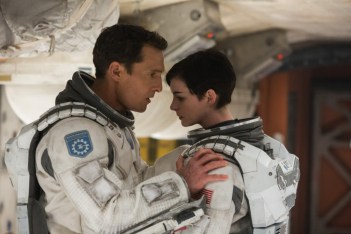 —–9) And the New Adam/New Eve typology (symbolism of Jesus and Mary) goes further still! When Cooper detaches from Amelia and the rest of the Endurance Space Station, he plummets into the black hole, sacrificing himself in order to let Amelia rise to safety and continue on to the new world.
Compare this with the Gospel: Jesus Christ surrenders Himself to the Crucifixion, sacrifices Himself and plummets into the place of the dead (aka: Hades). He is buried in the tomb, which is a black hole in the cave, in the ground. His sacrifice allows, actually it propels Mary (as New Eve and as the beginning and perfection of His Church) to rise and continue into a new world, a new redeemed Creation.
Lastly, recall that Amelia also believes Cooper to have perished in the black hole. She thinks herself alone now in the new world. But… Cooper is on his way to her, seemingly rising from the dead, out of the black hole and back to be with her. Now if this don’t sound like the Resurrection…
—–And that’s all I got. For now… let’s see what a third viewing brings…

 Last weekend, a book became a movie that should’ve never even been a book in the first place. But alas, here it is… 50 Shades of Grey.
 When Mako and Prince Wu are sharing their stories with each other, Mako shares with us what he learned from his time with Korra, and then with Asami. The takeaway here is that when we date, we should be able to breakup without turning our girlfriend/boyfriend into an enemy. If the two do become enemies, then what was the relationship worth in the first place? Obviously then both were too immature and irresponsible with one another’s hearts. Now, this doesn’t mean the two cannot argue. Arguing is actually a healthy thing if the argument is over something extremely important! But it’s vital not to tear each other down in the argument, but to work together and find out the truth. Arguing should strengthen your relationship, not bomb it into oblivion.
 First, the whole series has been recurrent with self-sacrifice. We see this again, but this time Korra sacrifices herself to save an enemy (no one before Jesus ever taught us to do this!). Especially noteworthy is that it’s Kuvira’s own weapon that is going to kill her, until Korra steps in as a body shield. This analogy fits well with how Jesus took on our fallen nature and our sin (our own weapons, our own mess and selfishness was going to condemn and kill us) and died in our place.
 Second, after both Korra and Kuvira are blasted into the Spirit World, Korra shares that she has finally realized that all the suffering she has gone through actually were blessings in disguise — without them she would not have matured and grown in wisdom, humility and compassion. Throughout the season, she was struggling to find meaning in her near-death experience and past trauma, and it was only after saving Kuvira that Korra understood. This is one reason why Christians believe suffering is permitted (not caused directly) by God, and that just because someone is suffering does not mean it is better for them to die, thus why euthanasia is morally evil (because murder is a sin, but suffering can be for our good as long as we suffer with Jesus).




![[from W. Norris Clarke's "The One and the Many"]](https://holysmack.com/wp-content/uploads/2014/11/infinite-regress.jpg)


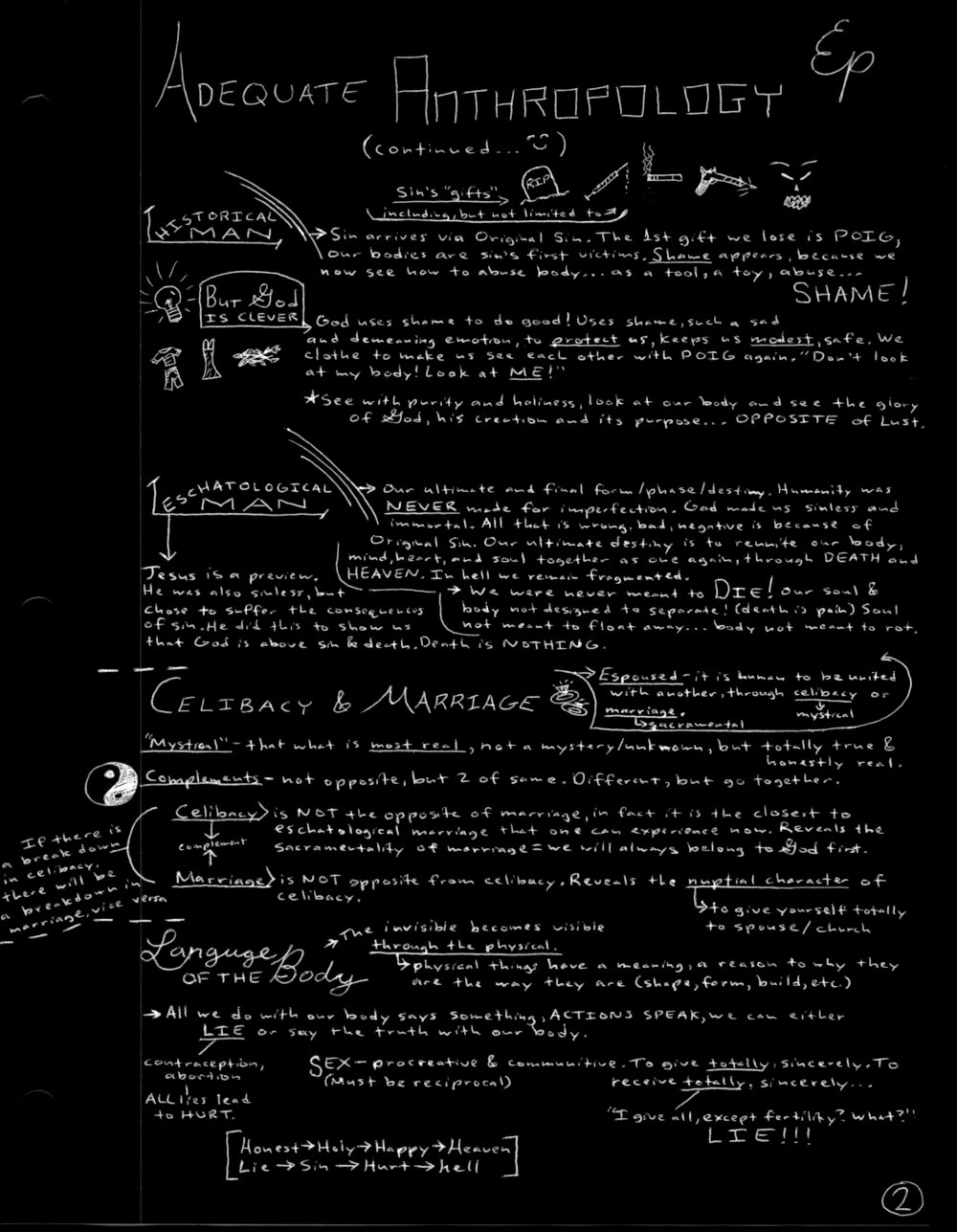

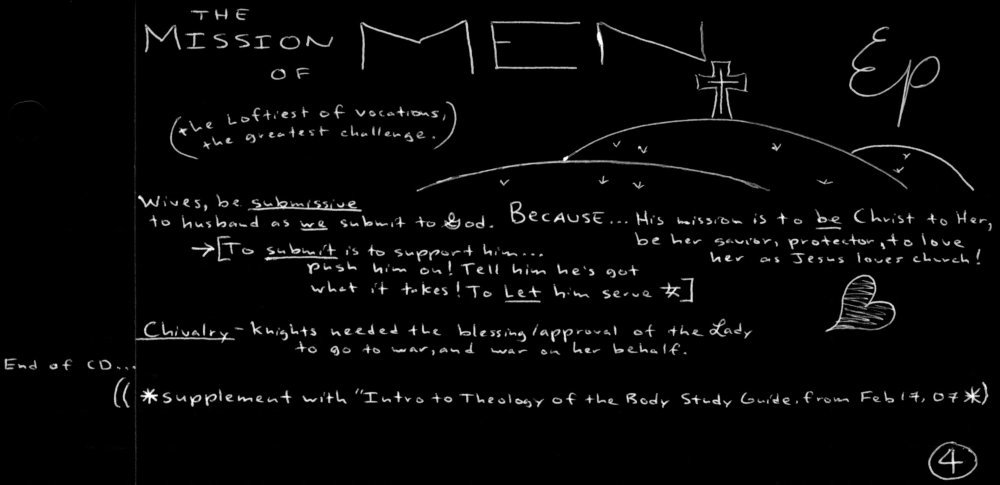



 So God took the humongous risk: to create so that his children have free will. Free will for what? Free will to decide if they will love each other, to love Him back. If He forced them to love, that’s not good enough because it ain’t real. So He let us choose, and many choose not to love others, not to love Him… but those who do choose love, well then their love is true, real, free, total, faithful, and fruitful (or at least become that way eventually).
 —–4) Finally, we see in the film an example of the best way to crush an enemy: by making him into a friend. After all, if you kill your opponent, he dies as your enemy, he dies in evil ways (assuming you are right and he is wrong) and you become his killer. But, if you can win him over, get him to understand and believe in your cause, then he becomes an ally, a friend, and the evil in him dies and leaves nothing left but love and friendship. The person is not the enemy, but it is the evil he thinks, believes and does that is the true enemy.

.jpg#mediaviewer/File:Creaci%C3%B3n_de_Ad%C3%A1n_(Miguel_%C3%81ngel).jpg)


 Look into her eyes and tell me they just got their color and shape because of 7,000,000+ years of human evolution. Tell me her voice is just noise vibrating from vocal cords in her throat, and that her words communicate thoughts that are merely electrical charges passing from one neuron to the next.
 own, share honeyed tea with her and overlook how her lips kiss the porcelain — it’s nothing but the animal need to satisfy thirst. In fact, it’s all just an animal need and an animal reaction. If she was struck dead by one of many cancers, or fatally stabbed through the blood-brain barrier, just go and find another female human to perpetuate the species. She was weak, sick, and too stupid to protect herself anyways… it would’ve been bad to have her pass her genes onto the next generation.
 Unless… unless you love her like I do. Unless you see signs of God through her person – and by person I mean everything that is hers. Can you not realize that no chance process set her fingers so that they fit so warmly into yours? No toss up tuned her voice so that you can hear music call your name from even across busy streets. There’s no way she wasn’t thought up and nurtured by Love. Something – someone so beautiful and precious to you could never be merely a thing rolled out by an expanding universe of matter… she could only be a holy miracle.
 Holy Smack