Will You Also Leave?

Even when Jesus walked this earth, even when people saw His miracles, even when some followed Him, many more left Him when they did not like hearing what He taught.

They abandoned Jesus because His words were too difficult, too harsh, too extreme, too loving and honest (think of his teachings on divorce, marriage, lust, and the Eucharist).

They left because they never believed in Him in the first place.

Today, people who once walked with Jesus are now deserting Jesus, again. It’s called a great apostasy. And this time, the difficult, harsh, and [one of] the extreme issues is this: choose life for every child, do not murder children anywhere, including in the womb. And there really is no acceptable excuse, despite what fakeful Catholyks may say (e.g., Tim Kaine, Nancy Pelosi, Joe Biden, etc.).

If you knowingly vote for pro-abortion politicians, then you automatically vote against Christ. Then you are no Christian. You have become a hypocrite.

If you are voting pro-abortion politicians, here is why I cannot do the same (please watch this video and listen carefully, for your own awareness and informed conscience):

(Find the video transcript here)

Is that too hard for you to accept? Will you leave Christ and His Church over this difficulty? Is it really that tough to want babies to have birthdays?

Is it really that confusing which presidential candidate you must not vote for, because they are against Christ and His Church?

deservebirthday

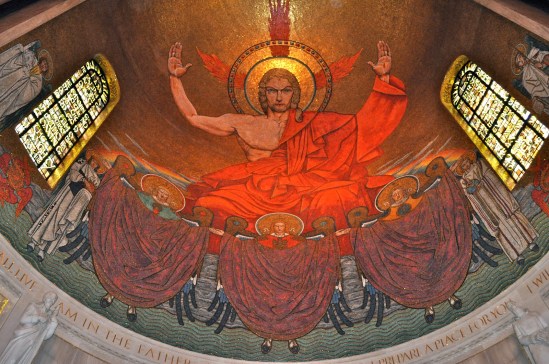
Scary Jesus

jcjudgeenhMost of us are familiar with merciful, loving and forgiving Jesus…

But there is a side of Christ we often overlook, a side that is justice, holiness, judgment, and power. And it is scary, especially for us who love the Lord and do not want to sin.

Here are two things that Jesus says that frightens me (really smack me with holy fear and trembling), because I never want to hear Him say these to me or to those I love:

—–1)

“Not every one who says to me, `Lord, Lord,’ shall enter the kingdom of heaven, but he who does the will of my Father who is in heaven. On that day many will say to me, `Lord, Lord, did we not prophesy in your name, and cast out demons in your name, and do many mighty works in your name?’ And then will I declare to them, `I never knew you; depart from me, you evildoers.‘ (Matthew 7: 21-23, RSV)

Can you tell which part scares me? Yes, the part I italicized and bolded: “I never knew you…”
Think about it: for God Himself to say that He never knew you, you who He created, you who He knew from even before He made the universe, and suddenly He “never knew you.” What does that even mean?

It means that God made us and does know us through and through, better than we know ourselves. But, He made us to be a certain way: He made us to be good, true, beautiful, loving, and holy. But when we choose to live in sin, when we choose to be evil, to be liars, to be disfigured, hateful and wicked, we become unrecognizable to God. He did not make us to be cheaters and murderers and demons. He made us to be His beloved children.

And so, our sins alter who we were destined to be, our sins deprive us of our destiny, and we choose (through our lives of sin) to become disfigured and unfamiliar to God, because we ourselves have become unfamiliar with God and no longer know Him either.

If God, almighty maker Himself does not know us, then who can? I am truly lost if He never knew me. I am truly gone if He tells me to depart. I am truly evil if He calls me that.

—–2)

“But Jesus answered them, “You are wrong, because you know neither the scriptures nor the power of God.” (Matthew 22:29, RSV)

As for the scary part here: if God Himself says that I am wrong… then I am wrong absolutely. Think about it: the Creator says you are wrong! The sculptor of stars, seas and summits has declared you to be wrong. The omniscient, all-knowing, and infinite mind! I cannot be any more in error if Truth Himself says I err, and since I want to know the truth, to live in the truth, and to be truthful, being so wrong terrifies me.

For me, those are the two most horrific things that Jesus says in Sacred Scripture. I have many favorite, non-scary, lines from the Bible, but those are for another post. For now, just know that we must read God’s Word seriously. When He Himself who made time speaks, His words are forever. When Truth Himself speaks, His words are THE truth.

dsc_0024

Judgment Day Jesus

The Conjuring is Conquering

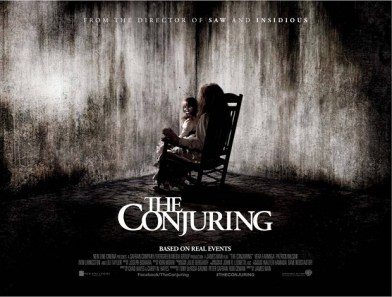
conjuring-posterWhen I first saw The Conjuring (2013) by director James Wan, I knew the film was special in its class. The sequel, The Conjuring 2 (2016), affirms the series’ uniqueness. At the end of my review, I’ll mention the standout point from the first film, but for now, let me share how The Conjuring is conquering its genre (see here for my thoughts on The Nun).

—SPOILER ALERT—

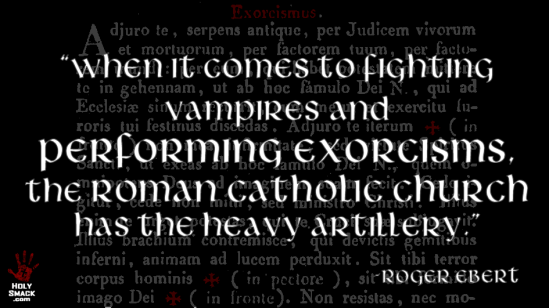
—–1) In this earlier review here, we learn that the writers for the movie series are devout Christians, and not only that, but are also devout Catholic Christians. Now although all Christians are similar in that we love and follow Jesus Christ, other Christians differ in that they broke away from the Church Jesus originally founded on St. Peter, our Lord’s first pope. Perhaps in a later post I can share more about this schism (to break away), but for now, we see in the film a few examples of why the Catholic Church stands apart from the Christian denominations that broke off from her to start their own churches. The first example is when we see Ed and Lorraine Warren discuss that any work they do must be cleared by “the Church.” And we all know that “the Church” refers to: the Catholic Church. Not the neighborhood community church, or the city central church, etc., but the Catholic Church. This reminds me of a quote from renowned movie critic Roger Ebert:ExorcismMeme

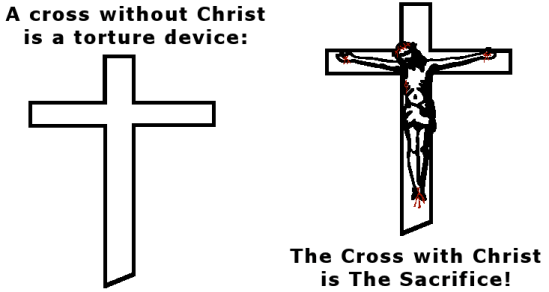
—–2) The second example of the Catholic Church’s primacy is the use and display of crucifixes in the film. Catholics and Orthodox Christians use and prefer crucifixes, and a crucifix is different from a mere cross: crosses do not have the little statue or image of Jesus affixed, but crucifixes do. In the film, we see a room covered in crosses, but the crosses are playthings to the demon. Evil does not fear two sticks glued together. However, when a crucifix comes out, especially when it comes out in the hands of a faithful and prayerful Christian, the demons freak. The key is that the crucifixion of Jesus Christ changes the mere cross into a weapon against sin and Satan. Without Jesus, a cross is merely an instrument of terrorism and torture, but with Jesus’ sacrifice, the cross becomes the beams that crush Hell. Here’s a little meme to summarize:CrossWithChrist

—–3) An extra sign of the Church’s power is in Ed’s use of Latin in his prayer to St. Michael the Archangel. We saw this in the first Conjuring (and in many other exorcism films), and it is reinforced here. To keep this short and sweet: Latin is the language of the Catholic Church, it’s the mother language of Catholics, and whether we know it or not, Latin remains our inheritance. In fact, real exorcists have claimed that Latin prayers have a extra punch to them than prayers in usual languages. Demons seem to despise Latin prayers, perhaps because the only culture that uses Latin in conversation today is the Church. In Latin prayers, the Church converses with her Lord Jesus Christ, and it’s a conversation most worthy of being had. Latin, because no other society uses it conversationally and daily, has become set aside (reserved) for the Church’s prayers. Latin, in a sense, has become holy (set apart, and in this case for serving God).

—–4) Next, it is true demons use fear to destroy us. When we fear, we tend to forget we are actually loved, actually guarded and prized by God and all Heaven. Many of us would do things exactly as the characters in the film: run, hide, scream, cry… and we should! But we should run to Christ! Hide in God’s light! Scream for the Lord’s mercy! Cry to the saints to pray with us, for us, to the Holy Spirit! Demons want us to be so afraid that we forget God, that we doubt He can help, that we dismiss His presence and focus on the demons and the crisis. Instead, we must turn to God immediately. As soon as trouble starts, and even before it starts, whip out your faith and call on Our Father who art in Heaven. In the film, we see Lorraine bust out her rosary when things get crazy. Don’t pay the demon any attention, but shower your gaze on Jesus, invite the Holy Spirit to nuke the sins and the demons. Get into the habit of using troubles as reminders to pray.Be Fearless

—–5) And at last, Janet, the star of the film, says something subtly profound at the end. After the literal Hell she has been dragged through by the demon, she believes she is so lucky! She actually says, “I’m so lucky!” and is not being sarcastic! She sees that all the terrors have been a way for God to lead her to love, to lead her to know two amazing and faithful friends in Lorraine and Ed. The evil was wicked and deadly, but God somehow knows how to work the horrors for Janet and her family’s benefit in the end. This is also true for the Warrens, when we see them realize that God has given Lorraine her gifts, and has allowed her to see the terrifying visions in order to help her save Ed and Janet from death. Most importantly, it must be said that we believe God never causes any evil, but He does permit evil to happen when we humans or when spirits (angelic or demonic) choose to commit evil out of our own free will. He might limit some of the consequences of our sins, out of His mercy, but He does permit us to use our free will, and only He knows how to set things up for our benefit. We must trust Him and do our best to do His will. To find out why God would take such a risk to let us have free will, please see this post.the_conjuring_-_uk_1757631a

—–And about the first Conjuring film: there was one line that jumped out at me. The mother in the film, after learning that the demon harassing her is the damned spirit of a woman who murdered her own child, says: “What kind of mother would kill her own children?” As soon as I heard this, I thought immediately of the millions of children aborted because their parents did not want them, did not love them enough to share life with them. The numbers are sobering: over 55 million children in America have been aborted since 1973, over 336 million Chinese babies have been aborted since the 1980s. And if you don’t really know what an abortion is and how traumatizing and violent it is for the mother and child, please see the abortion procedures here. So the question from the first film is actually pointing a finger at us as a nation, as a culture: what kind of society kills its own children?

—–The Conjuring 2 was a treat. It’s rare in film to see faith presented, the Church respected, and at the same time not in a cheesy lame way. I am grateful I got to see the film, and to share my thoughts. May God bless you and all those involved in the film in any way. Amen!

—–For a thoughtful and much more thorough review, please see Dcn. Steven Greydanus’ here.patrickwilsonconjuring2

My Worst Fear

Recently, a friend and I were talking about our greatest fears. Among all the truly terrible things in this fallen world, from terrorism to child abuse, from torture to betrayal, from murder to rape, from among all these things and everything between, I am most afraid of this:

I fear becoming evil.

I fear becoming a terrorist, I fear being an abuser, a torturer, a betrayer, a murderer, a rapist. I fear becoming evil more than I fear being terrorized, abused, tortured, betrayed, murdered, raped.

The only thing worse than being a victim is being a victimizer.Murderer

Because I never want to hurt the people I love. I never want to take away someone’s beloved. And I never want to forfeit my soul, forfeit my God and the New Heaven and New Earth He will make for you and for me when He returns.

If I am a victim, the Lord can heal me (as he has before). If you are a victim, the Lord can heal you, too (just ask Him, let Him). Some of the most abused victims in Church history (e.g., St. Maria Goretti, St. Joan of Arc, St. Jean de Brébeuf, and even the Lord Jesus Himself) even went on to become beloved, beautified and beatified in God’s grace!

But if I am the evildoer… if I choose to be malicious and to remain in evil, if I refuse to repent and persist in perversions, then I am lost. I lost myself and hid myself from Heaven. Then I become evil: forgotten, forsaken, forever.

And the more evil I do, the more evil I remain. Until it is almost impossible to turn around… because I might even forget and even doubt I can turn back to God. He forgives all who repent (see Luke 15:11-32), but what if I do not let Him love me? What if I become so prideful that I believe my sins are greater than His mercy?

It could happen. I can be that stupid. And I am that free to choose.

And that is why becoming evil is my worst fear, and it should be yours also.

Please pray our worst fear remains merely a possibility.

But if it has become a reality, let us pray we turn back to the King so He can make us new.

Forgiveness is For Giving (not withholding)

Hello! This post is unlike anything I’ve shared before: it’s an actual academic exegesis I wrote for my Synoptics class. You know how I sound when I write casually, now hear how I sound as a wannabe-scholar… (I promise, there are some really amazing things I learned and want to share with you!) The paper is based on one of my favorite verses in all Scripture, Luke 7:47: Therefore I tell you, her sins, which are many, are forgiven, for she loved much; but he who is forgiven little, loves little.
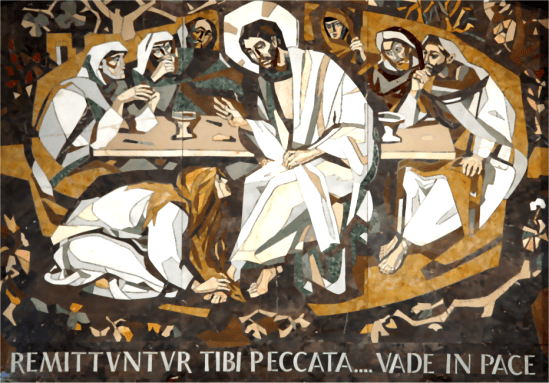
Lk7-47.png

Luke 7:41-50 (RSV)

[41] “A certain creditor had two debtors; one owed five hundred denarii, and the other fifty. [42] When they could not pay, he forgave them both. Now which of them will love him more?” [43] Simon answered, “The one, I suppose, to whom he forgave more.” And he said to him, “You have judged rightly.” [44] Then turning toward the woman he said to Simon, “Do you see this woman? I entered your house, you gave me no water for my feet, but she has wet my feet with her tears and wiped them with her hair. [45] You gave me no kiss, but from the time I came in she has not ceased to kiss my feet. [46] You did not anoint my head with oil, but she has anointed my feet with ointment. [47] Therefore I tell you, her sins, which are many, are forgiven, for she loved much; but he who is forgiven little, loves little.”  [48] And he said to her, “Your sins are forgiven.” [49] Then those who were at table with him began to say among themselves, “Who is this, who even forgives sins?” [50] And he said to the woman, “Your faith has saved you; go in peace.”

Introduction:

Ideally, the entirety of Luke 7:36-50, known as “A Sinful Woman Forgiven,” would be explored and discussed. However, the confines of this essay restrict us to an abridged reading covering only v.41-50, which exudes yet a great deal of wealth for faith that seeks understanding. The scene opens with Simon the Pharisee inviting Jesus to dine with him, which our Lord accepts. At table, a seemingly notorious woman approaches the Lord and begins to do him homage in the presence of Simon and others at table. Seeing this, Simon secretly criticizes Jesus for allowing this woman to even touch him, “for she is a sinner,” at which point, Jesus addresses a parable and lesson to Simon, and to us as well.

The Parable and the Pardon:

To help understand this parable in Luke 7, we must know the value of a denarius. In New Testament times, a sole denarius was a standard day’s wage,[1] and so in Jesus’ brief parable, one debtor owes fifty days’ worth of wages, whereas the other owes 500 days’ worth. Because the creditor cancels both debts, the difference between the debtors, with one owing a far larger amount, is important for grasping the message Jesus seeks to impart. Firstly, that the debtors cannot repay their debts, though the amounts owed would normally be repayable (unlike the debt owed by the unforgiving servant from Matthew 18:21-35), shows that perhaps unforeseen problems (e.g., debilitating injuries or disease) have arisen and made the debtors incapable of repayment. Allegorically, our debilitation is the sin of Adam, as well as all subsequent personal sin. Some bear greater sin than others, but all remain debilitated by Original Sin until Baptism, and then debilitated again with each following grave sin committed. Thus, sin is not merely debt but debilitation also.

Our Lord then says a peculiar thing in mentioning love with his question in v. 42, the original Greek of which is agapēsei (ἀγαπήσει) and means a love more nuanced toward willingness and commitment.[2] This is strange, for the business relationship between debtors and creditors usually do not involve love of any real sort, much less agapic love. Appreciation, gratitude and further indebtedness would be more fitting, but here actually lies the potential for love: the creditor in cancelling debt acts not only generously, but acts charitably,[3] acts as a benefactor who need not do such a thing out of lawfulness, but out of lavishness, out of love. Justice calls for the repayment of debt, but love becomes possible when a great debt is given, or rather, is forgiven as a gift to the debtor,[4] a gift of such immense cost that its giving transforms any stranger into a benefactor, into a lover, and any stranger into a beneficiary, into a beloved, for such great love moves the beloved to love freely in return. Thus, our Lord brings love into the parable of debt to reveal that the relationship is not one of economic basis, but of intimacy. He is priming Simon to “reconsider the meaning of [the sinful] woman’s actions – not the repayment of a debt, as though she were a slave girl or prostitute, but an expression of love that flows from the freedom of having all debts cancelled.”[5]

Indeed Simon understands, for Jesus responds that he “judged rightly” with his answer, but then Jesus does another peculiar thing. The Lord, while having turned to face the woman, asks Simon in v. 44, “Do you see this woman?” Jesus here is addressing Simon, but is looking at the woman, and doing so implies that Simon, though he sees the woman, does not truly see her. In asking Simon from this posture and gesture, Jesus invites Simon to “adopt Jesus’ own view of matters concerning this woman,” to see her as he sees her, to stand in his place and look upon her, to “no longer viewing her as [merely] a ‘sinner’ but as one who loves extravagantly.”[6]

Jesus’ address to Simon is also toward us, for we also should imitate the Lord in seeing others not as mere sinners, but as beloved siblings in Christ. Furthermore, the Lord is calling us to also love him and neighbor extravagantly, as the woman loves. From vv. 44-46, Luke’s comparison of Simon’s lack of bare minimum hospitality with the woman’s overwhelming hospitality is also an allegory: Jesus is the divine guest to the household of man. He visits not for merely his enjoyment or sake, but exclusively for ours, and is yet met not only with inhospitality, but even with open hostility from his host.[7] The allegory continues as Luke reveals the woman expresses love with prodigality similar to that of the prodigal father from Luke 15. Her experience of the Lord’s mercy and love moves her to go beyond basic hospitality that society calls Simon to provide, and so Luke compares in vv. 44-46 the coldness of Simon with the woman’s affections, presented here as a table for emphasis, reproduced from Brendan Byrne’s text:[8]

SIMON

I entered your house, you gave me no water for my feet,

You gave me no kiss,

You did not anoint my head with oil,

THE WOMAN

but she has wet my feet with her tears and wiped them with her hair.

but from the time I came in she has not ceased to kiss my feet.

but she has anointed my feet with ointment.

With the case of Simon, as the host he should have extended courtesies to Jesus, and that would have been socially enough. Yet, the woman not only extends the courtesies, but humbles herself before the Lord in ways that would have been inconceivable for Simon to have done. Simon should have provided water for Jesus to wash on his own, should have welcomed the Teacher with a kiss and anointed his head, yet the woman not only gives water, but gives water drawn from her tears of love, and dries the Lord’s feet with her own hair, which is seen in New Testament times as a woman’s pride and glory. Moreover, the woman, like the centurion from just prior in Luke 7:6, does not consider herself worthy to kiss the Lord on his divine face, but only on his feet, and does not even dare anoint the Lord on his crown, but reaches for his feet alone. Her humility in act and her extravagance in provision show her gratitude and reflect the forgiveness she has experienced from Jesus. To forgive and seek forgiveness is an act of humility and extravagance both for the penitent and the person offended: humility because pride prohibits repentance from the sinner and prohibits mercy from the one sinned against, and extravagance because parsimony restricts atonement by the sinner and restricts charity by the one wounded.[9] The allegory deepens here and finds completion in v. 47, but before continuing, the term kiss deserves special discussion.

Of the four Gospels, only the Synoptic Gospels employ the term kiss, and of the Synoptics, Luke makes most use of the term. All three Evangelists present Judas betraying Jesus with a kiss, but only Luke presents kisses elsewhere in different pericopes: once in the parable of the prodigal, and thrice here regarding the repentant woman. The appearances of kisses is telling in Luke, since his first kiss is here in Luke 7, bestowed on the Lord by a sinner on behalf of repentant sinners, and the next kiss is that of God (through the person of the prodigal father) upon repentant sinners in Luke 15’s parable. Luke’s final kiss is Judas’. One can then read that Luke’s intent is much like how he closes some of his pericopes with open endings: what will we choose next? Will we join the celebration of the younger brother’s repentance and safe return, or stay in the darkness of resentment? Will we let the last kiss upon our Lord be that of betrayal, or will we kiss him again with love and gratitude from his forgiving us?

And therein lies the conclusion of the allegory, for in v. 47, not only has the woman shown great love to the Lord for his having forgiven her,[10] but Jesus has also forgiven us our many sins and we, as the character of Simon, have yet to show the Lord such love and gratitude. We have not been forgiven little, for we have even been forgiven for crucifying the Son of God with our sins, but then why do we love so little? And why do we love not only the Lord so little, but also our brothers and sisters who are no worse than we? In fact, we who come after the Lord’s Passion, Death, Resurrection and Ascension have far more to be thankful for compared to the repentant woman, and so we also are far guiltier since we have in malice sinned against the greater gift of the Lord’s full revelation. Thus, we should in repentance and reconciliation, through the sacrament of penance, express even more love than the woman here, for we have been forgiven far more.[11]

The Lord then declares to the woman: “Your sins are forgiven,” something that at this point is already obviously clear to the woman. Rather, Luke here suggests Jesus not as addressing the woman alone, but to Simon and his tablemates who were questioning the situation, and not merely to Simon and the others, but to us readers also. Jesus here is not assuring the woman of his forgiveness (for such had been done), but is declaring to Simon and the onlookers that the woman is now reconciled with God and with God’s people and should be treated and related to as such by the community,[12] and not as a “woman of the city, who was a sinner” (v. 37). The others at table, however, are not concerned about this restoration of a lost sheep into the fold, but rather turn to critique Jesus in v. 49 with words that hearken back to Luke 5:21, when Jesus earlier forgave the sins of the paralytic. How important it is for us not to follow in such critique, which may tempt us when we ourselves are grievously wounded and do not desire our offender to be reconciled with us or with Heaven. To prevent such further resentment toward a forgiven sinner, Jesus reemphasizes in v. 50 that indeed the woman’s faith has saved her and she is free to go in peace. Here, faith is not to be misunderstood as the instrument of her forgiveness, for the Lord alone forgives, but as the requirement to even seeking repentance in the first place. Faith is necessarily bound to metanoia, for “those who reject faith reject the everlasting life that Christ offers to the world.”[13] Lastly, the peace Jesus mentions in v. 50 is not limited to the woman’s personal and “‘spiritual’ well-being… but speaks of a restoration … to the full social intercourse from which she has been excluded.”[14] The woman was once lost but has now been found.

Conclusion:

Luke closes this pericope with an open ending, as mentioned earlier regarding the kisses found in the evangelist’s Gospel. Such endings challenge readers to imagine what Simon and the others at table will do, and ultimately what readers themselves will do. Will we love much since we have been forgiven much? Will we love the Lord extravagantly, fearlessly and without shame before others who may judge us as sinful and untouchable, perhaps even as unforgiveable? Will we ourselves in turn forgive others much since we ourselves have been forgiven infinitely more?

[1] Hahn, Scott, ed., Catholic Bible Dictionary, (New York: Doubleday, 2009), 211.

[2] Catholic Bible Dictionary, 553.

[3] The word forgave in vv. 42-43 is from the Greek charizomai and connotes “by way of gift,” as in charity. See: Johnson: 127, note #42.

[4] Johnson, Luke Timothy, The Gospel of Luke, (Collegeville, Minnesota: Liturgical Press, 1991), 127.

[5] Joel B. Green, Gospel of Luke, 312.

[6] Green, Joel B., The Gospel of Luke, (Grand Rapids, Michigan: William B. Eerdmans Publishing, 1997), 312.

[7] Byrne, Brendan, The Hospitality of God, (Collegeville, Minnesota: Liturgical Press, 2015), 88.

[8] Ibid., 87.

[9] The parable of the Prodigal Son and Father in Lk. 15 further elaborates this nature of forgiveness.

[10] Johnson, Luke Timothy, The Gospel of Luke , 128. The woman’s love is the effect of the Lord’s forgiveness, not the cause of the Lord’s forgiveness, as can be misread in various translations. The preceding parable in vv. 41-43 also requires such a reading in v.47.

[11] Thomas Aquinas, Summa theologiae, II-II, q. 72, a. 11.

[12] Green, Joel B., The Gospel of Luke, 314.

[13] Catholic Bible Dictionary, 764.

[14] Green, Joel B., The Gospel of Luke, 314.

Tridentine Triduum

This past Holy Week was a first for me. I not only survived the taxing liturgies of the Triduum (Holy Thursday, Good Friday, Holy Saturday’s Paschal Vigil), but I found myself thriving in the Tridentine Triduum.

Not only did the usual Tridentine expressions help me, but I found the differences between the Ordinary and Extraordinary Forms (EF) of the Holy Week liturgies subtle yet rejuvenating to my soul and devotion. Here are a few points:

—–1) The priest truly disappears. The ad orientem posture of his prayer, the demands the rubrics places on him, the centricity of Christ, really shows how the priest is another instrument of Jesus. He wears what the Church commands him to wear; moves as the Church commands him to move; chants, speaks and whispers as the Church commands; does everything as the Church commands: all through which Christ Himself commands! The human priest merely becomes part of the whole thing: chalice, corporal, candles, altar, priest, patens, bells, thurible, servers, etc. Just another instrument among the many. And the more he disappears, the more He, who is Lord, appears. What made me see this clearer was the several times the priest had to vest in different vestments, outfitted for the specific task at hand, with no opinion of his relevant, necessary or appropriate. He was a slave to the liturgy, a slave to Christ and His Church.img_0531

—–2) Tenebrae took three hours. Holy Thursday’s Mass of the Last Supper started at 7:00pm. Two hours later, Tenebrae began and lasted until midnight. I was in liturgy for five straight hours. This was the single longest liturgy of the Triduum! But it’s length was vital, because it helped me feel the exhaustion that Peter, James and John felt while they waited for Jesus in Gethsemane, while they struggled to stay with Him and keep prayer. And those who chanted never stopped until midnight! Here we were then, doing what the apostles had failed to do: keeping watch with Christ in His agony. We were atoning for all the times we and others had failed to stay with Jesus.

Yet, going into Tenebrae, I had no idea it would last that long (not sure how long they last elsewhere). But I found myself just thinking, “Why not? Why not go the distance? Why not spend this time as I would with my other friends, talking late into the night, into the tenebrae (darkness)?”

So my advice: if you get the chance next Holy Week to attend Tenebrae, do it. But get ready for some spiritual struggle. Bring a devotional book with you (I suggest any of Fulton Sheen’s), your prayer journal, and get ready to reap and weep.tenebrae-hearse

—–3) Finally, the Paschal Vigil on Holy Saturday: two hours of which was in pure candlelight. Usually, in Ordinary Form Masses on this night, candles get blown out and lights turned on way too soon. Ever since I was a kid, I always thought the darkness should linger longer. Truly, I felt myself deprived that I did not yet feel deprived of full lighting. It seemed the candles were all for show, and not for something more.

Yet at this Extraordinary Form Mass, the darkness endured. So much so that I started worrying my candle would not last the Mass! As the wax waned, and the flame flirted with my fingers, I started noticing how dark the church was. Others had already lost their candles to the shadows, and mine was next. The desperation started to set in: should I find another candle? Should I save mine? Should I use my cell phone’s flashlight? And as I thought, I realized I was experiencing the darkness of being without the Light of the world. I tried to rely on myself, but this light was only going to go out anyway. I needed Christ to be my light. I needed Him to come back from the dead. I was awaiting His Resurrection.

And when the lights of the grand church came on amidst bells, organ and choir, I welcomed it in my deprivation. The darkness encroaching on my eyes taught me to receive His Light into my soul, because I had been in the dark for so long….easter2bvigil2b20152b042

—–So, if anything here has sparked your curiosity, please consider trying a Tridentine Triduum next time around, and you may find yourself not merely surviving, but thriving.

*Note, none of the photos shared here are mine but belong to their respective owners.

The Young Messiah

messiah_1sht_3k_rgbBiblical films that surprise me and move me are the only ones I recommend, and that’s not an easy thing to do since I am a very critical viewer with a high aversion to cheesiness. But I am glad to say “The Young Messiah” was worth the admission cost and worth my two hours and months of waiting. Here’s why:


SPOILER ALERT


—–1. Imagination: films like this are a great example of what St. Ignatius of Loyola calls “contemplation”, which is none other than using our God-given imagination to picture the Scriptures and put ourselves in the Biblical scenes. Doing such dedicates our mind to God, allows the Holy Spirit to help us see something we hadn’t seen before, notice a detail we didn’t know, discover God in a deeper and more profound way. Also, contemplation helps us not waste our mental power on lowly things, or in other words: dedicating our imagination and wits to contemplation keeps us from doing stupid things with it, wasting our imagination on perversions and derogatory daydreams. Your mind was made to think about beauty, glory, endless awe and wonder, lost in the infinity of God. And movies/stories like this show us how to do it: it all starts with a question, and it can be as simple as wondering how Jesus was like when He was still growing up.

the-young-messiah03—–2. Joseph: the man we see here guarding the Holy Family is no wimp, but he lives up to one of his many nicknames: The Terror of Demons. Joseph is depicted as courageous, loving, strong, gentle, and ready to die to protect Jesus and Mary. I got to see this movie with a group of friends, and it was overwhelming for us all how inspiring Joseph was in the film, especially when he tells Mary that she should not fear anything, but that the world’s most powerful and fearsome armies should fear her instead! Think about it! She is the mother of God, and God the Father custom made her to be the mother of His Son. God even honored and respected Mary enough to let her choose! So if anything were to happen to her, all Heaven’s legions would probably swarm down on her attackers.
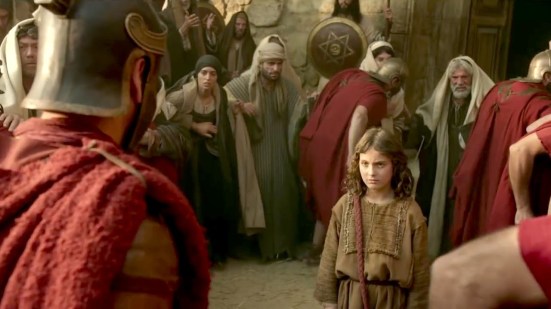
Joseph knows how special Mary is, and he is prepared to do anything for her and Jesus. For more about this great saint, please see my post on Not the Average Joe.

—–3. Mary: If there’s one near impossible role to play on film, it’s the role of Mary. No film has depicted her up to my standards, not even the epic “Passion of the Christ” does the Queen enough justice! But this movie actually gets pretty close, and in fact is my favorite depiction of our Lady. We see her ponder in her heart about her Son, we see how humble she is: humble enough to wonder if she can bear the suffering that is destined for her little boy. Just as we see Jesus growing and increasing in wisdom and stature, we see also His mother doing the same: growing in strength needed to surrender her child to the sacrifice He was sent to accomplish.

But perhaps what made my eyes water the most was watching Mother tell Son His story. And how she described the Annunciation, the simple beauty of the moment history changed course forever, and it changed because she said “Yes” to God’s proposal. This scene is hard to discuss anymore than that, so you’ll have to just see for yourself what I mean.home_youngmessiah

—–4. And the best for last: the boy Jesus. We see Him bursting with healing, and there was such power and desire to do good, so much but I’d like to point out two events in the film. The first is when Jesus raises a boy from the dead, and not just any boy. But a boy who bullied Jesus and wanted to hurt Him. So we see here Jesus not only forgiving His enemy, but healing him also. And when the bully rises, he continues striking Jesus, beating him from where he left off. This reminds me of us: how many times the Lord has brought us back from certain spiritual death, yet we deny Him and betray Him, abandon Him and even curse Him so we can return to our miserable sins. Truly we are a tragedy when we do so, when we reject Love Himself.

Another event is when the Roman Centurion, Severus, has caught the boy Jesus at last. There really is no escape for the Holy Family, except that Severus has seen the incredible might and goodness of Jesus. He has seen the healings, he has heard the witness accounts, and he knows that the world needs this — he himself needs this, this Jesus. You see it in Severus’ eyes that violence and death has defeated him (Severus was the one who executed Herod’s command to massacre the children of Bethlehem), and that he now wants more to life. He wants life rather than death, healing instead of killing, and goodness instead of malice. And all that life, healing and goodness was standing right in front of him.the-young-messiah-header

We should also know that by defecting on his mission to assassinate Jesus, Severus risks being reported to his superiors and then executed for treason. Severus is willing to risk his own life to let Jesus live on, and so we can see him here as a sort of first martyr for the faith!

So when we next see Severus, we see him carrying the toy camel that belonged to Jesus. It’s a relic. And it reminds Severus of the hope that this boy Jesus has brought into the world, and changed everything. Think about it: if He can bring people back from the dead, wouldn’t that change all we know about the world? If He can reverse absolute and certain death, what else can He do?! And of course we find out what more He can do at His Resurrection.

So knowing this, we also must decide if we let Jesus live, or do we kill Him? Will I let the Lord live in my life and heal me of my wounds and evils? Or will I kill Him by rejecting Him, and thereby kill myself also? Will I listen to my conscience which wants goodness and life to win, or will I listen to the Evil One and choose death and defeat?

—–BONUS: Jesus Wept. There is a scene where the boy Jesus asks an old rabbi about what happened in Bethlehem seven years ago. And when He learns of Herod’s slaughter of babies, we see tears in Jesus’ young eyes. He knows now that all those children were martyrs for Him. They were massacred to shield Him, they died so that He could bring all back to new life, and a glorious life at that. And He will make it up to them by dying for them in return, in love.

—–For a great professional and in-depth review, check Deacon Greydanus’ here.

—–More about how much Jesus knew while He was increasing in wisdom and stature.

theyoungmessiah_07-_h_2016

Risen to the Occasion

risen_posterLast week, I viewed the newest film on Jesus: Risen, and while it did not rise to the occasion of my expectations (I had great hopes for it), I did come away with a few highlights (I try not to focus on negatives). Here’s what I mean:
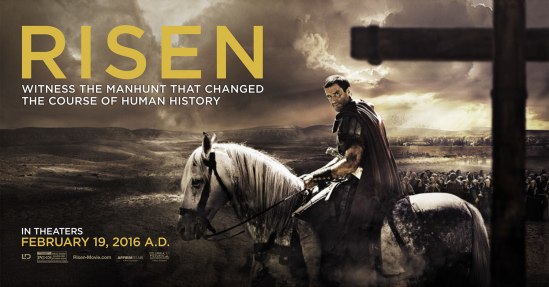

SPOILER ALERT

—–1. All about the Resurrection. We have a film on the Passion of Christ, and here is one about the implications of a man coming back from the dead. Many of us, Christian and non-believer alike, seem to forget that people do not do this: nobody comes back to life after being definitively dead, entombed, and decaying (you bet decay started after three days!) No near-death-experience is possible after a person’s heart is lanced and his body is wrung of blood and water.

Yet here Jesus is, alive (yes, we Christians believe this absolutely, even to the point of death), and not merely a resuscitated zombie of a corpse with gangrenous flesh. Jesus is healthy, strong, powerful, and yet still gentle and smiling. Jesus is glorified.

I don’t know about you, but if my friends abandoned and betrayed me, and my enemies tortured and massacred me, first thing I would do after my resurrection would be vengeance. Vengeance! (Be thankful I’m not God.)

But Jesus? He actually lived (and lives again) what He preached. He loves His friends and His enemies. We see this in the film especially when He even welcomes Clavius, the tribune who ordered Jesus’ heart stabbed, to join Him and His Apostles on their journey.

—–2. Which brings me to the point about Clavius when he says what he wants most in life: “a day without death, peace.” Isn’t that what we all want? A day when life kills death? When death no longer has the final say? When death is not the end? Well, that is exactly what Clavius and we have now in Christ.

Once the resurrection happened, death lost its final say: death died. It means that God is greater than death, that death is nothing, that we should not fear death since Jesus can flick it away like it was a leaf. Imagine Jesus: Oh, I’m dead… boo hoo, what can I do, what can I do… hmmm… I know — I’ll just get up!

It’s really that easy for God. And if He can raise Himself up, what makes anyone think He cannot raise others?risen-an-exclusive-movie-clip-for-tbn-youtube-370

—–3. Lastly, now that Jesus is resurrected, that also means that everything He teaches and says is true (and we gotta follow Him). He really is God. Because if He died and stayed dead, even though He said He would rise, then we would just dismiss Him as a liar or an idiot. But He actually came back. Just remember this: God not only became a human for you, not only was born for you, not only lived for you, suffered and died for you, but He even came back from the dead for you, to love you.

You must be pretty special to Him, for Him to go through all that trouble for little old you…

—–4. So go see Risen if you wanna. Nothing in it really put me off or can make me ward you off, but one thing’s for sure: once I saw it, I don’t think I’ll ever make time for another viewing. It wasn’t that special. The book is definitely better. And yet for a better and more thoughtful review, please see Dr. Taylor Marshall’s here.

mc_risen_fb

PowerBall and Poverty

Nice try.

But dividing the 1.3 billion dollar PowerBall by America’s population will not fix poverty. Here’s why:

  1. Not only because 1.3 billion/300 million = $4.33,
  2. But because poverty is global, and worse around the world.
  3. But even if every person on earth got millions, poverty will worsen:
  4. Because nobody would work; everyone would go into retirement
  5. So nobody will grow your food, run your government, keep your emergency services going, run your schools and universities, open your restaurants, stock your favorite stores, make your merchandise, sell your wares, etc.
  6. Suddenly all that money will be worth nothing.
  7. Civilization falls apart
  8. Culture of bums
  9. Because the motivation that drives most people is making a living
  10. Besides, if Jesus did not fix poverty, what makes you think we can? (see Mark 14:3-9)
  11. There’s a reason Jesus did not rid us of poverty and suffering:
  12. Because poverty and suffering teach us that life is more than about having stuff and stuffing ourselves:
  13. It’s about loving others, which requires sacrifice to be real:
  14. And sacrifice means enduring and struggling, about putting another’s well-being before yourself.
  15. So no, money will never solve poverty. Only real love, hard work, and self sacrifice.

But having some money would be nice (so please share some my way if you win!). Money is only meant to be a tool to help with the tasks of love, work and sacrifice, not be a substitution!

Here’s the stupid (no other word for it) meme, edited:PowerBall

Reviewing The Revenant

During the little blizzard today in Detroit, I got the chance to see “The Revenant“. Though the movie is set in the winter of the American Midwest, it was a film on fire. Here are three major points in the movie worth a Holy Smack about:RevenantPoster.jpg


—SPOILER ALERT—


—–1) The misuse of Christianity: we see Tom Hardy’s character (Fitzgerald) spouting the Lord’s name and calling on God for all the wrong reasons. Most of us do this when we curse God, or use His holy name as a curse, or worse! This is extremely insulting to God, Whose name is power, love, grace, life, truth, beauty, goodness, almighty. To use His name for pathetic things, for things against His will and identity, is offensive. We also see an example of this wickedness when people use God and Christianity as an excuse to do evil: American slavery’s justification that Africans are descendants of Cain (their “mark” is the color of their skin).

In the movie, we also see misuse with the “Our Father” prayer (aka: the Lord’s Prayer) when the captain forces someone to say it under distress and threat of death. Prayer is not a tool for threatening or torturing someone. Prayer is a gift we get to have to talk with God. Its use any other way is a depravity.

—–2) But then the movie shows the correct use of God’s name and Christianity, in two ways. First we see Leonardo DiCaprio’s character (Hugh Glass) approach a Catholic church in his dream. The church is in ruins, its bell is hanging on edge but still tolling away, and its icons are aged but dazzling: it’s the most colorful thing we see all film long. We see the saints, and then we see the crucifix: Jesus on the cross. We realize that it is Glass’ son, Hawk, who is in the church waiting for his father. He holds a fire to the crucifix, letting us see the Lord’s feet.Revenant2.JPG
As Glass enters the church, he finds his only son waiting for him. We also know that his only son had died for him already, earlier in the film. The connection becomes apparent: God lost His only Son, and Glass lost his only son. Glass suffers here with God the Father. At this point, we see a connection with what Glass told his son before: “You are my son”, as in “You are my beloved Son” when God speaks at Jesus’ Baptism (Matthew 3:17). The film is truly a film about a father losing his only son, and learning to suffer with God.

Another insight about this church scene: no matter how broken down the Church appears, the Church remains a place where our loved ones can be found. In the Church Triumphant (Heaven) and Church Suffering (Purgatory, enroute to Heaven), we find reunion with those beloveds we lost. They await us! They are in the Father’s home and they are waiting; we only have to go to the Church to find them. The Church is the family of God, the body of the Lord. So next time you are at Holy Mass, realize that all Heaven is there with you. All the angels, all the saints, Almighty God is there with you, for you.Revenant1.jpg

—–3) Finally, the film shows us Glass surrendering justice and revenge to God’s control. Whenever anyone is so close to a climax, so close to completing (achieving) an intense act, it takes incredible self-mastery and will power to stop. In this case, Glass stops just short of killing Fitzgerald. He remembers that his friend had also lost his family and home to murderers, and his friend said “Revenge is in the hands of the creator.” His friend’s act of letting God be God comes back to set an example for Glass, who says here, “Revenge is in the hands of God.”

Surrendering his quest for vengeance to God is the same as surrendering our quest for justice to God. Actually, it’s the same as surrendering anything to God. When we let God have control, we are letting the person who knows everything, who knows every perspective and nuance and secret, make the call. We don’t know it all to make a good call, but He does.

We also must realize that God loves us more than we love ourselves. Hawk’s murder hurts Glass. But it offends God even more, in fact, infinitely more because God is infinite! And so His love is infinite! So murdering Hawk offends Glass, but offends God forever (unless it is atoned for and repented of). Even more: since God loves us so much and went as far as dying for us, anyone’s murder means that the murderer is spitting in God’s love, saying effectively that He died for nothing. Example: I love my wife, I love her enough to die for her. Someone comes along and says I shouldn’t die for her because she’s not worth it, that in fact she is so worthless that she should be killed. I would be very insulted, because I love her enough to die for her!

But God already did die for us. And everytime we murder, cheat, betray, hate others, we insult God because He loved enough to die for them. We are telling God that He died for worthless people.

And so, Glass’ surrendering of vengeance to God’s providence shows us we should do the same. And by doing so, Fitzgerald’s last taunt falls limp: he says that getting revenge will not bring back Glass’ son. Hawk is dead regardless. And that’s true…

But God can resurrect us all.

And Glass’ act of virtue (surrendering revenge to God) guarantees he and his son will rise and be together again.

—–So as you can see, you should see “The Revenant”.

—–Bonus) Anyone else get the feeling that Glass’ wife was a type of Mary? The way she whispered to him in his memories was like prayers, the way she appeared was like apparitions, guiding him and encouraging him.

—–Bonus 2) Being that the film is set in 1800s America, the church shown most likely had the Traditional Latin Mass (I just had to say it).

Revenant3.jpg