
 Not many directors have my full trust in their story telling; besides Christopher Nolan, there is only Mel Gibson. After a decade of recovering and rehabilitation from his downfall, Gibson’s first film since Apocalypto and The Passion of the Christ—Hacksaw Ridge (based on a true story)—is very telling, even if I did not like it as much as I thought I would.
—
—
—
—SPOILER ALERT—
—
—
—
——1) Heroes are not spotless, they have pasts and histories, and Desmond Doss (Andrew Garfield) is a fine example. His youth is peppered with violent, even homicidal episodes, and he exemplifies this famed quote well: Every saint has a past, every sinner has a future. And most importantly, a saint is someone who starts on the path of sainthood again and again, never staying down, never giving up. If you apply this to Gibson, or to St. Paul, or to St. Peter, St. Mary Magdalene, then you see what I mean. And if you apply this to yourself, then you have found the path to Heaven.
——2) Of all the things she could give Desmond before he ships off to war, his beloved Dorothy gives him her tattered Bible. They share their faith with one another, and in this love for God, their own mutual love grows. If couples do not ground the roots of their love in the infinite Love, into infinite Life, then how can they hope their love will survive? If you do not believe in something greater than yourself, then you will never have anything greater than yourself. And if you do not anchor your love first in eternal love, then your love does not get any greater: it will not survive when you die (and we all eventually die).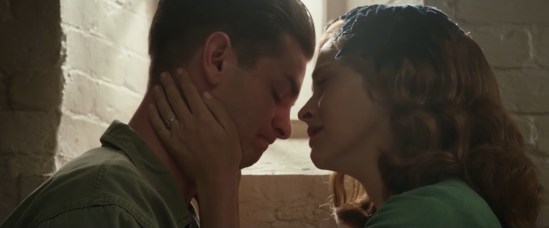
——3) Speaking of death, we see also the jarring juxtaposition of two cultures with clashing values: one that tries to preserve and save life at the risk of one’s own (the devout Christian West), the other disregarding life and glorifying death through suicidal kamikaze tactics and seppuku (the Japanese). In today’s culture we see a similar struggle: one that strives to honor all human life from conception to natural death, the other advocating that life is only valuable if we want it to be. In other words, the Christian rooted cultures know each life to be of infinite worth and not to be given up on lightly, whereas certain cultures see human life as expendable as if it were a mere resource. Most importantly, if human life is only a resource, only valuable if we decide so, then who is the judge for whether another life should be ended? Who is so “enlightened” and “fair” that they can decide who lives or dies? And who says that judge has to be yourself? It can easily be someone else… in fact, if it is not God, then it very well might be someone else much less loving and merciful.
——4) Love for enemies is never easy, but here in the film we see Doss even extend mercy toward the enemy soldiers. He treats them as his own, only hesitating because of fear they would attack him, not because he hates them. In fact, we do not see Doss express any malice toward the Japanese troops! For a war film, it was strange to see such little animosity from the protagonist against the foe. But there we see the point of the story: the primary foe is not the Japanese military: the foe is Desmond Doss himself.
——5) The foe is Doss himself because we are waiting to see if he will drop his promise. We are watching to see how committed he is to non-violence, how long he will go before picking up a rifle and shooting the Japanese. We expect to see him cornered, desperate, and succumb to breaking his vows. We wonder how much will it take before he snaps. Yet, he does not. His resolved conscience is so solid that we are forced to think whether we ourselves are that resolved on anything!
——6) It is there the film reaches out to us, Doss reaches out to us, to challenge us whether we have the courage to keep our promises, to stay faithful, to try over and over, praying God helps us one more time, and always one more time, no matter what came before, which reminds me of a prized quote from St. Paul (so prized I made a meme for it):

 Recently, a dear friend of mine requested I should view and review one of her favorite films. At first I was reluctant, because I had heard negative reviews about Maleficent, and I also secretly dislike Angelina Jolie as an actress (yes, she bores me). But after giving the film a look, here are the really powerful moments of the tale:


 An actress who has become a fast fave of mine is Alicia Vikander. When I saw she was in “The Light Between Oceans,” I knew I should see it. Coupled with Michael Fassbender, and it became something I had been looking forward to for a few months now. And so thankful am I to have not been disappointed. Here are the shining moments of the film:
 —–2) On the note of parenthood, Isabelle shares that (paraphrasing): “When a wife loses her husband, she becomes a widow, but when a mother loses her child, she remains a mother always, even if she has no children left. I wonder if I am still a sister, since I have lost my brothers.”

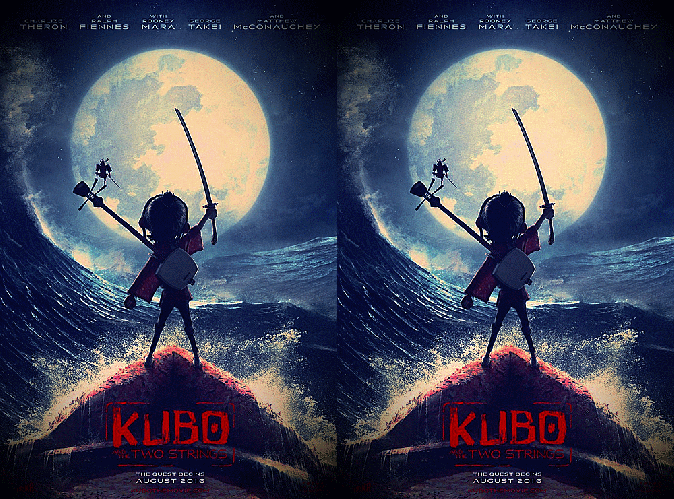 It is very easy for me to critique and focus on negatives, so on Holy Smack I try my best to be positive, but sometimes exceptions must be made. This is one of those times. See what I mean here:


 Most of us are familiar with merciful, loving and forgiving Jesus…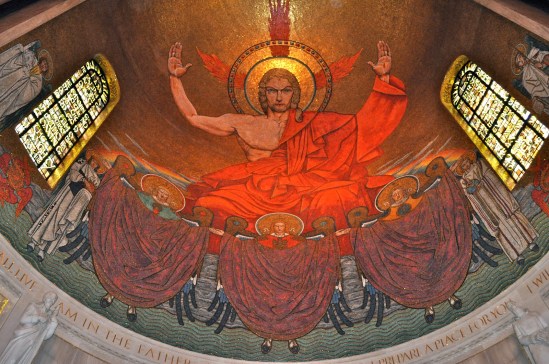


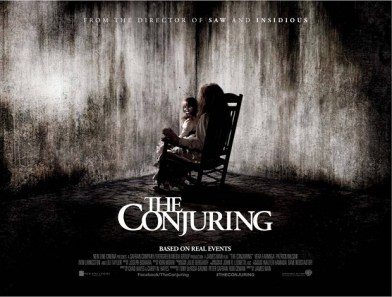
 When I first saw The Conjuring (2013) by director James Wan, I knew the film was special in its class. The sequel, The Conjuring 2 (2016), affirms the series’ uniqueness. At the end of my review, I’ll mention the standout point from the first film, but for now, let me share how The Conjuring is conquering its genre (see here for my thoughts on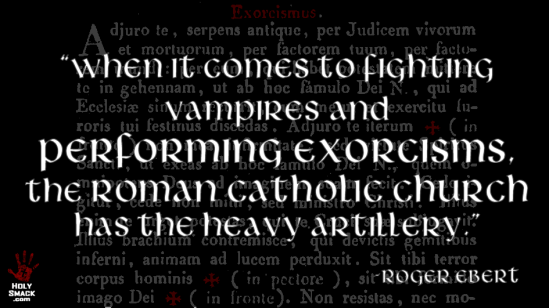



 Holy Smack