My First Love Notes

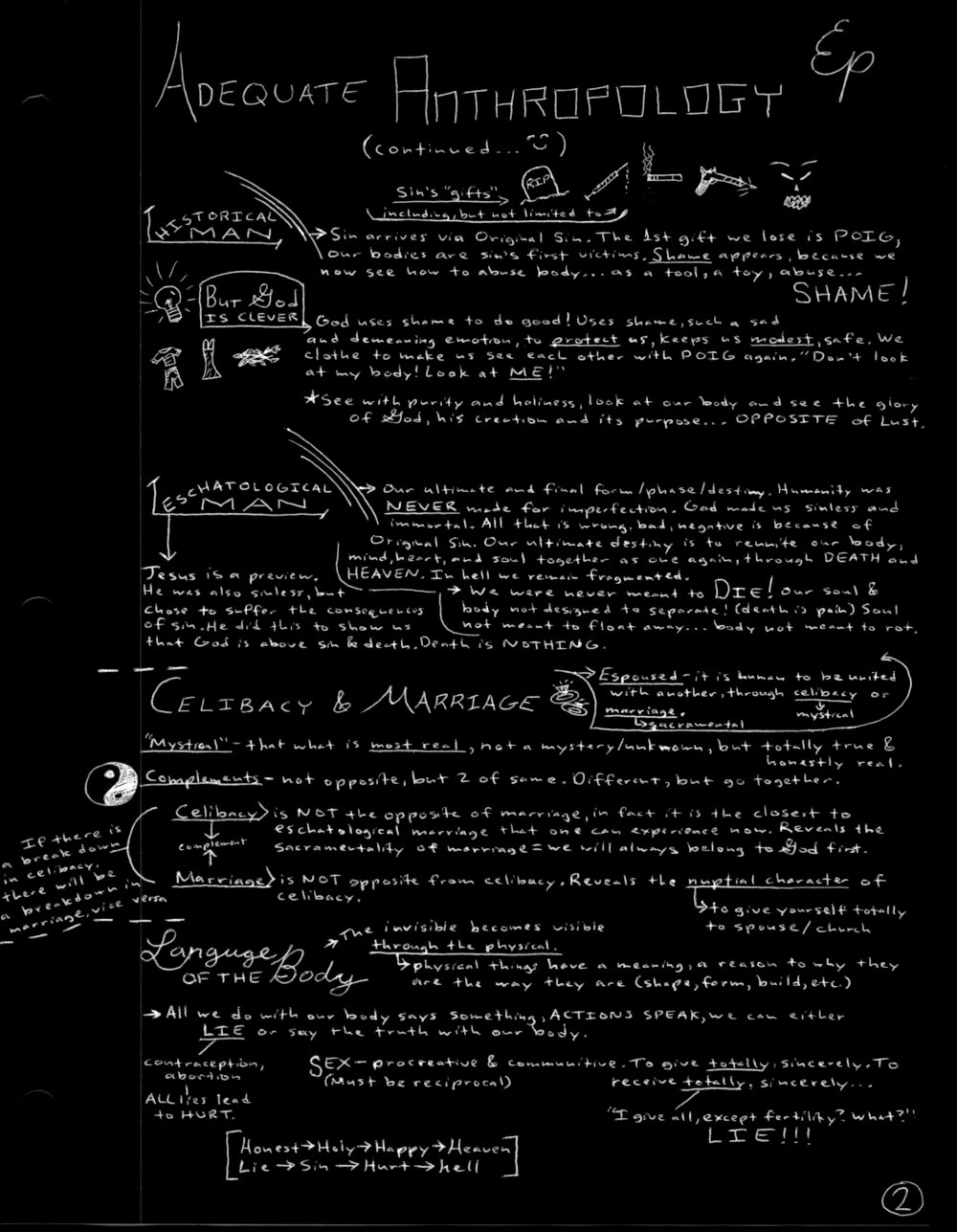
Around this time, seven years ago, Theology of the Body [TOB] became real. It wasn’t just something intellectual and textbook smart anymore. It showed me why God made me the way I was; why I have a mind, heart, soul and body; why I was not some poor soul trapped in flesh; and even why angels are kind of jealous of us human beings (jealous in a good way for the unfallen angels, and jealous in an evil way for the fallen).

Most importantly, this Theology of the Body from Saint John Paul II tore off a leech that had begun ravaging me since I was a little fifth grader. For ten years, I lived with this worm of sin, constantly tempted, perverted, and lustful. My adolescence was spent struggling for freedom, for life that was better, more beautiful and true.

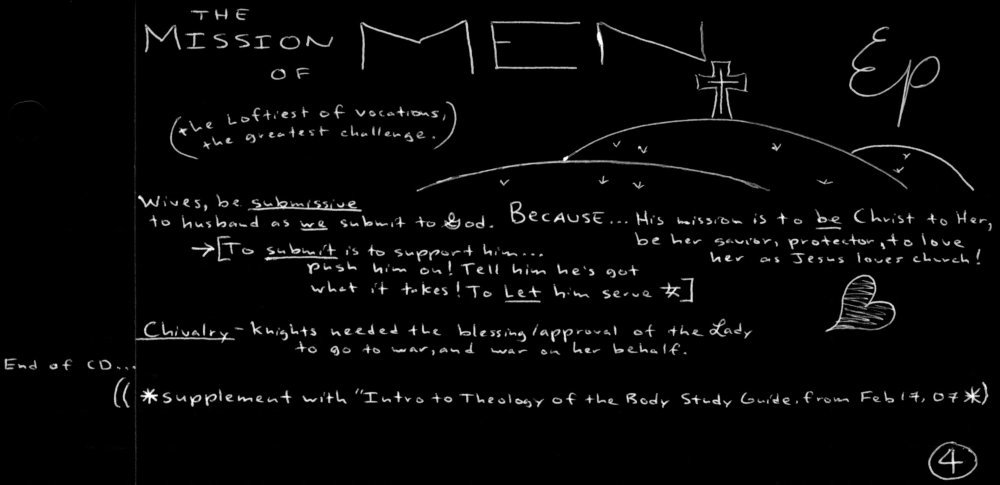
And that’s when a dear friend of mine (many thanks, Mr. Dang) randomly handed me this CD that showed me exactly how I had always wanted to live — even though I didn’t know it back then. In fact, after I listened to it, I hit replay right away! I started taking notes! And it wasn’t even a class! I just had to get this down! On replay for days…

So now, attached for your pleasure and for the glory of God, made public for the first time ever: My First Love Notes (because with TOB I was finally starting to learn how to love)…

Click here for more of my TOB posts.

What Kind of God Do You Want?

Even if you don’t know if God exists, even if you don’t believe God exists, you can at least think about what kind of God you would like to exist, right? It’s like daydreaming: even though I’m no billionaire, I can at least fantasize about what kind of billionaire life I would like to live…

So play along and think about this: what kind of God would you want?

A powerful God? A God who is master of all?

Don’t misunderstand me, I do want God to be powerful and masterful. By definition, God is Power itself and Master itself. But think about it: if God was first merely Power, then what’s keeping Him from using that power to intimidate, to manipulate, to oppress and dominate us? Same with God if He was first merely our Master — what’s stopping Him from being a tyrant, a slave-driver, an abuser?

There are religions out there (I’m thinking specifically Islam) that believe God is Power and Master first, before He is anything else. But like we saw above, if God is first merely those things, or anything else along those lines, then what’s keeping Him from abusing His almighty authority, power, omniscience and etc.?

GodIsLove

Because God is first, before all else, a father… Our Father.

Not the kind of father you and I have, because human fathers, earthly fathers can make mistakes, can be selfish, can be ignorant and even evil. But the Father in Heaven — the Father who all other lower fathers are meant to imitate and symbolize — is Love. Our Father is Love.

And as Father, as Love, God will not abuse his authority, not enslave us nor intimidate nor manipulate us. As loving Father, He will not use omniscience, wisdom, or anything to hurt us. Instead, He will use all that He is to love us and help us…

He even sent His Son to be a man and die for us.

So I don’t know about you, but I’d want a God who is Father, who is Love. And I’m grateful this God is ours — the one and only.

For more, check out Dr. Scott Hahn’s excellent discussion on who God is to us:

Blasphemy with Breakfast

Abba or Allah?

Slaves and Sons

An Exorcism Experience

IMG_20141003_145844By now, most of America is in Halloween mode.

And I’ve been saving a special something for Halloween mode.

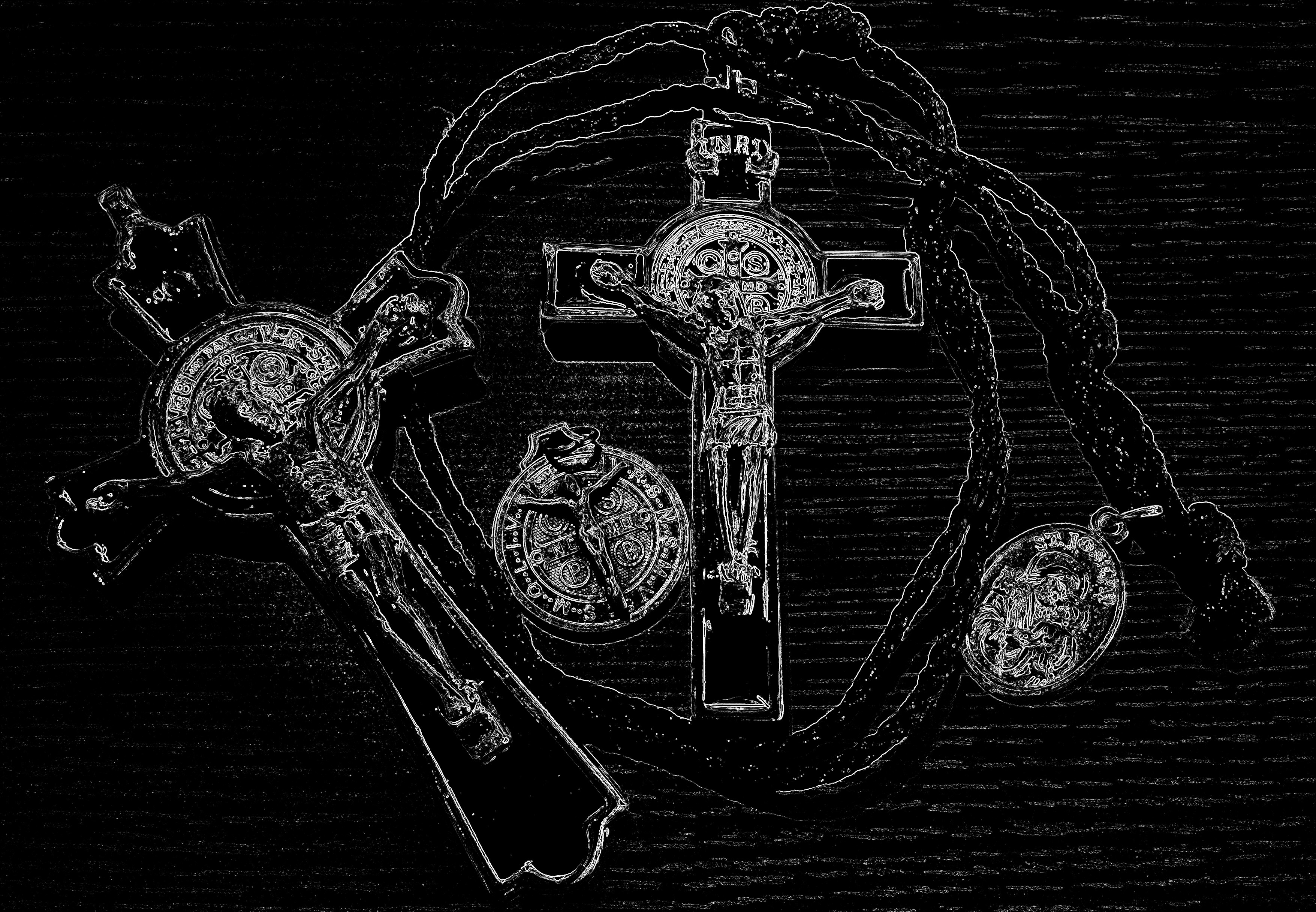
A few months ago, a dear friend shared with me about her exorcism experience. Now, just to be clear, she did not undergo the Ritual of Exorcism. What is meant is that she experienced the power of the exorcism prayers in the Medal of Saint Benedict (do yourself a favor and click the link!). And when I heard her story, I felt she should share it with others also, and so I offered her the chance (and SO glad she responded generously! Thanks, Sarah!). In many ways, it reminded me of the Exorcism of Emily Rose, and ultimately because both Emily and Sarah became witnesses not to the devil’s tricks, but witnesses to Christ’s power and love.

But that’s enough from me. Have a look and a listen yourself:

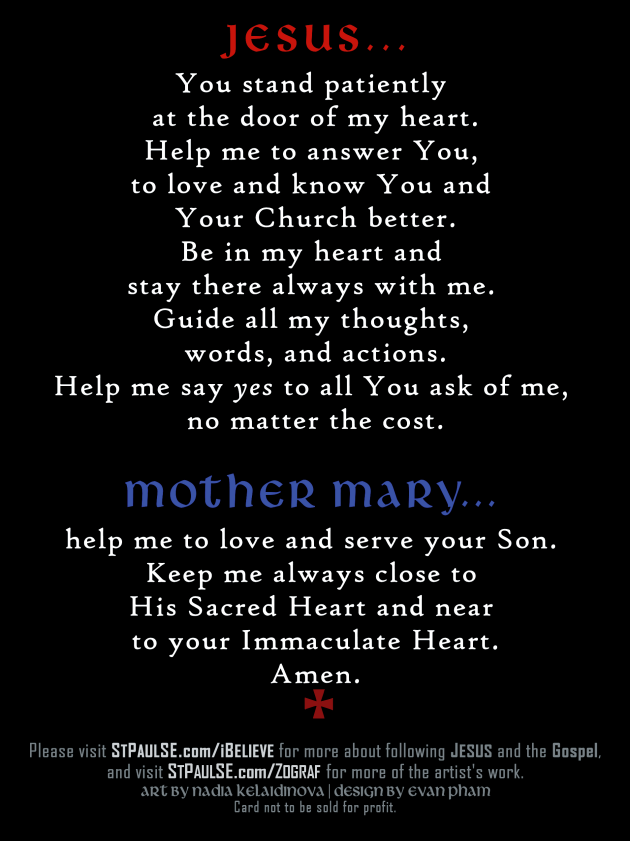
Behold, I Stand at the Door and Knock

Hello Holy Smack Readers!

On this Memorial of St. Teresa of Avila, may I present to you the first Holy Card I had the honor of designing for Saint Paul Street Evangelization [SPSE], a group of Catholic Apologists and Evangelists who volunteer to introduce Jesus and His Church to others in public, across the United States! I’ve even heard that this card itself has been slowly spreading throughout America’s cities.

One of the priests here at seminary asked if I would be interested in helping with this mission, and needless to say I was humbled and grateful to God for such a chance to offer my talents to this work. I only hope the Holy Spirit continues guiding me in the good fight against hatred and ignorance of the Faith.

Thank you for reading, and I’d like to especially thank the artist who shared her work so generously for this project: Nadia Kelaidinova (please visit her gallery here). May God bless her ever more abundantly!

Lastly, if you would like a card or so, please feel free to leave me a message on the Holy Smack FaceBook page, or email me at EvanPham@HolySmack.com (Of course, you’re also welcome to support SPSE by ordering from their site. The cards are sold for non-profit purposes only to keep the ministry running.)


JesusAtDoorCardSample

 JesusDoorBack3Sample

Praying and Praising with Audrey Assad

The first time I encountered Audrey Assad‘s prayer through music, I was stunned silent. It was during an August sunset, and she was only a guest appearance during Matt Maher‘s charity concert. Before this point, she was only an unknown backup vocalist… but when she started singing her Restless… nobody wanted her to be merely a backup anymore.

Audrey AssadYesterday night I had the chance to see Audrey again on her final tour. So much of it felt like a reunion of sorts, but I also noticed and appreciated the beautiful and subtle ways she has changed since 2010’s experience.

She was not center stage this time — not even close! She put herself off to the side, and made sure icons and masterpieces of the Faith were our focus. The artwork would appear distorted at first, and only gradually become recognizable as we prayed with Audrey through song.

And she didn’t just sing, but she led us in prayer. She moved away from the mic and would let us take over — hinting to us that our voice is beautiful too. We needed to pray while she hushed.

And hushed… and hushed until she backed away from stage, unknown to us. She left us praying and praising Christ at the end, herself decreased to the point of absence, Himself increased to the point of sole presence.

It was clear she wanted to remind us that we were gathered there for Jesus — not for anyone else, not for her. Even after the whole show, she was nowhere to be found, because she wanted us to find Christ instead.

And I think a lot of us did find Him.

As my brother seminarians and I drove home after, we prayed and praised God the whole way. I really don’t think the other fans were doing anything different either as they went home that night.

Thank you, Audrey [and Bellarive!] — may Mary keep you and your beloveds close to her Son’s Sacred Heart always.

Some favorites:

Lastly, check out this post for how to move to Audrey’s You Speak… yes, you read right: move. As in dance. With me.

How Women in Veils Inspire Males Like Me

[The following post is in honor of Pope Saint Pius X, whose memorial is today, and the Coronation of the Blessed Virgin Mary, which we honor tomorrow.]

Ever since I rediscovered the Extraordinary Form of Mass for myself, being Roman Catholic has never been the same. In fact, three big markers pop out of my timeline of Catholic living: when I encountered the Theology of the Body, when I met Mary, and when I discovered the Tridentine Mass.

Over the past few years of attending Tridentine Masses whenever I could (each time a wonderful treat!), one of the things most noticeably distinct to me are the number of women — young and old — who don the chapel veil (aka: mantilla). I always felt different at Mass and worship in the presence of these women in veils, but I didn’t know why (or how so) until this past weekend in the most unlikely of places…

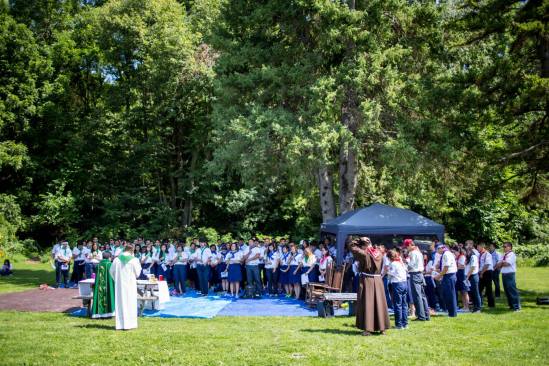
Mass at CampI was at the Midwest’s annual weekend training camp for leadership in the Vietnamese Eucharistic Youth Movement of America. Just before our opening Mass in an open field, in the humble shade of a tree and under the gaze of the morning sun, one of my dear friends beside me pulled out a white lace veil and draped it over her hair. It was out of the corner of my eye, but I saw everything in slow motion. I could not believe what I was seeing, and how it lifted my heart. Instantly, I felt a rush of reverence: if she could humble herself so much before Jesus… then how much more should I long to join her in worshiping Him! Her simple gesture to honor Christ floored me, and inspired me to show at least as much reverence.

And then, I found out she was not the only one. Throughout the Masses we shared at camp, I saw another young woman under a veil. As she approached Jesus in the Eucharist, as she knelt before our King and received His Communion, I found myself no longer able to stand before the Lord. The simple and passing beauty of the scene between the King and His daughter made me feel unworthy of beholding it so. I turned my eyes down… I wanted to crawl to Communion because my soul could sense the holiness present. My humble little heart could not handle the beauty.

I know not why it was this setting, this weekend, this event that helped me see how women in veils could help males like me worship, but I praise the Holy Spirit for the gift of this experience, for the gorgeous gift of these women. Thank you. And to further the glory of God, I asked these women to personally share with you their beautiful story…

I’m an all-in-kind-of girl, and as of that, I’ve come to realize that my inability to commit partially is both a blessing and a curse. In any case, it is most definitely the reason why I usually find myself, either, fatally wrong or unshakably confident.

My decision whether to veil or not to veil was no exception. Unbeknownst to me, my discernment process started a few years ago as casual curiosity and admiration. I didn’t have any strong feelings towards it, other than, “Wow, that’s beautiful and holy looking……. I probably shouldn’t wear it.”

But then, through my encounter with the Theology of the Body and the Blessed Sacrament, my understanding for the Church, worship and the nature of God developed — and I wanted to participate in my faith more fully.

It started with my decision to dress more modestly — by replacing my skimpy bikinis with one piece bathing suits.  I avoided controversial situations, like getting drunk while bar hopping in leotards — or just getting drunk, period. (I’m not really sure why I ever thought that it was appropriate to wear leotards as a complete outfit). But bit by bit… all these little changes restored my self image as a child of God. It helped me see myself how my Creator intended me to be. I became more aware of how I needed to represent myself as part of Christ’s body, so much so that I became uncomfortable when I misrepresented myself — and thus misrepresented Christ.

But the holy smack didn’t happen until a few months ago, when I was listening to Tim Staples, an apologist, talk about how Catholics are missing the point of Mass. It’s not just about us ‘getting fed’ but instead the Mass/Sabbath is a day, set aside to give God the praise and worship that is just.  It’s the time to fall to our knees to ask for forgiveness, grace and mercy. It’s the time to glorify Him and hail Jesus to be our true Savior.

Worship is not a matter of my feelings, it is our response to faith.

Furthermore, when I reflected on Scripture, and saw how Jesus references the Church as His bride. The pieces started to fall in place and I understood more clearly, what my Living God was doing. Day-in-and-day-out, upon that altar, He was keeping His Word. He was coming to us, as a MAN. He was offering Himself — completely and fully to us. He was re-establishing a covenant.

Jesus was all in.

[Korean Figure Skater, Yuna Kim, wears the veil.]

[Korean Figure Skater, Yuna Kim, wears the veil.]

This brought me to my knees — literally. I not only genuflected before the Eucharist, I went down on both knees. I am a mortal human that has been chosen to be a temple of God…! I was in the presence of a king. I was receiving Christ! And I wanted to do what was just and deserving of that honor.I begin to prepare for Mass differently. I hung onto every word of the liturgy. I humbly, surrendered and re-committed my life to Jesus, each and every time I received Him.I am a woman, claimed by Christ, Himself.So, what about the veil? Well, there’s no high theology here. It just made sense and was fitting. I want to submit myself before the Lord.  I want to embrace my role as a woman in the Church. The veil represents something that had changed WITHIN me. It is an outward sign of a commitment made in the depths of my heart and soul. So with unshakable confidence — I wear it…’Cause I’m an all-in-kind-of girl.

-Santa Thérèse

The beauty of the mantilla never struck me until reading Crystalina Evert’s blog on the Chastity Project; before, it had just been some weird headdress that old women and younger, presumptuous girls wore to Mass to show off their holiness.  Little did I know that those women didn’t wear those veils because they thought they were holy – it was because they needed to be holier.

Before Vatican II, women were required to wear a chapel veil to Mass in order to show reverence to the Lord on His day, as well showing the world that they, as women, were sacred enough to veil and be protected from the world around them.  The sacred should be veiled, as the Eucharist is protected in the monstrance, the tabernacle, and under the veil during Mass.  After Vatican II, the requirement of wearing the mantilla was taken out of Canon Law, and feminists in the 60’s denounced wearing it because they believed that it was a symbol of slavery to men and to the church, and so the beautiful tradition of the mantilla faded away.

When I read Crystalina’s thoughts on the mantilla, the idea of wearing one intrigued me, but I brushed it off because I didn’t want people looking at me funny or thinking I was getting above myself.  But the image of the veil kept popping into my head, incessantly and constantly.  I decided to pray about it and leave it up to God to show me what I should do, because if I was going to go all out Mary-style, I needed to know exactly why I would.  In the meantime I did some research on it.  I found that several First Ladies, including Jackie Kennedy, Nancy Reagan, and Michelle Obama, all wore veils upon meeting Popes John Paul II, Benedict XVI, and Francis.  If powerful women felt the need to veil themselves in the presence of the Holy See, why shouldn’t we veil ourselves in the presence of Jesus in the Eucharist?  Not only does the veil show that women are sacred, it also helps you grow into your sacredness.  The wearing of the mantilla promotes the growth of virtues such as chastity, purity, humility, and modesty, all of which are exemplified in the Virgin Mary, who is always depicted wearing a veil.

[Icon by Mina Anton]

[Icon by Mina Anton]

The more I read, the more I felt that God was calling me to be more like our Mother, and to emulate her in everything that I do. Like Crystalina, I loved the idea of being covered by the Holy Trinity and being protected by it.  My boyfriend bought me a white mantilla, which is the traditional color for unmarried women, made of Spanish lace as an homage to my patron saint, Teresa of Avila.  Wearing the mantilla makes me feel like I am alone with Christ during Mass; everyone else melts away, and it’s just me and my maker. I feel more alert, more open, more joyful, and even excited when I get the chance to put it on. I feel even more excited when people ask me about it, because it gives me a chance to share my love for the Holy Family and Holy Trinity.  I love the feel of the lace on my hair, like the caress of a parent’s hand on their child’s head.  I love the way the veil frames my line of vision when I look at the Eucharist.  And I love being able to grow closer to my heavenly Father and my Blessed Mother.

-ANonymous

“And this is why the female body should be veiled because everything which is sacred calls for veiling. When Moses came down from Mount Sinai, he veiled his face. Why did he veil his face? Because he had spoken to God and at that very moment there was a sacredness that called for veiling… Veiling indicates sacredness and it is a special privilege of the woman that she enters church veiled.” –Dr. Alice von Hildebrand

More thoughts on the mantilla from around the Catholic blogosphere:

1) I Love My Chapel Veil

2) Notes from Beneath the Veil

3)And here’s a video on the veil! 

Beauty and the Beast and the Bible

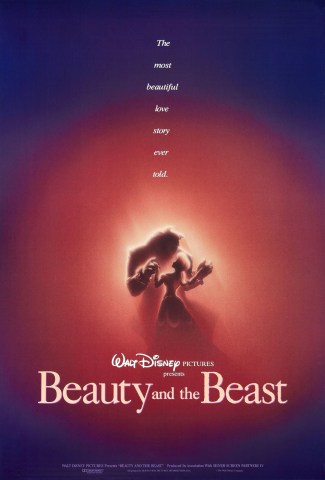
BeautyBeastPosterLike most typical American kids, I grew up with Disney movies in my DVD collection. Some films are great, some were great, and some are just trash.

Beauty and the Beast (B&B) is great. I’m sure you already know that if you’ve seen it. But here are some details you may not have noticed:

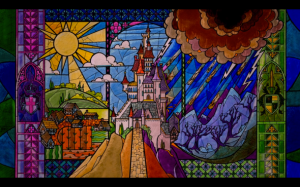
——1) The prologue is narrated in stained-windows… stained-windows… reminds you of what? What kind of buildings have stained-windows? For what building was stained-glass invented for? If you said castles or palaces, then you’re partially correct. The answer: Christian Castles/Palaces — aka: churches.

——2) The Rose is the main motif in the movie, especially a rose that seems to countdown. If that doesn’t hint at the ROSARY (which is a bouquet of prayers we offer to Our Lord’s Blessed Mother), then I don’t know what does!
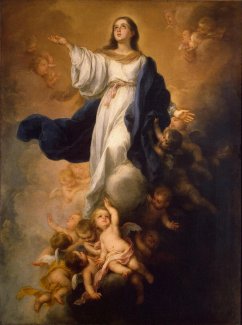
the-assumption-of-the-virgin-1670——3) Speaking of the Blessed Mother, what colors do Belle wear? Did you know that light blue and white are Marian colors? Notice that the majority of traditionally colored Mary statues and icons show her to be wearing blue and white.

——4) Shortly after we meet Belle, she stops where and sings to what? She stops at a fountain, and she tells a story in song to a little lamb. A fountain is like a well, and in Sacred Scripture, it’s typically the place a man and woman have a significant meeting (recall Isaac and Rebekah, Jacob and Rachel, Moses and Zipporah, Jesus and the Samaritan Woman). Well, in B&B, we see Belle singing to the lamb: “She doesn’t discover that it’s HIM till chaper 3…”

This is significant because Jesus had to be revealed to the Samaritan Woman, had to be discovered. And three is a convenient number that not only rhymes, but symbolizes the third day after Jesus’ death — when His Resurrection is discovered by Mary Magdalene. Also, Jesus is the prince in disguise!
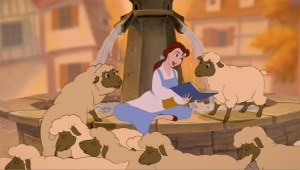
BelleLambAnd what does a lamb symbolize in Christianity? “Agnus Dei…” which means “Lamb of God…” which means Jesus.

And Belle is Mary, and Mary is the God-bearer, and God is love… so Belle carries love.

Betcha never connected that “Mary had a little lamb… little lamb… little lamb. Mary had a little lamb whose wool was white as snow” is talking about the Blessed Mother who has a Son who is innocent and pure.

And in B&B, everyone thinks Belle is such a strange, funny girl, such an odd girl unaware of her own beauty. Well, Mary is odd too! She was immaculately conceived, and no one else was. She would obviously have been singled out as exceptional and strange and completely oblivious to how beautiful she is (because of her humility). Oh, oh, oh! You don’t know you’re beautiful! Oh, oh, oh! That’s what makes you beautiful!
BeautyBeast——5) What about what causes the prince in B&B to be cursed? Wouldn’t that be the sin of pride? Being spoiled, selfish, unkind… and pride causes us to be isolated to the point that we curse ourselves. Pride was the Original Sin, and it caused us to be disfigured, naked, ashamed, lonely and doomed to die. And so after the prince commits this sin, he becomes a beast: ugly, naked, ashamed, lonely, and doomed to die.

——6) Our sin never affects us in isolation. Sin is like contagion: it spreads. And so Adam and Eve’s sin caused all of us and the rest of Creation to crash and burn. In B&B, the curse spreads throughout the castle, infects the servants, the forest, the world around the property. Sin is never personal; it affects everyone eventually.
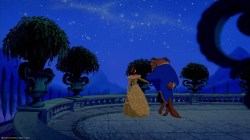
BeautyBeastBalcony——7) And only what can redeem Beast and his servants? Only if he truly loves and is truly loved in return, right? And doesn’t Belle bear that love? She’s the one to break the spell… she must give her love to him, must give her word to him. Notice later in the film that it’s only when Belle says she loves him is the curse busted. This is so symbolic of Mary’s fiat to the Archangel Gabriel, when she said “let it be…”

——8) At the ball, notice the colors of Belle’s gown: yellow and white. Those are the colors of Mother Church, the Bride of Christ, the redeemed. The colors of the Vatican flag hint at this.

PiercedSide——9) When Gaston (whatta jerk…) attacks Beast, where does he stab him? In the side! The right side! Take a look at any crucifix and you’ll see that’s exactly where Jesus was pierced (John 19:34).

——10) Then, when Beast dies in Belle’s arms… it looks a lot like the Pieta.

——11) And earlier when Beast released Belle after the ball, he in effect accepted sin (the curse) and death. Recall Beast’s response when his servants warn him of the mob’s approach: “It doesn’t  matter, just let them come.” This is a bit similar to when Jesus accepted our sin (though he was sinless) and accepted His impending death, even death on a cross.

——12) But true love breaks the spell (remember that God is love). After Mary gives her fiat, God is allowed to intervene (allowed to love) at the ground level of our humanity to redeem us through the Passion and Resurrection of Jesus. And in B&B, after Belle’s fiat, we see Beast rise from the dead in glorious light. His body shines forth as a glorified body. This is totally an allegory in the movie for the Resurrection of Christ!BelleLoves

——13) And Beast’s salvation also saves the whole castle (transforms all the gargoyle’s too!), all his servants and the world around him.

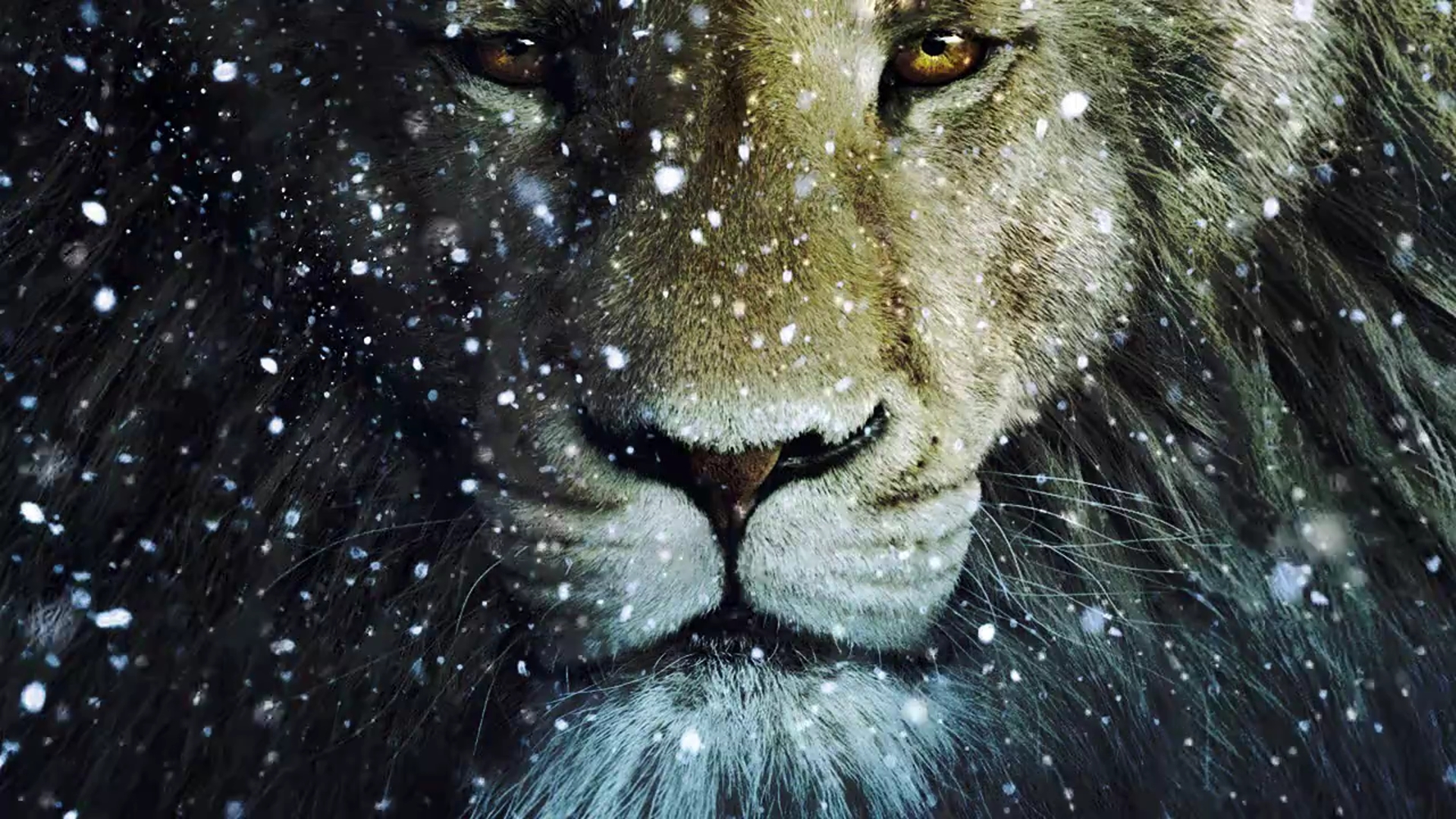
——Bonus) Beast can be seen as a Christ figure, in that Jesus is also known as the Lion of Judah, an idea that C.S. Lewis used when writing the character Aslan in his Chronicles of Narnia.

Aslan

So there you have it, 13 or so details I noticed one day while re-watching this classic.

——BONUS) Found out recently via a comment below that the Prince’s name is actually Adam (thanks Anh-Thu!)! This further adds to Biblical symbolism, since the New Adam (Jesus) and the New Eve (Mary) in a perfect way undo the sin of the first Adam and Eve. We see this played out in Beauty and the Beast because Adam (the Prince) becomes a new man at the end (a new Adam), undoing the past sin (most importantly with the love and help of Belle [who can be seen as a type of Mary, a new Eve.]).

——BONUS 2) Here, we see an even deeper connection with points 5 and 6 above. Now that we know the Beast symbolizes Adam, we also can see how similar their reaction to sin is. After the Original Adam sinned, he felt great shame, thought himself ugly and hid himself. So too does the Beast do this!

——BONUS 3) That’s right, it gets better! According to the film’s plot summary, the beggar visits the Prince on CHRISTMAS EVE. Now, this definitely makes me recall that on the First Christmas Eve, Mary and Joseph [and the unborn Jesus] were beggars trying to find a place to stay. The people they asked turned them away, not knowing the beauty of the Holy Family and that someone very powerful, special and beautiful was hidden within the Holy Couple: Jesus.

——See here for the review over the 2017 remake

Happy to be Hated

Today is Good Friday.

Christians today around the world remember the scourging, suffering, crucifixion and death of our Lord Jesus Christ. Yes, it is the day we murdered God, the day He let us kill Him.

There are many things we can discuss about this: why did God let us kill Him? how can God die? why would we do such a thing? etc…

But right now, I want to share why I think we call this infamous Friday good.

Doesn’t it seem ironic that we call this day good? It’s like calling September 11th Good Tuesday. Doesn’t it seem absurd? And doesn’t it seem even more absurd to be happy about it?

What do I mean? I mean it is a great thing, a happy thing to be hated by haters. It is a good thing to be hated by what I dub:

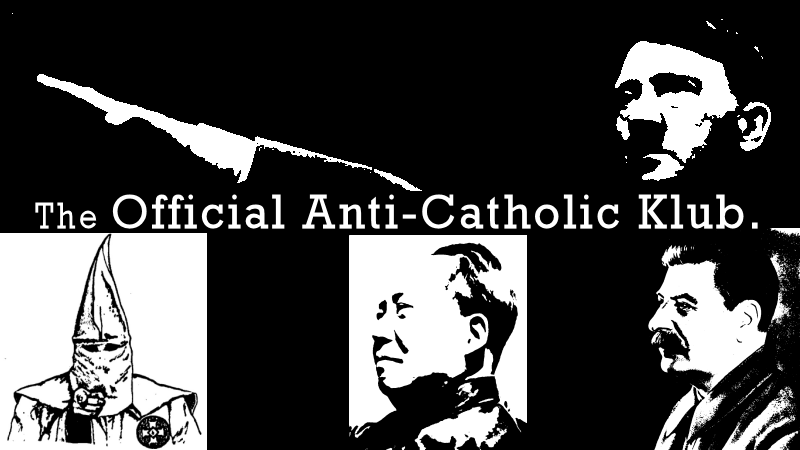
AntiCatholicKlub

Yes, this exists. Members of the Official Anti-Catholic Klub [OACK] include the KKK, the Nazis, and Communist Parties. There are other members too, like radical Islam, Satanic cults, militant atheists, and even some misguided Protestant denominations. All these groups are very different from one another, but they share one thing in common: they hate the Catholic Church.CatholicHaters

Why do they hate the Church? Because they want power they don’t have. They want power they can never have. They want to have a leader who leads forever. They want a leader who can create universes from scratch. They want a leader who is not only invulnerable and incorruptible, but immortal and invincible too. A leader who — even if he somehow gets killed — can resurrect Himself!

And we have that one-and-only leader in the Lord Jesus. So on this Friday twenty centuries ago, when hatred, death and sinners (you and me) cut down our Christ, we Christians call it a good day — because this day means we’re on the right side. We’re on the winning team.

We’re supposed to be hated by evil-doers. We’re supposed to be hated by the prideful, the envious, the wrathful. Because if they like us, if they call us friend… that means we’re not threatening to them, that means we are just one of them — part of their klub.

So don’t be afraid of being hated by the haters. It’s a good thing. But notice that if you hate them in return, you just joined their team…

So do what Jesus does.

Start today.

P.S. If you’ve never watched the Passion of the Christ, give it a look!

The Forbidden Christian

Last week we saw Yuna Kim’s Catholic faith fearless on the world stage.

This week, a research organization has once again named North Korea as “the worst country in the world for Christians.”

If you didn’t know the drama: North Korea and South Korea (where Miss Kim calls home) share the same border. They are one country divided by bombs and barbed wire. They are now neighbors, each with soldiers staring down the other side, fingers on their triggers — just waiting. It’s been this way since the end of the Korean conflict in the 1950s. And the South’s capital — Seoul — is only 120 miles from the North’s: Pyongyang. That’s right, those two cities are closer together than Detroit is to Chicago.

Many of us know that North Korea is probably the worst country in the world for anyone, but the paradox here is jarring. Let me help you see it: Christians are forbidden on the north side, and on the south side are Christians free and flourishing. North: Christians are hunted and sent to prison camps. South: Christians are winning Olympic gold medals. And South Korea is home to probably the fastest growing Catholic community in the world.

Zooming out, here’s the big picture:

The map details the 50 nations openly hostile to faithful Christians (I say faithful because a Christian in-name-only is no Christian at all, and I say openly hostile because there are plenty of regimes and nations that persecute us indirectly and in secret.). From my own ethnic background, I see Vietnam at #18, and China at #37. You can click on the map to download the full report, or here to see country by country profiles of persecution.

So please, remember that “often completely unaddressed in the West is the fact that Christians are the largest persecuted minority in the world.” We — faithful Christians — always have been the most persecuted, and always will be. Why? And why so many?

Why? Because Jesus is offensive. He tells us we must become perfect. He tells us we must sacrifice. He tells us we must not lust. He tells us we must carry a cross just like He did. In a world that says individualism and license-to-do-anything-without-consequence is supreme, He tells us we must be less us and more Him. And He tells us that this world is not our home, that we are made for better, and the world is insulted by that. The world does not want us to be better than it. It wants us to worship it, to die with it, sleep with it and rot with it.

And why so many? Because committed Christians are among the most convinced of their Faith. Nobody dies for what they know is a lie, or for a hobby, or a social club, or a free time fellowship. But if what they believe is True… and if they are convinced, convinced absolutely by reason and faith that Jesus rose from the dead, if so! then there is no force in the universe that can sway them to admit that the Truth is a hoax. They would die and disown the world rather than lie and disown Christ.

And those Christians among us who refuse the world?

What else should we expect from the world that even dared to butcher God Himself?

So the persecution will continue, and probably worsen. And that’s when the courageous and faithful Christians rise. And some have already rose. They live and died in those hostile and forbidden nations. They are more renown in Heaven than we are. They are the saints and martyrs.

May those saints pray for us Christians who are too busy being comfortable to seek greatness.

Made for Greatness

P.S. It is in honor of these persecuted Christians that I named my publishing entity Banned Books Press. And the most banned book of all: the Holy Bible.