
During the little blizzard today in Detroit, I got the chance to see “The Revenant“. Though the movie is set in the winter of the American Midwest, it was a film on fire. Here are three major points in the movie worth a Holy Smack about: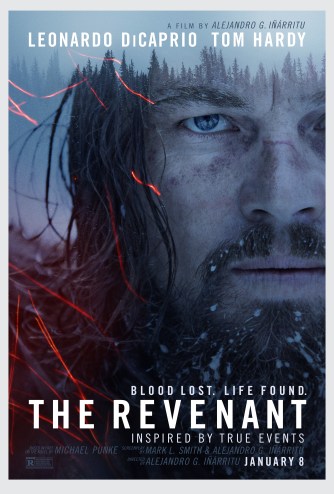
—
—
—
—SPOILER ALERT—
—
—
—
—–1) The misuse of Christianity: we see Tom Hardy’s character (Fitzgerald) spouting the Lord’s name and calling on God for all the wrong reasons. Most of us do this when we curse God, or use His holy name as a curse, or worse! This is extremely insulting to God, Whose name is power, love, grace, life, truth, beauty, goodness, almighty. To use His name for pathetic things, for things against His will and identity, is offensive. We also see an example of this wickedness when people use God and Christianity as an excuse to do evil: American slavery’s justification that Africans are descendants of Cain (their “mark” is the color of their skin).
In the movie, we also see misuse with the “Our Father” prayer (aka: the Lord’s Prayer) when the captain forces someone to say it under distress and threat of death. Prayer is not a tool for threatening or torturing someone. Prayer is a gift we get to have to talk with God. Its use any other way is a depravity.
—–2) But then the movie shows the correct use of God’s name and Christianity, in two ways. First we see Leonardo DiCaprio’s character (Hugh Glass) approach a Catholic church in his dream. The church is in ruins, its bell is hanging on edge but still tolling away, and its icons are aged but dazzling: it’s the most colorful thing we see all film long. We see the saints, and then we see the crucifix: Jesus on the cross. We realize that it is Glass’ son, Hawk, who is in the church waiting for his father. He holds a fire to the crucifix, letting us see the Lord’s feet.
As Glass enters the church, he finds his only son waiting for him. We also know that his only son had died for him already, earlier in the film. The connection becomes apparent: God lost His only Son, and Glass lost his only son. Glass suffers here with God the Father. At this point, we see a connection with what Glass told his son before: “You are my son”, as in “You are my beloved Son” when God speaks at Jesus’ Baptism (Matthew 3:17). The film is truly a film about a father losing his only son, and learning to suffer with God.
Another insight about this church scene: no matter how broken down the Church appears, the Church remains a place where our loved ones can be found. In the Church Triumphant (Heaven) and Church Suffering (Purgatory, enroute to Heaven), we find reunion with those beloveds we lost. They await us! They are in the Father’s home and they are waiting; we only have to go to the Church to find them. The Church is the family of God, the body of the Lord. So next time you are at Holy Mass, realize that all Heaven is there with you. All the angels, all the saints, Almighty God is there with you, for you.
—–3) Finally, the film shows us Glass surrendering justice and revenge to God’s control. Whenever anyone is so close to a climax, so close to completing (achieving) an intense act, it takes incredible self-mastery and will power to stop. In this case, Glass stops just short of killing Fitzgerald. He remembers that his friend had also lost his family and home to murderers, and his friend said “Revenge is in the hands of the creator.” His friend’s act of letting God be God comes back to set an example for Glass, who says here, “Revenge is in the hands of God.”
Surrendering his quest for vengeance to God is the same as surrendering our quest for justice to God. Actually, it’s the same as surrendering anything to God. When we let God have control, we are letting the person who knows everything, who knows every perspective and nuance and secret, make the call. We don’t know it all to make a good call, but He does.
We also must realize that God loves us more than we love ourselves. Hawk’s murder hurts Glass. But it offends God even more, in fact, infinitely more because God is infinite! And so His love is infinite! So murdering Hawk offends Glass, but offends God forever (unless it is atoned for and repented of). Even more: since God loves us so much and went as far as dying for us, anyone’s murder means that the murderer is spitting in God’s love, saying effectively that He died for nothing. Example: I love my wife, I love her enough to die for her. Someone comes along and says I shouldn’t die for her because she’s not worth it, that in fact she is so worthless that she should be killed. I would be very insulted, because I love her enough to die for her!
But God already did die for us. And everytime we murder, cheat, betray, hate others, we insult God because He loved enough to die for them. We are telling God that He died for worthless people.
And so, Glass’ surrendering of vengeance to God’s providence shows us we should do the same. And by doing so, Fitzgerald’s last taunt falls limp: he says that getting revenge will not bring back Glass’ son. Hawk is dead regardless. And that’s true…
But God can resurrect us all.
And Glass’ act of virtue (surrendering revenge to God) guarantees he and his son will rise and be together again.
—–So as you can see, you should see “The Revenant”.
—–Bonus) Anyone else get the feeling that Glass’ wife was a type of Mary? The way she whispered to him in his memories was like prayers, the way she appeared was like apparitions, guiding him and encouraging him.
—–Bonus 2) Being that the film is set in 1800s America, the church shown most likely had the Traditional Latin Mass (I just had to say it).

 That’s right. Isolation chambers. Also known as baby rooms, or cry rooms, where parents attend Mass with their infants and toddlers, safely behind soundproof windows and walls.
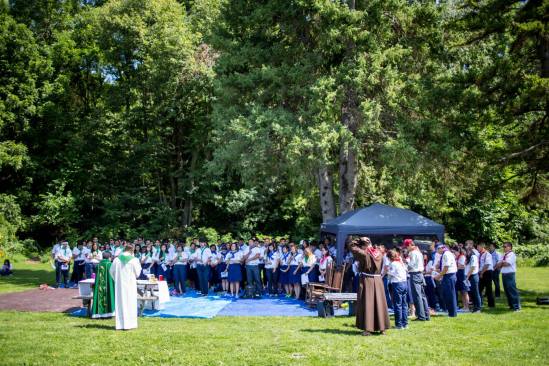 I was at the Midwest’s annual weekend training camp for leadership in the
 ![[Korean Figure Skater, Yuna Kim, wears the veil.]](https://holysmack.com/wp-content/uploads/2014/08/yuna-kim-veil.jpg?w=210&h=300)

 When I read Crystalina’s thoughts on the mantilla, the idea of wearing one intrigued me, but I brushed it off because I didn’t want people looking at me funny or thinking I was getting above myself. But the image of the veil kept popping into my head, incessantly and constantly. I decided to pray about it and leave it up to God to show me what I should do, because if I was going to go all out Mary-style, I needed to know exactly why I would. In the meantime I did some research on it. I found that several First Ladies, including Jackie Kennedy, Nancy Reagan, and Michelle Obama, all wore veils upon meeting Popes John Paul II, Benedict XVI, and Francis. If powerful women felt the need to veil themselves in the presence of the Holy See, why shouldn’t we veil ourselves in the presence of Jesus in the Eucharist? Not only does the veil show that women are sacred, it also helps you grow into your sacredness. The wearing of the mantilla promotes the growth of virtues such as chastity, purity, humility, and modesty, all of which are exemplified in the Virgin Mary, who is always depicted wearing a veil.
![[Icon by Mina Anton]](https://holysmack.com/wp-content/uploads/2014/08/maryjesus.jpg?w=212&h=300)
![[It sees you, but you don't see it.]](https://holysmack.com/wp-content/uploads/2014/05/predator-02.jpg?w=344&h=184)
![[O Mary, conceived without sin, pray for us who have recourse to thee.]](https://holysmack.com/wp-content/uploads/2014/05/mmedal.jpg?w=215&h=215)

 Holy Smack