The Romance Tongue

VaticanAnd when I say Romance, I mean as in relating to Rome, as in the Roman tongue, aka: Latin.

The Roman Catholic Church [aka: the Latin Church] still uses Latin today. Sure, it causes some to wonder why, and causes others to be suspicious. After all, isn’t Latin a dead language? Does anyone even understand it anymore? Why keep up with it when it’s irrelevant?

Well, I’ve heard many of those thoughts throughout the years, and I’ve had many of those years to reflect and pray about it. Here’s what I think:

1) Latin is Mother Church’s language. I mean, wouldn’t you wanna know the language your own momma speaks? Don’t you love her? It’s a part of your heritage, your legacy! (Which explains why I love learning Chinese, academically and for fun.) If you don’t know a lot of Latin, at least know how to goo-goo-gah-gah in Latin, and lip-sync some of her favorite love songs!

2) Latin isn’t so much a dead language as it is a language that has been left alive for one thing, and one thing only: worshiping God. Think about it: we use common languages (like English, Spanish, Chinese, Vietnamese, Korean, Afrikaans, etc.) for common things. We use those languages to work, to curse, to joke, to love, to hurt, to heal, etc. When we use any language well, then it’s all good. But we can also easily use those languages to harm… except we can’t really use Latin to harm! Not enough of us know it well enough to use it for evil. And so Latin’s limited use has left it off limits to common use/abuse, and has dedicated it now as a custom-made language for praying and serving God.

3) Common languages (aka: vernacular languages) are changing constantly. Words in English have changed since Shakespeare. Styles of Chinese have evolved since the Oracle Bones. They change because people use them, and people change. But God does not change. He is the same yesterday, today and forever. Latin today symbolizes our unchanging God superbly, because Latin does not change! It hasn’t changed since the Roman Empire went to ruin. And now it’s not going to change anymore because it’s a “dead” language: what a Latin prayer meant 1,000 years ago means the same today, and always. Whereas maybe 100 years from now English will be too different to even read an English dictionary!
The Latin Missal4) I cherish being able to pray in Latin. I pride myself in learning new Latin hymns and prayers by heart because it humbles me. I love it because it’s like the trust-game: even though I don’t understand every word and nuance of the Latin prayer, I do know that Mother Church has been praying this way and teaching us these prayers for centuries, and countless saints have said the same prayers, and it worked for them! It teaches me to trust my Church, my Faith, and pray the way she has prayed to her Lord and Savior for ages and ages.

5) Lastly, if some exorcists claim that the demon corrects them when they stumble through Latin in the Ritual, then who am I to think Latin is inferior?! Hell don’t care if English prayers are mispronounced, but mutter a Latin error and the devils go out of their way to correct you while you’re thrashing them??? I don’t know exactly why, but that just means there’s something about Latin you just don’t mess with or brush off. After all, some exorcists even claim that the prayers in Latin are just more effective.

This recording of an exorcist’s testimony reinforces the claims behind the power of prayers in Latin during his exorcism sessions:

So there you have it: five little reasons why I like to have some Latin in my pocket and in my prayers.

P.s. Did I mention that dinosaur names are in Latin?

[Tyrannosaurus Rex!]

[Tyrannosaurus Rex!]

Winter 2014 Seminary Classified Notes!

Today, my first year as a Catholic seminarian has finished! A good bunch of my brother sems here graduated and are moving on, while some have found that Jesus is calling them specifically elsewhere. I’m still finding the time to reflect with the Lord on my discernment experience, but for now… enjoy the top secret notes I’ve taken during my academic missions here:


[above is the 1st page of notes from my Theology 249 class: Introduction to Sacred Scripture.]

[above is the 1st page of notes from my Theology 249 class: Introduction to Sacred Scripture.]

[above is my 4th page of notes from my Latin 122 class: Introduction to Ecclesiastical Latin]

[above is my 4th page of notes from my Latin 122 class: Introduction to Ecclesiastical Latin]

[above is my 4th page of notes from my Philosophy 300 class: Epistemology]

[above is my 4th page of notes from my Philosophy 300 class: Epistemology]

[above is the 3rd page of notes from my Philosophy 235 class: Medieval Philosophy]

[above is the 3rd page of notes from my Philosophy 235 class: Medieval Philosophy]

*not pictured is a sample of notes from my Philosophy 365 class: Philosophical Anthropology, but believe me, it was a great class.

** click here for my notes from the Fall 2013 Semester!

Memo on the Memorare

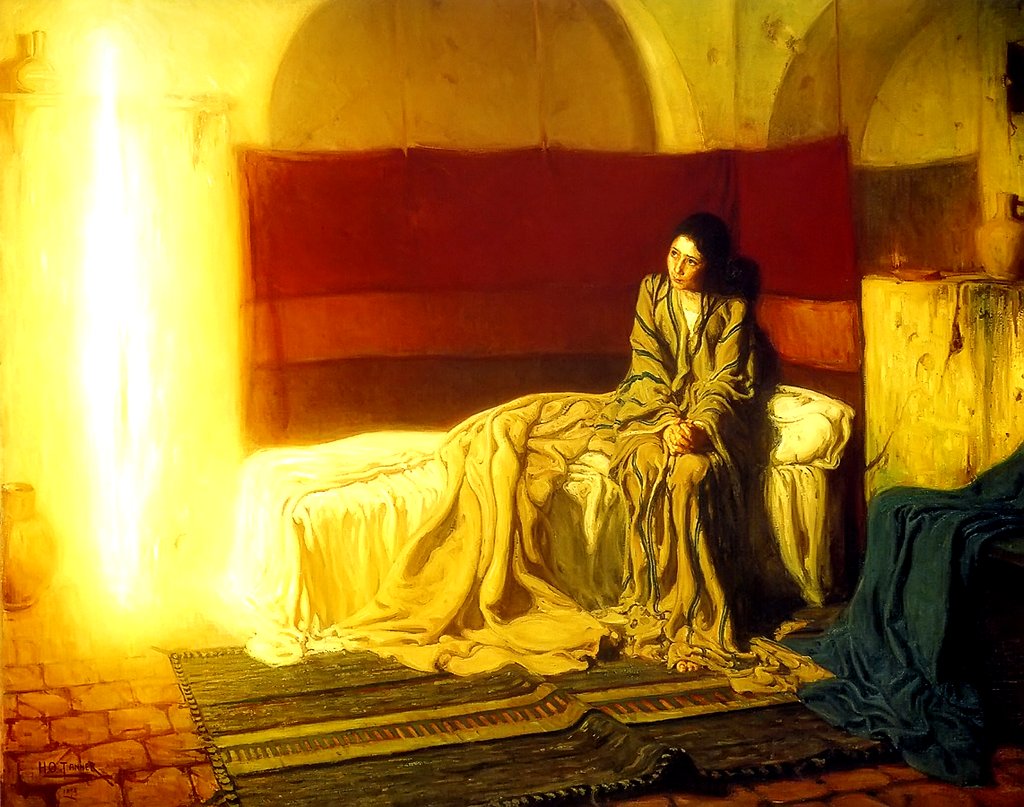
Today the Church celebrates the Solemnity of the Annunciation: when the Archangel Gabriel spoke with Mary, when God proposed to the Queen… (Luke 1: 26-38)

My favorite icon of this cosmic event is painted by Henry Ossawa Tanner (it also heavily inspired my writing of Little Miss Lucifer’s first chapter).

Henry Ossawa Tanner's "Annunciation"

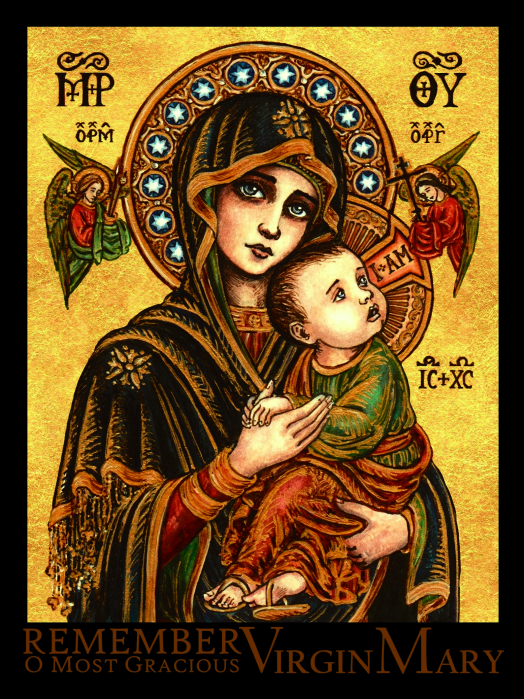
But may I also present, on this solemnity (which overrules Lent! That’s right, we may feast today!), the newest Holy Smack Holy Card made possible by artist Cecilia Lawrence’s faith, talents, and generosity:

[Our Lady of Perpetual Help]

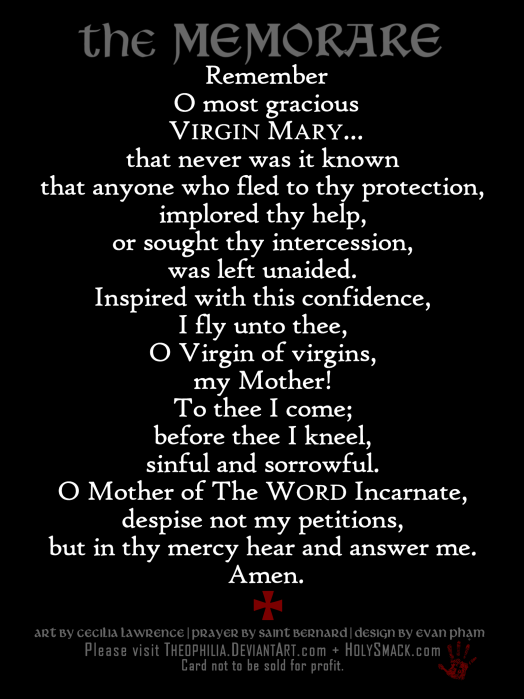
The Memorare

[The Memorare — I pray it every day!]

Funny story: after I stumbled upon Cecilia’s DeviantArt site, and after contacting her for the privilege and permission to present her work on a Memorare prayer card, I found out that her very own brother lives, studies and discerns the priesthood in the same seminary as myself! What a small Catholic world it is! So please, pray for her, her brother, and all of us here who are offering to God our talents. Thank you and Happy Feasting!

Special Deliverance

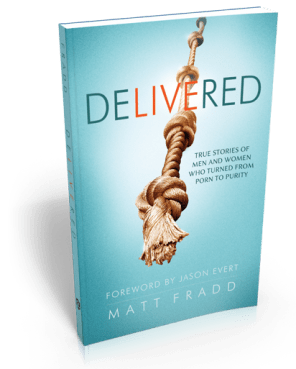
I just finished reading a book!

The book is Matt Fradd‘s Delivered. It’s a great collection of nine testimonials from men and women who once were or are struggling to be free from pornography addiction.Delivered

Yes, there is such a disorder as porn addiction, and if you don’t believe me, consider this article, and this article, and this one too… and this one. (Btw, the last one was made by an ex-porn actress.)

And if you were or are addicted to porn, if you are tempted, if you think porn is harmless, please know that I was like you.

I was caught up in lust starting from a very young age. I remember the first incident was when I was in fifth grade, and it worsened when my family got Internet for the first time (in 1998 – yes, I just showed my age) and I was trapped for ten years.

For ten years I abused women and girls by lusting after them. I abused my imagination, my body, my freedom, my desire to love. I was butchering my ability to truly love and to truly be loved.

Then in 2006, I was Holy Smacked in the face. I was punched with this insight: “The problem with pornography is not that it shows too much, but because it shows too little.”

That’s right. Read that quote again: Porn is not showing too much — it’s not showing enough! So… what is there more to see?

How about all of her? She has a name. The girl is someone’s daughter. She’s someone’s sister. Someone’s granddaughter. The woman is someone’s wife, someone’s mother, someone’s aunt. She is someone’s friend. She has dreams, goals, aspirations. She has a childhood, a history, a whole life-experience. She’s not just a body, she’s not just body parts. She has an irreplaceable soul, a unique mind, a heart made for love.

The most beautiful part of a woman is her. All of her.

And porn blinds us from seeing all of her for who she is. Porn blinds us from seeing anyone for who they are, including the person who uses it. There’s so much more to a person than we can see (If you don’t believe it, look over a copy of Delivered for yourself).

My life changed when I realized this (via the Theology of the Body). Actually, my life more than changed, I felt more free, strong, manly and a follower of Jesus than ever before. I even saw more in girls and women than I could ever see while trapped in lust. Today, whenever I see a beautiful person, I stop and sigh a prayer: “Oh Mary, conceived without sin, pray for this person, and all her beloveds, for they all have recourse to thee.”

And if she’s especially beautiful to me, then I pray and pray and pray for her to be safe from my lust and the lusts of others. I pray over and over, and thank God for creating and nurturing this person, and I pray for her to become a saint. And by this time, I think so much about who she is that I’m too lost in wonder with God to start lusting.

What just happened there? What exactly?

I just turned the temptation to abuse the woman into a reminder to pray for her and thank the Lord. And guess what: that really annoys the devil. REALLY ANNOYS that leech! And he can’t do anything about it.

Last thing: Don’t get me wrong, it’s not like I don’t feel tempted anymore. I’ll be tempted until I die. But now the chains are off, and I know where the gun safe is, and I know how to aim and shoot.

[Click on the safe for your own weapons.]

[Click on the safe for your own weapons.]

The Underground Rail

During the past few weeks, there’s been quite a few blog posts railing (pun intended, you’ll see) against the way Roman Catholics receive Holy Communion in the past 50 years. Complaints have ranged from the current mode as being too factory-like, too restrictive, too forceful, and even too formal. Calls were made to make it all more spontaneous, covert, and unobtrusive. You can see what I’m talking about here and here.

Well, I was at my Holy Hour today, and reflected on that perspective. There were good points to be made, but I felt the overall argument was against the overstepping ushers – not necessarily the way we receive Communion.

But then it got deep.

I gazed at our Lord in the monstrance, and He reminded me how I felt less than 24 hours earlier, when I was at a Low Tridentine Mass in a beautiful, yet cold, dim, downtown church (St. Joseph’s of Detroit). It was time for Holy Communion, and we made our way to the communion rail (aka: altar rail. Click here for more about the different parts of a Catholic church building.). I knelt at the rail that divided the nave from the sanctuary, that kept us at a distance from the high altar, that we waited at as the priest approached us and spoon fed us God. I remember feeling strange kneeling beside a man I didn’t know, among strangers who I’ve never seen.

[Notice the Altar Rail along the bottom of the photo.]

[Notice the Altar Rail along the bottom of the photo.]

BirdFeedingThen I realized the beauty – the intimacy. At a communion rail, I am there waiting long enough to gain a sense of angst, to wander in the wonder, to reflect, pray, and be childlike. At a communion rail, we get to wait, to anticipate, to be near so beautiful a sanctuary. The rail serves partly as a limit, a boundary, to keep us in check, to remind us that we are not holy enough, not ready enough, never good enough! The priest – who is in persona Christi (in the person of Christ) – must bring Jesus to us. Our Blessed Lord must come down to us, must stoop down to us as we kneel in wait before Him, and He must feed us like we are his lost and hungry flock, like we are starving little hatchlings still in the nest. He must come to us, because we as mortal man can never lift ourselves to Him. He first loved us, as any parent must first love their child before any of us can ever return love.

[The priest prays for every communicant, one by one as he/she receives communion: “May the Body of Our Lord Jesus Christ preserve your soul unto everlasting life. Amen.”

And when we are knelt, we are always lower than anyone who is standing. The communion rail encourages us to kneel before Beauty, to stare up with awe at the most gorgeous part of the church: the altar, the tabernacle, the frescoes and stained windows, the statues and the view. So, we are lower than the Lord, and He comes down to our level, and we gaze up at Him as He gives us Himself.

Kneeling also renders us vulnerable to He who is standing. Jesus reaches down to us, gives to us, then lifts us from our humility and vulnerability into intimacy, into His glory and dignity. Then there’s kneeling beside and among strangers during Communion, and when we receive the Lord with them, we become siblings all of us. We shared God together. We become spiritually intimate.

Outside of the Extraordinary Mass, I only ever see people receive Communion knelt at their weddings. The new couple, before the altar, knelt together, intimate as they share God. If this is such a powerful experience for the newlyweds, then no wonder it was the norm for centuries! For millennia even!

Then came the communion line we know of today… sometimes feeling more like a conveyor belt as we shuffle up to receive a handout. We take, then go – like a dine-and-dash, like a carry-out. It’s too quick, too efficiency-oriented, too much like a factory. That’s where I agree with the detractors of “orderly” Communion. But I cannot agree when they seem to call for a random mad-dash, bad-timing-prone, childish and Black-Friday-esque Communion experience (yes, someone even said it should have the fervor of Black Friday chaos. Mind them, people are trampled to death on that shopping day…). The rail calls us to be childlike, but the craziness asked for calls us to be childish!

Yet despite those and other points that I disagree with, I would say the railers are actually deeply longing for the rail of old, the time tested communion rail of the Vetus Ordo Mass, the largely forgotten and neglected and unjustly detracted and overlooked and forced underground communion rail. Because I realized how beautiful and intimate Holy Communion is… and I did not realize it in some queue, but at the rail! among and beside my siblings! humbled before God.

And you can see more of what I’m sharing here.

Fall 2013 Seminary Classified Notes!

Besides ministry, prayer, fraternal hang-outs, spiritual direction, physical and spiritual exercise, Mass and worship, we seminarians also go to class. Here’s just a little look at what I’ve been jamming into my brain the semester just past:

[above is the 5th page of notes from my Philosophy 225 class: Ancient Greek Philosophy]

[above is the 5th page of notes from my Philosophy 225 class: Ancient Greek Philosophy]

[above is the 2nd page of notes from my Latin 122 class: Introduction to Ecclesiastical Latin]

[above is the 2nd page of notes from my Latin 122 class: Introduction to Ecclesiastical Latin]

[above is the 4th page of my Philosophy 350 class: The Philosophy of Nature]

[above is the 4th page of my Philosophy 350 class: The Philosophy of Nature]

Remembering Tragedy

Tomorrow is the one year memorial of the Sandy Hook tragedy. I was reading Jennifer Hubbard’s reflection in the Magnificat about her daughter Catherine being killed. Somehow, I was then reminded of the Fall — our Fall from Grace way back in Eden — when we chose to disobey and eat of the Tree of Knowledge of Good and Evil.

And I know for certain God always intended to give us this fruit, this knowledge. Why else would He create such a thing otherwise? A thing that was “good for food, pleasing to the eyes, and desirable for the knowledge it would give”?

DO NOT EAT. DUH!

DO NOT EAT. DUH!

But He wanted us to wait. The fruit was not ready, not yet ripe, and we were not ready. He was saving the fruit, waiting for the right time when it was safe for consumption.

But we wanted to know, and the fruit was still bitter and our digestive system was not mature for it. It was like us feeding solid food to ourselves as newborns. And we got terribly sick.

And this is why there is evil in our world now… we asked to taste it, to bring it into us, to know it, and it has ravaged us with its poisons. The goodness and sweetness of the fruit we forsook when we couldn’t wait, when we chose to have the immature flavor instead.

And we are far from done. Evil can get far worse. We have not yet known its full decadence and toxin. The worse is yet to come. We indeed wanted to know, so now we’re still finding out how wicked it can taste.

Yet, New Fruit has been given to us by the New Eve. The Blessed Fruit of Her womb turns water into wine, and wine into His Precious Blood. He turns bread into His Sacred Heart. Stop settling for the unripe, the bitter, the disgusting, and seek instead the true life, true sweetness, true hope. Salve Regina, Mater misericordiae, vita, dulcedo, et spes nostra, salve…

The Fall, and the New.

The Fall, and then The New.

There Will Be Blood

SurgeryPrepI was at a Tridentine Mass and the priest was vesting in the sanctuary. Altar men in full cassock and surplice were assisting the priest, like how nurses assist a surgeon before the operation, like how technicians assist an astronaut before launch, like how safety personnel assist engineers into haz-mat suits before a mission.

Yes, it was complicated, those Extraordinary Form chasubles of antiquity. But as I watched the priest vest in chasuble and maniple, my imagination took off (as you can see) and my mind stopped when I saw the symbolism. And when I saw it, I could never unsee it. Permanent and powerful.

Vestments

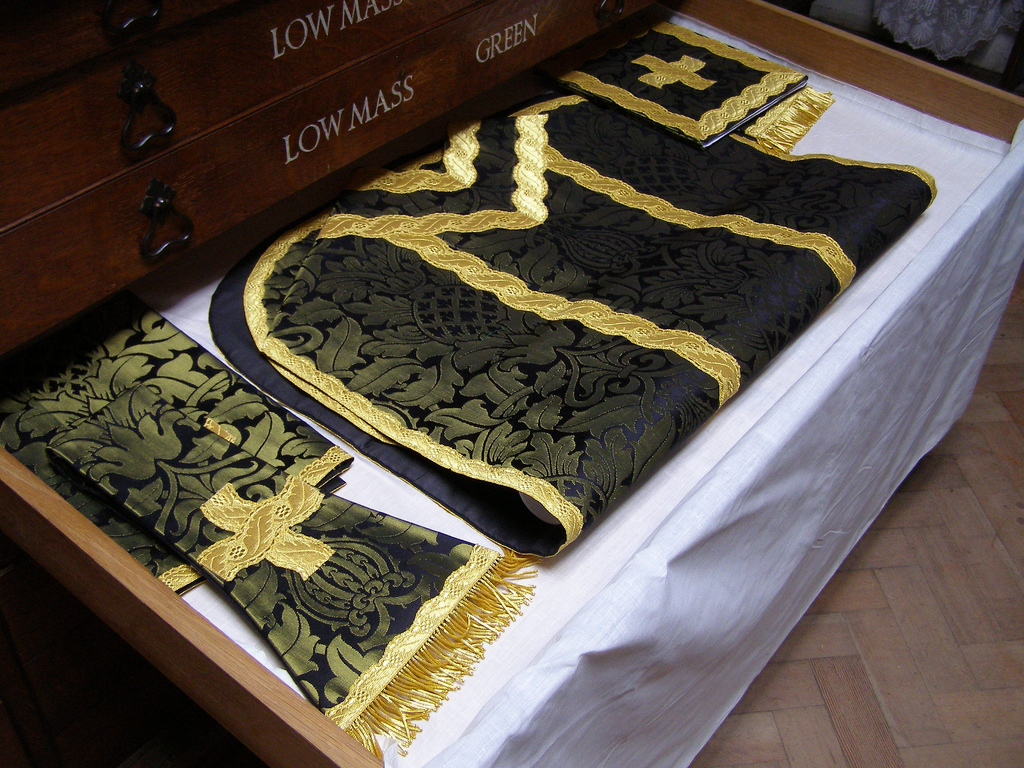
The chasuble was a giant apron, not unlike the kind that a dentist buries you under before they take X-rays of your jaws and teeth. The chasuble is thick, heavy and dense, and looks almost stab-proof.

Now why would the Church vest her priests in these bulletproof vests… err, aprons?

Why?… I wondered.

Because there will be blood. Because there will be BLOOD!

It’s going to get messy at Mass. It’s a sacrifice… the Lamb will be slain, the priest will fill a chalice with its precious blood, the priest will feed us with fresh flesh from the Lamb.

So of course a chasuble is necessary!

FinalChasubleManipleBurseVeilBut now, what about that maniple? That fancy, overgrown handkerchief pinned onto the priest’s left arm? It hangs down by about a foot… so obstructive (right?)! Why would that be important…

Because there will be sweat. Because there will be tears shed.

Worship and sacrifice is hard labor. Prayer and service for an hour before an altar, lugging around all that armor, deciphering all that Latin, chanting all that time, expressing all those gestures and postures, genuflecting, stooping, bowing, kneeling and weeping, and more…

So of course a maniple is necessary!

Because love is hard work, because love involves tears, sweat and blood from the lover and from the beloved. And love is the only thing worth it all.Ghent Altarpiece by Jan van Eyck

The Key to Immortality

Hello readers of Holy Smack! Happy blessed Thanksgiving to all you Americans of the United States.

Mao

Because of my Chinese background, I was thinking the other day: who is the most widely well-known Chinese person in the history of mankind?

Could it be Mao Zedong? The infamous and notorious butcher of a chairman? Who was responsible for at least two failed class revolutions in China that resulted in at least 30 million deaths each.

Christ have mercy on him and their souls.

Emperor Qin

Could it be Qin Shi Huang Di? The infamous and notorious butcher of an emperor? The one who mandated that construction workers of his Great Wall improvise when they ran out of bricks. And so the bodies of workers and peasants were used instead. The Great Wall is the world’s longest mass-grave, visible from space they say.

Lord have mercy on them all.Great Wall of Death

… Or could it be Bruce Lee? The famous and celebrated martial artist of the body and the mind?

Yes, my friends — Bruce Lee read, studied and loved philosophy. And now that I’m in the philosophy program at seminary, I’m also discovering the intrigue and intensity of what our human minds can do. But before I am articulate enough to share that aspect, let me share this:

A lover of life!

A lover of life!

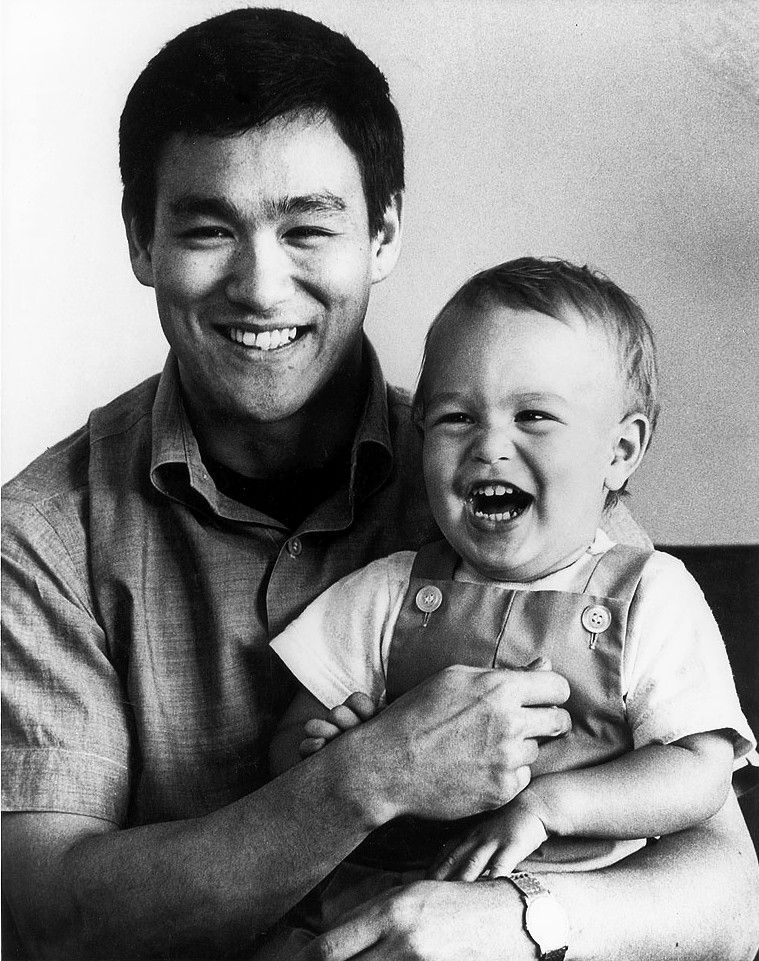
Bruce Lee and his son in 1966.

And what a life Mr. Lee lived! In 32 years, he went from awkward skinny kid stuck in Hong Kong and awkward Chinese immigrant stuck in San Francisco, to Amazing. Just Amazing. It makes me think if he had lived on, what else could he have done? What else? (Reminds me of Jesus Christ, who in 33 years went from unknown to UNIVERSAL SAVIOR… but we’ll talk more about Him another time, aka: Christmas?)

And then I realized that even though Bruce Lee died so early, that I doubt anyone would think his life was wasted. In fact, no matter how short a life is lived — if lived worthy of honorable memory — it is a life of immortal importance. Because we are all immortal. What we leave behind: our legacy, our children, our friends, our love and contribution is all forever. What we leave behind: our crimes, our orphans, our enemies, our selfishness and deprivation is all forever.

So we are all immortal, only the question is: in what way will we be immortal? Will you be immortal in Heaven? and leave tracks behind that help others aim for Heaven? Or will you be immortal in Hell? and leave snares behind you…

For your consideration, please have a look (satisfaction guaranteed):