A Look-See at Lucy

Lucy-BannerWhen the first Lucy trailer hit my face, I was about to scream plagiarism!

On a warm autumn day in 2002, I daydreamed about a girl who had an accident that fully unleashed her mind. From then on, the scenes of how she would live played out in my imagination… and eventually give rise to the raw origins of my novel: Little Miss Lucifer.

I wasn’t worried though, and am not even threatened by Lucy. The story is way different. But even so, after spoiling it by reading the plot on Wikipedia, I still wanted to see what director Luc Besson could do with such a character. Here’s what I think of Lucy:

[SPOILER ALERT]

Saint Lucy1) First, the name of the film and Johansson’s character is — you guessed it — Lucy. But who was the person who popularized that name? Who is the person who every “Lucy” afterwards was named after? Well, like most names we have in English today, those names belonged to saints who launched them into popular use. Think of MaryAndrewJohn, and yep… Lucy.

Saint Lucy was a young Christian woman who was persecuted for her love of Jesus. One of the ways she was tortured before being martyred was that her eyes were ripped out from her face. Many icons of St. Lucy depict her holding her two eyeballs in a dish.

But here’s how this relates to the movie: In Latin, the “lu” in the name Lucy refers to “light,” as in “luminous” or “luster”. When St. Lucy was blinded and murdered, she no longer saw created light (the light of the sun, stars, firelies and lightning), but instead became able to see the true Light of the World: Jesus Christ, the God who created all other lights. (Btw, notice all the emphasis and focus on Lucy’s eyes in the film and its ads.)

In the film, Lucy also symbolizes this as someone who becomes able to see more than light. She can see, and sense, the world we know as mystery. She even explains that time is the standard of defining reality, not us humans and our standards, but time. Now, I don’t agree with this because even time itself can be destroyed (since spacetime is only a product of the Big Bang), and if time itself can be destroyed, then what? Instead, what I take from this is that we do not define what is real or true. Instead, the film tells us that reality and truth exist apart from what we think of it. In short, the film busts relativism (the idea that something is true only as long as we want it to be, and that we can all have our own truths about reality) into smithereens!

Creation of Adam2) Lucy in the movie also amasses huge amounts of information. She and others believe that knowledge is the purpose of life. She gains the ability to time-travel, manipulate matter, teleport, and even control other people. There’s criticism out there that the film’s use of Michelangelo’s Creation of Adam suggests that Lucy has become god. However, if this is the film’s intention, then it cancels itself out in a few ways. First, Lucy knows a lot about how and what things are, but she does not know why: as in why is there such a thing as the universe as opposed to nothing? Why is there life? Why does she exist? Why does she love her parents (their conversation was one of my favorites in the film)? Why is there love anyway? And what is love? Why are some things beautiful and others not? Why does beauty exist?Why does anything exist at all? Second, Lucy can do a lot, but she couldn’t even save her own body from decay. Unless there’s a sequel about her resurrection, she’s a pretty flimsy god. Third, she’s an even flimsier god since she needs a cell phone to tell her friend that she is everywhere (and more on this below). Fourth, is it really enough to know something, to know all things? If you had all the information in creation, but nobody ever existed to share it with, would that be enough for you? If you knew about love and what it was, but you were never loved by anyone, and had no one to love in return… would that be enough for you? What I’m saying is that knowledge is not the purpose of life… love is! And this reminds me of a quote from beloved Pope Benedict XVI: “For those who love, you can never have enough information” — meaning that a lover never tires of discovering and rediscovering  the beloved.

3) So, what’s up with Lucy needing to use the cell phone? In fact, what’s up with all these latest mind-movies (like Transcendence and Her) showing that untethered consciousness still needs a way to be physically expressive? Could it be because God (the real One) created us humans that way? That we need the physical to make ourselves known? That “the body alone, and only the body, can make visible the invisible” (I stole that quote from Pope John Paul II’s Theology of the Body). Think about it: if I had an idea, how would anyone know about it? Unless… I used my brain, nerves, eyes, hands, skin, bones, muscles, etc. to pick up a pen and write it out. Or used my vocal cords, lungs, breath, tongue and teeth to speak it out? We need our bodies, because we are our body. It’s not just something we have, it is us.

Lucy4) And back to the beauty question from #2 above: beauty is one of those realities that knowledge and information alone cannot explain. I mean, how do we recognize beauty? Why does it exist? Why is it important to us? And don’t just think of visual beauty, but think of music, flavor, fragrance, and texture! (Yes, this movie did make me think of this, after all… if knowledge was everything, why bother making it all pretty with Scarlett and cinematography?)

5) Scarlett made me notice another thing: when her roommate was gushing about her night with a man, Lucy was totally disinterested. Lucy not only didn’t care, but even mocked it. This reminds me of why some men and women in the Catholic faith choose a life of celibate chastity. I’m thinking of priests and religious sisters (aka: nuns). That’s right! Scarlett Johansson’s character just exemplified celibacy. Here’s how: priests and nuns put the ordinary and natural desire for married sexual intimacy aside and instead choose the extraordinary and supernatural desire for intimacy with God. By living celibate lives, they’re witnessing that we were not meant merely for marriage with another person, but were meant for marriage with the Person, with God who is more real than any creature, more beautiful than beauty (since He created beauty). In the movie, Lucy knows reality more than the average person and sees that sexual intimacy is not enough for her — that compared to intimacy with supreme reality, sexual intimacy is kind of a joke. [NOTE: Catholic teaching does not say that sexual intimacy is a joke (married intimacy is very holy), only that any other intimacy is incomparable to intimacy with God.] (Click here to see what I mean (these sisters went on Oprah to share their story!) (And click here for how Professor-X from X-Men also exemplifies celibate chastity.)

6) The movie starts and ends with this voiceover: “We were given life over a billion years ago…” Notice that it says we were given life. Not that life popped out of nowhere, or that we gave life to ourselves, but that it was given to us. In that case… who gave it to us? Being given something implies there’s a giver…

7) Lastly, there’s a sort of throwaway line that Lucy says when the lead police officer warns her about people dying. She says point blank: “No one ever really dies.” Now, this is a claim Christians should know very well, since we profess to believe in the Resurrection and the Life, that we will all live forever, and not just spiritually, but bodily too! So, not sure what to make of this line from Lucy since nothing else follows it up and fleshes it out.

8) All in all, I enjoyed Lucy. It made me ask a lot of philosophical questions and hinted at theological truths. It was fun, although corny at times. I’m just glad it wasn’t a waste of 90 minutes and a free admission, and I’m even more glad Luc Besson didn’t steal my idea about a girl who goes 100%. Yet, the greatest disappointment was that Besson himself didn’t go 100% on this film.
Beauty and the Beast and the Bible

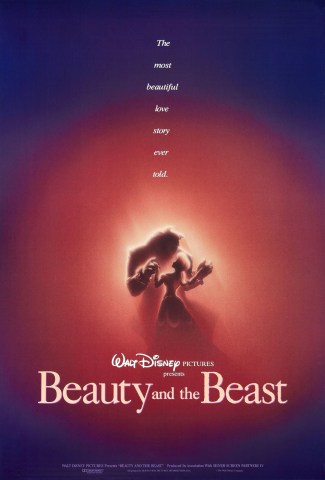
BeautyBeastPosterLike most typical American kids, I grew up with Disney movies in my DVD collection. Some films are great, some were great, and some are just trash.

Beauty and the Beast (B&B) is great. I’m sure you already know that if you’ve seen it. But here are some details you may not have noticed:

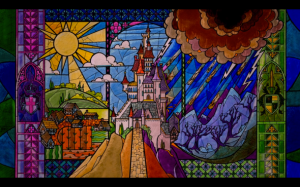
——1) The prologue is narrated in stained-windows… stained-windows… reminds you of what? What kind of buildings have stained-windows? For what building was stained-glass invented for? If you said castles or palaces, then you’re partially correct. The answer: Christian Castles/Palaces — aka: churches.

——2) The Rose is the main motif in the movie, especially a rose that seems to countdown. If that doesn’t hint at the ROSARY (which is a bouquet of prayers we offer to Our Lord’s Blessed Mother), then I don’t know what does!

the-assumption-of-the-virgin-1670——3) Speaking of the Blessed Mother, what colors do Belle wear? Did you know that light blue and white are Marian colors? Notice that the majority of traditionally colored Mary statues and icons show her to be wearing blue and white.

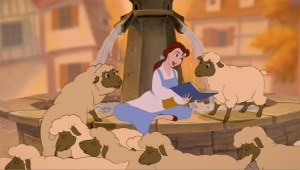
——4) Shortly after we meet Belle, she stops where and sings to what? She stops at a fountain, and she tells a story in song to a little lamb. A fountain is like a well, and in Sacred Scripture, it’s typically the place a man and woman have a significant meeting (recall Isaac and Rebekah, Jacob and Rachel, Moses and Zipporah, Jesus and the Samaritan Woman). Well, in B&B, we see Belle singing to the lamb: “She doesn’t discover that it’s HIM till chaper 3…”

This is significant because Jesus had to be revealed to the Samaritan Woman, had to be discovered. And three is a convenient number that not only rhymes, but symbolizes the third day after Jesus’ death — when His Resurrection is discovered by Mary Magdalene. Also, Jesus is the prince in disguise!

BelleLambAnd what does a lamb symbolize in Christianity? “Agnus Dei…” which means “Lamb of God…” which means Jesus.
And Belle is Mary, and Mary is the God-bearer, and God is love… so Belle carries love.

Betcha never connected that “Mary had a little lamb… little lamb… little lamb. Mary had a little lamb whose wool was white as snow” is talking about the Blessed Mother who has a Son who is innocent and pure.

And in B&B, everyone thinks Belle is such a strange, funny girl, such an odd girl unaware of her own beauty. Well, Mary is odd too! She was immaculately conceived, and no one else was. She would obviously have been singled out as exceptional and strange and completely oblivious to how beautiful she is (because of her humility). Oh, oh, oh! You don’t know you’re beautiful! Oh, oh, oh! That’s what makes you beautiful!

BeautyBeast——5) What about what causes the prince in B&B to be cursed? Wouldn’t that be the sin of pride? Being spoiled, selfish, unkind… and pride causes us to be isolated to the point that we curse ourselves. Pride was the Original Sin, and it caused us to be disfigured, naked, ashamed, lonely and doomed to die. And so after the prince commits this sin, he becomes a beast: ugly, naked, ashamed, lonely, and doomed to die.
——6) Our sin never affects us in isolation. Sin is like contagion: it spreads. And so Adam and Eve’s sin caused all of us and the rest of Creation to crash and burn. In B&B, the curse spreads throughout the castle, infects the servants, the forest, the world around the property. Sin is never personal; it affects everyone eventually.

BeautyBeastBalcony——7) And only what can redeem Beast and his servants? Only if he truly loves and is truly loved in return, right? And doesn’t Belle bear that love? She’s the one to break the spell… she must give her love to him, must give her word to him. Notice later in the film that it’s only when Belle says she loves him is the curse busted. This is so symbolic of Mary’s fiat to the Archangel Gabriel, when she said “let it be…”

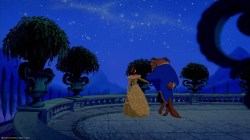
——8) At the ball, notice the colors of Belle’s gown: yellow and white. Those are the colors of Mother Church, the Bride of Christ, the redeemed. The colors of the Vatican flag hint at this.

PiercedSide——9) When Gaston (whatta jerk…) attacks Beast, where does he stab him? In the side! The right side! Take a look at any crucifix and you’ll see that’s exactly where Jesus was pierced (John 19:34).

——10) Then, when Beast dies in Belle’s arms… it looks a lot like the Pieta.

——11) And earlier when Beast released Belle after the ball, he in effect accepted sin (the curse) and death. Recall Beast’s response when his servants warn him of the mob’s approach: “It doesn’t  matter, just let them come.” This is a bit similar to when Jesus accepted our sin (though he was sinless) and accepted His impending death, even death on a cross.

——12) But true love breaks the spell (remember that God is love). After Mary gives her fiat, God is allowed to intervene (allowed to love) at the ground level of our humanity to redeem us through the Passion and Resurrection of Jesus. And in B&B, after Belle’s fiat, we see Beast rise from the dead in glorious light. His body shines forth as a glorified body. This is totally an allegory in the movie for the Resurrection of Christ!BelleLoves

——13) And Beast’s salvation also saves the whole castle (transforms all the gargoyle’s too!), all his servants and the world around him.

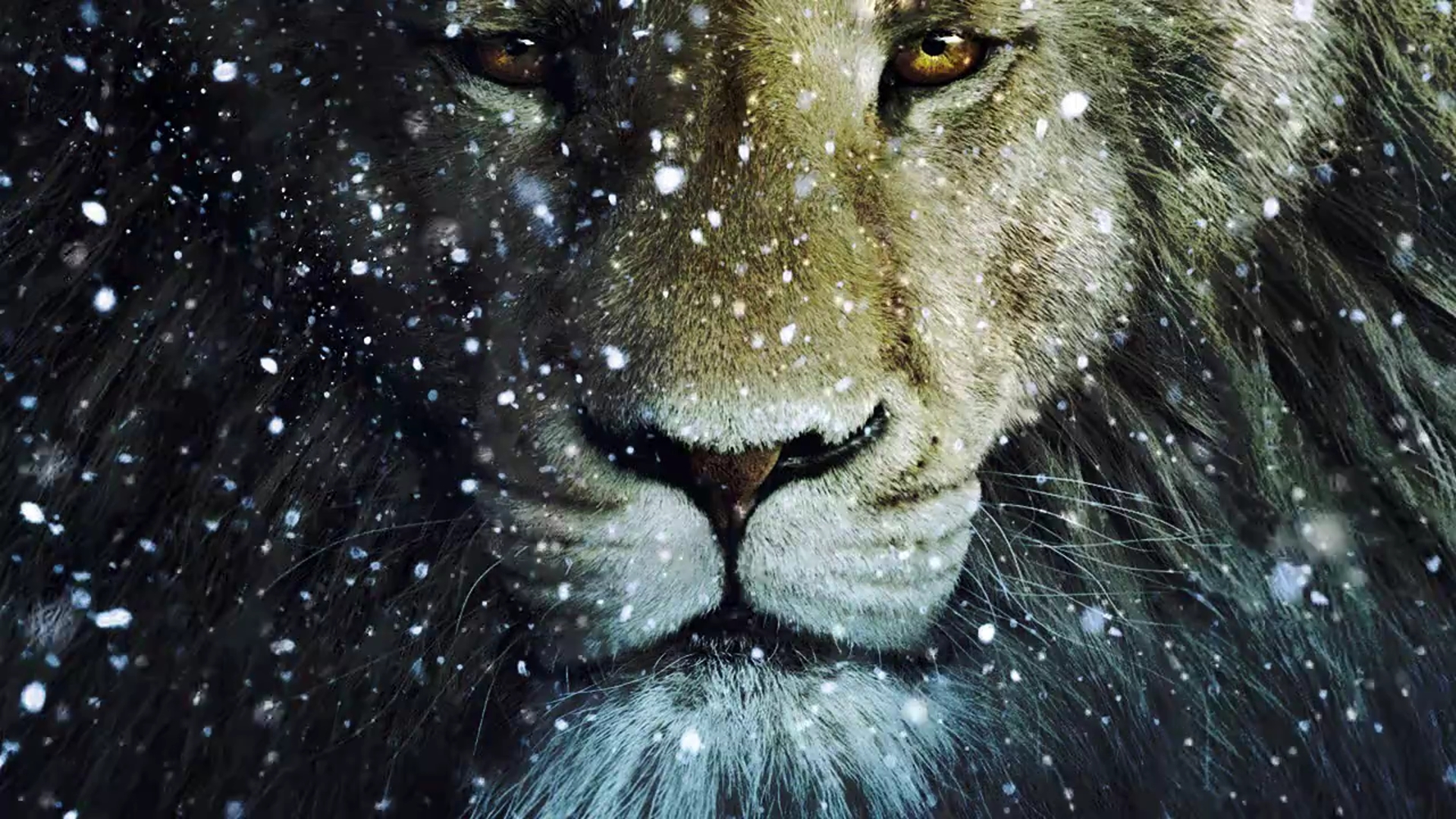
——Bonus) Beast can be seen as a Christ figure, in that Jesus is also known as the Lion of Judah, an idea that C.S. Lewis used when writing the character Aslan in his Chronicles of Narnia.

Aslan

So there you have it, 13 or so details I noticed one day while re-watching this classic.

——BONUS) Found out recently via a comment below that the Prince’s name is actually Adam (thanks Anh-Thu!)! This further adds to Biblical symbolism, since the New Adam (Jesus) and the New Eve (Mary) in a perfect way undo the sin of the first Adam and Eve. We see this played out in Beauty and the Beast because Adam (the Prince) becomes a new man at the end (a new Adam), undoing the past sin (most importantly with the love and help of Belle [who can be seen as a type of Mary, a new Eve.]).

——BONUS 2) Here, we see an even deeper connection with points 5 and 6 above. Now that we know the Beast symbolizes Adam, we also can see how similar their reaction to sin is. After the Original Adam sinned, he felt great shame, thought himself ugly and hid himself. So too does the Beast do this!

——BONUS 3) That’s right, it gets better! According to the film’s plot summary, the beggar visits the Prince on CHRISTMAS EVE. Now, this definitely makes me recall that on the First Christmas Eve, Mary and Joseph [and the unborn Jesus] were beggars trying to find a place to stay. The people they asked turned them away, not knowing the beauty of the Holy Family and that someone very powerful, special and beautiful was hidden within the Holy Couple: Jesus.

——See here for the review over the 2017 remake

Sed Libera Nos a Malo

DeliverUsFromEvil“But Deliver Us from Evil…”

And does Deliver Us from Evil deliver?

I love a good exorcism story. But over the last few decades, they’ve been less and less original. My favorite is still Scott Derrickson’s The Exorcism of Emily Rose (yes, I prefer it over the original Exorcist).

This latest film from Derrickson wasn’t bad at all, but it did leave me feeling disappointed. No one in the film industry seems to know what to do next with the genre (which is why I wrote Little Miss Lucifer); the same story runs over and over. Hey Hollywood! It’s getting a bit redundant!

But let’s focus for now on the positives from Deliver Us:

1) It’s Catholic. The director himself, in a lengthy interview, admits that he “has nothing but love for Catholicism” and would convert if it weren’t for one reason: he doesn’t know how to raise his kids Catholic. So, here’s to praying he finds out how!

St. Benedict Medal2) It boldly features the Medal of Saint Benedict! Today is the Memorial of Saint Benedict! I have more and more friends who sport the Medal of St. Benedict. If you want to know more, check out this page (note: the medal bears exorcising properties.)

3) It calls out anti-Catholic stereotypes, especially about priests. No priest is perfect, just like no police officer is perfect, just like no person is perfect: “Every saint has a past — every sinner has a future.”

4) It takes the Sacrament of Confession dead seriously: meaning that if you’re going to battle the devil’s tricks and temptations, you must be free from your tainted history, and the only one who can liberate you from your guilt and lies is Jesus Christ. Confession is not only for healing, but also for shielding!

5) And of course, the Latin!

ExorcismMeme

X-Men: Days of Future Past, now with Catholic Symbols!

The X-Men films have been more and more surprising to me! First, there was First Class’ symbolism of Professor X choosing a life of Catholic priestly celibacy for the sake of his beloveds, and now there’s even more Catholic symbolism in Days of Future Past! Here’s what I saw (warning – possible spoilers!):

  1. X-Men: Days of Future PastThe Chinese temple the X-Men hide in during Logan’s time-travel doesn’t seem pagan to me… not at all! For one thing, I’ve never seen Chinese pagan temples with an altar like that, much less use stained-glass windows like that! I mean, when I say “stained-glass”, most people think “church!”
  2. Logan rests upon the altar during his time-travel. Why an altar? Why signify that this is a sacrificial act for Logan? Why the intimate symbolism with Christ’s sacrifice at the Mass upon Catholic altars?
  3. Then there’s Professor X almost breaking out a gospel song/psalm/hymn with: “Lead me… guide me…” If you don’t believe me, just Google “Lead me… guide me…” and you’ll see how Christian that line is.
  4. And despite Jennifer Lawrence’s (as Raven/Mystique) butchering of the Vietnamese language (nice try! But no.), she too was involved in Catholic symbolism. When she sought help for her wound, where did she go? A Catholic hospital! With a crucifix smack dab in the middle of the opening shot! And when the world reacted in terror of Mystique and other mutants on the news, what did the Catholic religious sister wonder? She wondered if the woman – the mutant – has a family. She wondered with concern and compassion. When the world freaked, the Catholic sister loved and nursed.
  5. Audrey Hepburn as Sister LukeAnd if that wasn’t enough, when Mystique flees from an insane Erik (Magneto) in a crowded subway station, who do we see file into the shot and veil Mystique’s escape? A half-dozen or so religious sisters in full habit! I bet Mystique morphed into one of them and slipped away… I bet!
  6. Finally, the last scenes in the movie invoked in me a glimpse of eternal life in Heaven. Wolverine wakes to find that despite the terror and horrific sacrifice he witnessed in his life, when he wakes… everything is okay. And not merely okay, but perfect. In this life, we face terrors and are called to make incredible sacrifices for our beloveds, for our Beloved. And by doing so, we experience in Heaven that it was all truly worth every drop of sweat, blood and tears. Everyone who loves is there with us, and it is the greatest reunion ever – replete with sharing epic stories of how we struggled with life and faithfully finished the race. Well done, good and faithful servant, good and faithful friend.
  7. And a bonus: The overall story arc that the future is not set, that our decisions have weight, that we have free will is a holy smack against the heresy of Calvinist Predestination. We Catholic Christians believe God is love, but if we have no free will, then love is only an illusion. I don’t know about you, but love is pretty real to me. [More about this in detail here.]
  8. Now don’t take my word for it… see for yourself!

*Want more? Here’s a great Days of Future Past review by Steven Greydanus.

DaysFuturePastBanner

P.s. I have no idea why these symbols are present in the movie… but I like them!

Introducing: The THIRD Way

“There are not 100 people in the United States who hate the Catholic Church, but there are millions who hate what they wrongly believe to be the Catholic Church.”

-Archbishop Fulton J. Sheen

It is sadly true that we Catholic Christians do not know much about homosexual attraction and how it affects people, and it is even sadder that many others know even less. But, let’s stop the ignorance, stop the hatred and misunderstanding and finally know what the Church actually proposes to us.

This short film is a great first step. I personally have waited for something like this for a while: a compassionate and honest look, a loving and fair response to an issue that is so stained with pain, malice and evil on both sides.

Well, this here is the THIRD side, this here is the THIRD Way:


Godzilla and the True God

Godzilla 2014The turf of my childhood has a Godzilla-sized shape carved into it. In fact, when I was a first-grader, I was so obsessed about the radioactive beast that I made a shrine for him one day atop my dresser — complete with train wreck, car in mouth and hand, and ocean surf at his feet! The water leaked and blistered the wood finish of course, and Mom made me take it down, but my fanhood stayed with me. Everything had to be Godzilla! It got to the point that even my humble little computer teacher in Catholic school became uncomfortable whenever I said Godzilla since it seemed to him to mock the name of the True God.

So when I found out there was another effort to remake the classic (my favorite was Godzilla 1985), it was difficult to pass up the film on the big screen.

And if you didn’t notice, I’m the most scrupulous film viewer I know. Mix that movie-scrupulosity with my super-serious-Catholicity and whaddya get? Well… let me show you with a screenshot:

[Click image for better view]

[Click image for better view. Elle Brody is played by Elizabeth Olsen.]

And I’m pretty sure my working knowledge of Catholic iconography is decent. Anyway, what’s an overt Catholic medal doing on the necklace of a summer blockbuster’s actress?

Well, everything that goes into a shot of any film means that the director approved of it. Everything in every scene cost work and money to put there, and producers and directors won’t waste time and money making sure things show up on a frame, unless they want it to. So the fact that this medal is blatantly focused in on, with the shot resting on Elle and with her medal clearly noticeable, one has to think either: (a) Elizabeth Olsen insisted on wearing the medal and director Gareth Edwards approved of it, or (b) director Gareth Edwards insisted the medal be part of the actress’ costume, and Elizabeth didn’t object. Other than those two paths of thought, anything else is a stretch…

HALO jumpersBut then there was the scene of the military personnel preparing for the now-famous HALO jump scene. Just before their jump, we hear a Christian praying to God, thanking the Lord Jesus for allowing him and the other men to serve others with their lives. Now that is pretty obvious that there is a Christian presence to this film — a presence I definitely did not expect but was pleasantly surprised by. After all, these scenes both vindicated me that Godzilla is not a mockery of the True God.

Anyway, just wanted to point out those God-fearing tidbits in Godzilla. If you do decide to give it two hours of your time, know that it’s definitely a fun flick with a big emphasis on mothers and fathers and their children, on husbands and wives and their faithful marriages, and of course on the king of the monsters. Gojira!

The Dark Knight Fails

Dark Knight Rises

The Dark Knight Trilogy is by far my favorite in film history. Many things were simply done right in the story, but a few things could’ve been better. But since I have a reputation for nitpicking the negatives, I’ve decided to write about more redeeming things.

Except…Miranda and Bruce

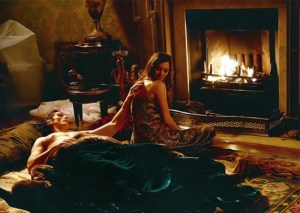
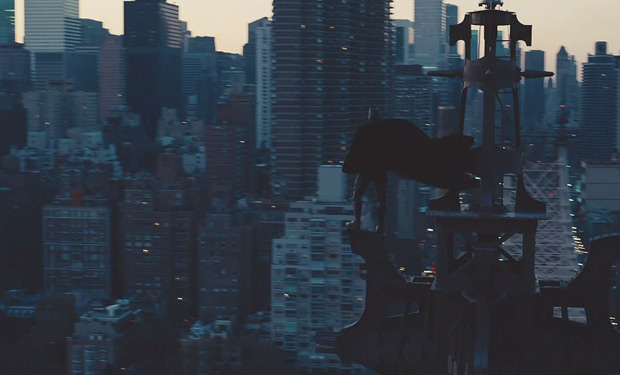
Do you remember the scene in The Dark Knight Rises, when Bruce and Miranda share an intimate night together in his lonesome mansion? Yes – the scene that didn’t need to be in the movie at all. Yes – the scene that was followed by a silly shot of Batman overlooking a Gotham sunrise, standing atop a skyscraper, triumphantly posed as if he just accomplished a rite of passage into manhood.

Batman Surveys Gotham

Yes, that one-night-stand between Wayne and Tate. What was it all about? Why have it in the storyline?

Here’s what I think (SPOILER ALERT):

In Bruce’s loneliness after being abandoned by business, boss, and butler, he finds a lovely young woman in Miranda – someone also interested in him. Together, they share something proper only for a married man and woman to share. But it doesn’t end there.

Every act of love-making has consequences. And in this case, Bruce just cursed himself. How so?

1. Miranda turns out to have been only using sex to gain Bruce’s trust (where Bruce was using love only to gain sex).

2. As a consequence of using and being used, Bruce falls for someone out to manipulate him even more. Miranda is Talia al Ghul, none other than Ra’s al Ghul’s vengeance-bound daughter out to finish her psycho-father’s plan to terrorize Gotham.

3. Because of Bruce’s weakness and lust, he fell for Talia’s treachery, which made him overlook a lot of clues a virtuous Batman would’ve noticed sooner and used sooner to track down Bane and the League of Shadows resurgent.

4. Finally, Bruce’s weakness and lust betrayed Selina – his true love, his true friend and companion, despite her stained history. Because he gave away the gift of his body and love to Miranda, he failed in keeping himself for Selina, and that deprives Selina of what she rightfully deserves as Bruce’s bride.

If you are hoping to find your spouse one day, please think of him or her right now:

Men: she’s out there somewhere, waiting to meet you. Wouldn’t you want her to be keeping herself, saving herself for you? Shouldn’t you do the same?

Women: he’s out there looking for you, eager to meet you. Wouldn’t you want him to keep himself, save himself for you, because of how special you are? Shouldn’t you do the same?

[Happily Ever After...]

[Happily Ever After…]

Frozen Favorites

Frozen So a few weeks back I was finally cornered into watching Frozen (yes, I was sitting in the corner of the living room). Then, I was on a transcontinental flight and guess what was the in-flight movie?

Yes – twas none other than Frozen. Again.

So I obviously noticed a few things (and for those of you who have not yet seen the film, consider this your SPOILER WARNING!!!)…

1. Rushing into marriage is crazy… a crazy mistake! Imagine what the fallout could’ve been if not for Elsa’s refusal to bless their union, and if not for Kristoff’s intervention and advice. Anna could’ve found herself in even deeper domestic abuse and violence (for herself and the Kingdom!). That’s why the dating and courting process exists – to let the man and woman really know what they’re getting into, and who this stranger is before pledging their life and love in marriage. By the way, “Kristoff” is the same name as “Christopher” (which is a name with strong Christian meanings, as you can see on this cognates list.)

2. Let it go… let it go… and you’ll hurt so many! Including those who love you (I mean, Anna got shot in the heart!). Be yourself, yes. Be not ashamed with your talents, yes. But don’t be reckless! Be responsible with your abilities and personalities. We all know what Uncle Ben told Peter, right? And so… the cold never bothered her anyway… but it got a lot of people sick!

3. Finally… yes, an act of true love must save the day! Anna must be swept away by a kiss so romantic that her heart is healed and the eternal winter is melted! Except… this does not happen. Instead… agapic love was the saving act! (I know… I know… aga-wha?) Agape is one of the four types of love, and is the highest type of love. We have philia, which is a friendly, brotherly and sisterly love. We have eros, which is romantic love and a love for beauty, and we have storge, which is  familial affection. So the message of Anna’s act is not only storge, but is agapic in that she sacrifices herself for the good of another. Agape is charitable and self-sacrificial: wanting and seeking the best for another person even if it hurts you, even if it kills you. This is the love that saves the day, that saved all days. (IMPORTANT: Romantic love without sacrifice is not love at all but mere infatuation. All the other three loves must mature to include or inspire agape, or else they fall short.)


So in the end, I thought Frozen was a nice little treat. All it was missing was a cherry on top. Sorry, but carrots just don’t go very well – confection-wise.


FrozenCharacters

UPDATED: Getting to Know “Noah”

Noah

Be warned: SPOILERS POSSIBLE

Ten years ago, Mel Gibson’s The Passion of the Christ cemented itself as the greatest motion-icon about our Lord’s Passion. Today, there is still no comparing it with any other film about Christ. It has set the bar, and the bar is in orbit.

Yesterday, Darren Aronofsky’s Noah did the same for the Genesis narrative about the Great Flood. So be warned now: if you’re looking for a rant against Noah, you won’t find it here. Instead, I believe the film did more good than bad, more beauty than bumbling, and more creativity and faithfulness to the Flood story than what I’ve seen in a long time. (If you have a specific critique of the film, please feel free to comment!)

Links to various reviews and interviews will follow, so you can see what better critics than I have been saying, but before that, let me share my favorite scenes (these are obviously spoilers):

  1. The Creator sends a little raindrop down. It hits the dirt. Noah (played by Russell Crowe) looks to the sky, sees not a cloud, and wonders where the drop came from. He looks down again and it pops like popcorn into a flower. I don’t know about you, but I would go nuts if ex nihilo happened right in front of my face! (Ex nihilo is Latin for “out of nothing,” meaning God alone creates out of nothing.)
  2. Illa (played by Emma Watson) is ashamed of being infertile, to the point of trying to convince Noah to find another woman for his son. She believes to the point of tears that she is worthless because she cannot be a mother. But Noah refuses. He tells her again and again: “I thought you would be a burden, but I was wrong. You are a gift. A precious, precious gift!”
  3. When a grounded angel repented to God for having sinned, he was blitzed straight to Heaven – like a shooting star in reverse. The beauty of a saved creation, a contrite spirit, a redeemed beloved (like the Prodigal Son), always brings tears of joy to me.
  4. And the best for last: Illa, as a new mother now to her newborns, begs to at least be allowed to sing a lullaby to her children before they are taken from her, to at least calm them to sleep first. Trust me – you just have to see and listen to this scene for yourself. Even if you dislike the whole movie, this scene is worth it. Emma Watson just ravaged my heart. At display here is what Pope John Paul II coined the Feminine Genius, and what I call severe tenderness (more on those another time).

Other reviews:

Illa


The Terminator and the Immaculate Conception

This year, for the Solemnity of the Immaculate Conception (Dec. 8th), I’d like to have a chance to share an ancient understanding through a new vantage point. Many people misunderstand what Catholics believe about the Immaculate Conception, many Catholics misunderstand too!

The Immaculate Conception is when Mary — the Mother of God — was conceived in her mother’s womb… Saint Anne’s womb, and Mary was conceived immaculately [without Original Sin].

Yes, we believe that Mary was conceived and born without a single pimple of sin (her birthday is Sept. 8!). She was conceived beautiful, full and precious; she was born beautiful, full and precious; she lived and was assumed into Heaven sinless, beautiful, full and precious. Some may say this belief is ridiculous: that we all need Jesus Christ to save us! Including Mary! That this belief is heresy!

But that’s where the misunderstanding happens. Instead, we have understood it this way: that God is eternal, He is outside of time, not restricted or confined by minutes, months, and millenia. An author who writes a story is also outside of the story, not restricted or confined by the pages, chapters and plot outline. The author can flip to the end, whip back to Genesis, think before Genesis, jump all over the middle, and even simultaneously be fifty-five chapters past the finale and through the sequel! A timeline is a toy! And all the different versions of a draft are like alternate dimensions.

The Author pwns.

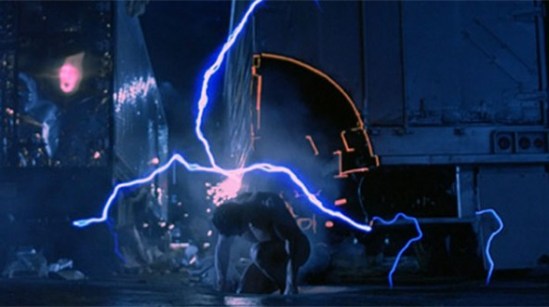
[Terminator protecting the young John Connor.]

[Terminator protecting the young John Connor.]

This is exactly the analogy of what God did for Mary. Knowing that Jesus was going to redeem Creation, God used the after-effects of the Passion and Resurrection of Christ and applied the goodness to Mary before she was even born, at her very conception. Mary was vaccinated against Original Sin. (Better yet, it’s sort of like the fantasy of sending a cybernetic organism back in time to change history by protecting a certain person from all danger: aka Terminator 2!)* We believe God is so beyond space, time and quantum mechanics that He not only did this for Mary, but that it was easy and even appropriate!

Why appropriate? Just ask yourself: If you were God, wouldn’t you have made your mommy perfect? And if God didn’t make Mary immaculate, then wouldn’t you wonder why not? After all… couldn’t He have done it? Didn’t He think that His only Son — the King of kings — should have a Queen Mother who matches His royalty?

Of course.

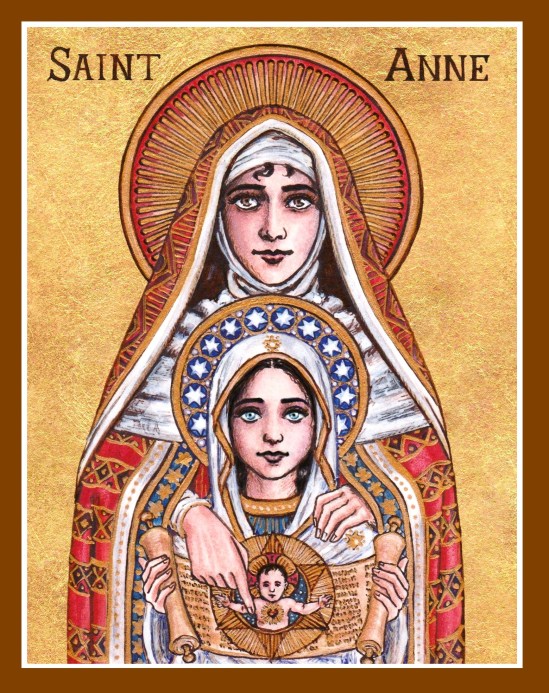
St. Anne with Mary and Jesus

[St. Anne Icon by the talented Theophilia on DeviantArt. Click the pic to visit her page for more!]

P.s. If Mary is good enough for Jesus, then she’s more than good enough for me!

*Hear me out: Sarah Connor is the mother of the savior (John Connor) of mankind in the future war against Skynet. In the future, after John routs the machines, they become desperate and send a terminator back in time to destroy his mother before he is conceived. John knows this and sends a guardian back in time to protect his mother from harm.

In Catholic belief: Mary is the mother of the savior (Jesus) of mankind in the age-old war against sin and Satan. In the future, after Jesus dies and rises from the dead and thereby routing all Hell, He sends His grace and power of redemption back in time to protect His mother from harm (sin) at the point of her conception. Thus tada: Immaculate Conception

Not a perfect analogy, but too close to be a coincidence!

TerminatorTime

More immaculate info here.