A Quiet Place with Jesus

After the Olympic-sized blasphemy against our Lord last week, it was a gift to see (finally) A Quiet Place: Day One throw respectful shoutouts to Him. How so? Well, here’s your spoiler alert.
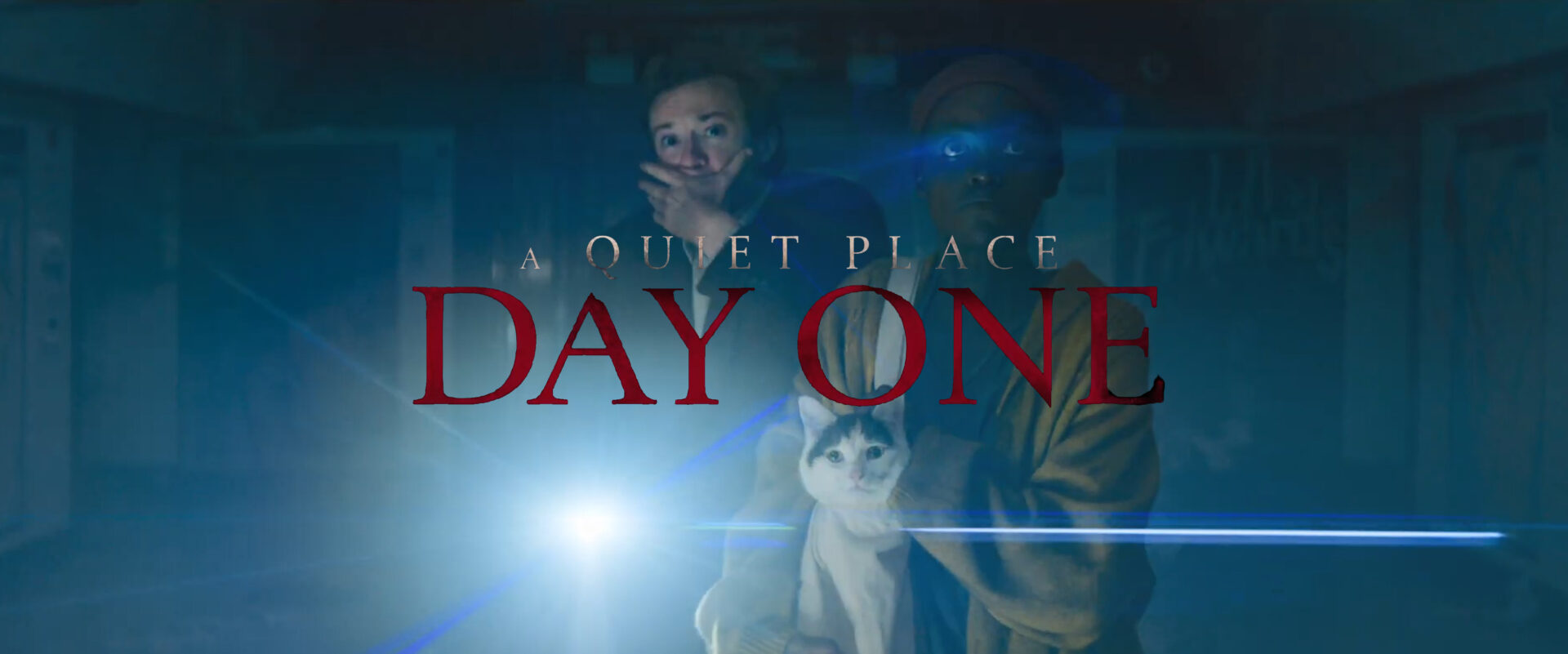

  1. When Samira and Eric descend into the waterlogged NYC tunnels to escape the alien infestation, they find themselves submerged into silence. A death-angel (what the lore calls the aliens, hearkening the angel of death from Exodus?) pursues them into the depths, struggles to swim, and then drowns — leaving Samira and Eric free to emerge and escape their near-death-experience. This pairs extremely well with Israel’s escape through the Red Sea: the Egyptian hordes pursue the Hebrews, and then drown en route, leaving Israel free to rise from “death” and slavery to Pharoah. Traditionally, this scene of Exodus is typology for Baptism: the unbaptized person descends into water, pursued by sin and Satan, and then ascends but leaves behind the former life of sin and Satanic enslavement. In Baptism, Christ’s waters and words drown our past and bring us to new life in Him.
  2. And where do we see Samira and Eric emerge after their “baptism”? Is it a NYC landmark? Is it a commercialized product placement for McDonald’s or Starbucks? It is an Eastern Orthodox (or possibly Byzantine Catholic) Church, complete with iconostasis, candles, chandeliers, refugees, pews, and priest at the pulpit. The pair rises from the waters, narrowly escapes death by fallen angel (from space) and drowning, and enters the Church.
  3. During their stay at the Church, they find safety and hope. At no time is there any sign of danger while the Church is featured: no despairing people crying out and alluring the death-angels, no accidental commotion, nothing that we see elsewhere in the film’s settings. We even see Eric rising to another level of self sacrifice for Samira, which I’ll let you discover yourself.
  4. [BONUS] Lastly, we see a powerful depiction of a father-daughter relationship that very often is not portrayed in Hollywood today. The remembered love of her dad calls Samira (who begins the story in despair and nihilism) to great courage, hope, sacrifice, and loyalty. When we see her memories of her time with Dad, drawn out by Eric’s company and questions, we see Samira grow and strengthen. All families must take note: build up that daddy-daughter time!

Pagan Motion Pictures

Familiarity breeds contempt, so they [accurately] say.

To avoid such contempt, we all must re-view what we’ve taken for granted (at least from time to time), and the greater the thing we take for granted–the greater we should “realize that it might be lost.”

While reading G.K. Chesterton’s Everlasting Man, I was reminded of certain films that are helpful in granting a glimpse of a world without the Catholic Church. Taking a cue from Frank Capra’s It’s a Wonderful Life, this trilogy of movies imagines cultures, societies, and worldviews void of Christianity, and the powerful consequence of such an absence. We all truly take the Church for granted, believer and unbeliever alike, and if someone needs that more clearly demonstrated, then have a movie marathon* with these titles (listed in order of world historical basis):

  1. Robert Egger’s The Northman (2022): This film depicts the lives of Vikings in a Europe before the Church. Perhaps in no other part of the world do so many yawn at the wonders the Church has done for their continent. Yet, before Europe’s conversion, it was a land of brutal paganism, superstition, violence, and darkness. Those who whine about the Church’s influence upon Europe can have a peek at what paganism was like in the land of the Vikings, and perhaps wake from their naive and idealized dream about pre-Christian society.
  1. Mel Gibson’s Apocalypto (2006): This film explores the Americas before Columbus, specifically regions of the Amazon. Countless cultural Christians, and atheists who enjoy the fruits of a Christian culture, have idyllic notions of a peaceful and free pre-Columbian America. False anthropologists and historians presume that the New World was a paradise, and that Catholic missionaries and the Church destroyed these perfect peoples. However, as archaeological research reveals, pre-Christian America hosted some indigenous nations, kingdoms, and empires that ran on unrestricted war, cannibalism, and ritual human sacrifice (all things Christianity has fought to end).
  1. Ari Aster’s Hereditary (2018): Lastly, all those naysayers about the Church can see how a post-Christian America looks. How would 2020s USA be without Christ? What would family life and childhood be like if every sign and symptom of Christianity was eliminated from the culture? Well, this film shows a family that finds an alternate religion, an ancient pagan cult that the Church had once suppressed, because even if one is rid of Christianity, people will still want to idolize something: pleasure, power, prestige, pesos. So give Hereditary your time if you think Christianity is no big deal anymore, and then remember that we are quickly approaching a nation without the Church.

*Notice: all these films have intensely disturbing content and are only for mature audiences. What should we expect, since they depict paganism at its logical conclusion?

Mano a Mononoke

There are times when details, images, words, and ideas align beyond mere coincidence. When story writers across disconnected cultures echo one another, one can only guess a few possibilities: God guided them, or there’s a common intuition within our human nature, or the cultures involved came into contact somehow.

In Princess Mononoke, a powerful connection shows itself in a beautiful way, where the Japanese tale hearkens the Jewish Song of Solomon (aka: Canticle of Canticles, or Song of Songs). Without spoiling too much of the film: a village prince named Ashitaka becomes the victim of a curse, and is thus banished from the only home he has known. Just before going into exile, his sister surprises him to say farewell (although bidding him goodbye was forbidden by village law). She gives him a crystal gem that had been carved into a dagger, that she had worn around her neck. He refuses the gift, but she insists, explaining it was to remind him never to forget her, never to forget the love of a sister for her brother. This gift then becomes Ashitaka’s dearest possession: the sole little bit of home that he will never be able to return to. Yet, this seemingly passing moment has massive ramifications…

Toward the end of the film, during the mounting moment crisis, Princess Mononoke (aka: San) is furious with Ashitaka and never wants to see him again. He decides to give to San the very gem necklace that was his sister’s, handing it off to a wolf to deliver to San before they separate and both run off into battles that may separate them forever.

That’s when it hit me… echoing the Song of Songs, Chapter Four:

9 You have ravished my heart, my sister, my bride,
    you have ravished my heart with a glance of your eyes,
    with one jewel of your necklace.
10 How sweet is your love, my sister, my bride!
    how much better is your love than wine,
    and the fragrance of your oils than any spice!
11 Your lips distill nectar, my bride;
    honey and milk are under your tongue;
    the scent of your garments is like the scent of Lebanon.
12 A garden locked is my sister, my bride,
    a garden locked, a fountain sealed.

And there lie the “coincidences” between the verses and the film : necklace, jewel and crystal gem; sister and bride; garden, fountain, and pool; fragrance and forest, and glance of your eyes… when Ashitaka had first seen San glaring at him from the tip of the sword in her hand, and he called her beautiful. That moment had disarmed her, stunned her silent, her violence and rage dissipated, and her behavior markedly changed from that time forward in the film. As if the long-awaited recognition of her beauty by a sincere heart made her human. No longer was she an offspring of her wolf caretakers, but she became a woman, at exactly when a man saw her and loved her as he would love his sister: with purity, honesty, and dignity.

Ashitaka extended to San the love he has for his sister, a genuine and devoted love with good intentions. He sees in San what he remembers of his sister, and San is the living memory of her. San is someone Ashitaka knows his sister would not mind receiving the gift of her crystal gem. And the fact that the gem is a blade shows that the beauty of San has cut into his heart, cut where he had worn the necklace for love of his sister. She has ravished him.

And that’s the shockingly aligned images I saw within Princess Mononoke and the Song of Songs. Don’t tell me it’s just luck.

(Enjoy this favorite cover of Princess Mononoke’s track: Journey to the West)

P.S. This Ashitaka-gesture makes me hope there can be a tradition, where a girl gives something small yet precious to her brother, for him to safeguard and keep for love of her, and then to discover a woman to whom he can offer this precious gift to as his bride. I think this would go a long way to help boys become good husbands and seek good wives.

Lovers of Liturgy

Late have I loved Thee, O Beauty ever ancientever new, late have I loved Thee… 

So said Saint Augustine, referring to our Lord. Yet, similar may be said of the things which reveal Him to us: the endless ability of His dawns and dusks to awe, the overwhelming stars of night compelling our staring, the expansive sea drowning us in wonder, and the simply pure laughs of babies filling our ears with bliss.

So too with a Mass that inspires awe, stares, wonder, and joy. Can anyone imagine being star struck over the Novus Ordo Mass (NOM, est. 1969)? Do any faithful Catholics ever relish its shortened prayers, its suspicious origins, its banal fabrication by committee (as Cardinal Joseph Ratzinger said before his rise to the papacy), its mess of options, its bracketed readings of Scripture (for shortened form, omit the text in brackets), and even its deliberate redaction of key Catholic beliefs from the “new and improved” Lectionary?

But then here’s a trilogy of films, labored over by independent and artisan film makers, aided by dozens of well-known faithful Catholics, funded through crowd-sourced donors, all head-over-heels in love with the Traditional Latin Mass (TLM, est. too far back to know for sure). These faithful can’t stop telling others about this beauty they’ve found, like a young man who aches to tell the world how he found his beloved bride. To us, the TLM is worth the commitment, the money, the hundreds of miles on foot (see episode 3 for the reference), the pleas to popes, and the skirmishes with schismatic-ish Catholics who have forsaken their inheritance for cheap, modern, synthetic, mass-produced substitutes. What is merely trendy and timely will always whither for lack of roots. What is timeless, rooted deep in hearts and souls, will endure beyond the end. Timelessness > timeliness.

But enough from me. Watch for yourself what true lovers of liturgy have to say, and then find a TLM for yourself (before they’re canceled by fakeful preests, bishups, cardinulls, and poaps).

Conjuring and Consequence

Demons have limits. All created things are limited, and the demon in Conjuring 3: The Devil Made Me Do It is no different. Let’s look at those limitations, and those also of the humans involved.


—SPOILER ALERT—


Sin always has consequences. Sin is a cancer for the soul, and it weakens us because sin is whenever we reject God and choose someone/thing that is not God. Basic Christianity: God is love, power, goodness, wisdom, justice, joy, life, and existence. If we reject Him, then we reject the source of love, power, goodness, etc. So rejecting God necessarily leads to the absence of those things, which means we are weakened, and will end up in eternal death if we don’t return to Him. It’s just logic.

In cases of demonic possession, sin makes us vulnerable against it. Here are the main examples straight from the movie:

  1. Ed’s possession at the very end: we’ve seen in the Conjuring series instances of Ed’s pride (pride is not only a sin, but the worst of sins, contrary to what many think today). Every time he thinks he can handle a demon, or performs an exorcism himself, or breaks a promise with Lorraine because he needs to be the hero, these instances are prideful. No man can ever handle a demon without the Church and her Lord backing him up, which means he needs to be ordained (or at least commissioned explicitly by a Catholic bishop), and to break good promises that should be kept, well we can all see that is wrong.
  2. Arne’s possession at the very start: another example of pride, and very much like Ed’s prideful attitude, thinking he can take on the demon without the Church, ultimately without God’s backup. It may be heroic, perhaps even selfless to tell the demon to possess him instead of David, but good intentions don’t make evil actions okay. Demons can even play us into thinking we’re being sooooo sacrificial and generous, only to destroy us by making us play by their demonic rules instead of the rules of the Church that God made (tangent: the priest in the film wants to have the exorcism on David done at the Church–a sacred space–but Ed insists over the priest (perhaps in his pride) that it be done immediately at the boy’s home instead. Because of this, the protection of the Church over the family is lessened, and leads to a worse situation for everyone). Additionally, the film suggests that Arne and his girlfriend (Debbie) have been sleeping together without the blessings of marriage, which is the mortal sin fornication and lust.
  3. David’s possession before the very start: since David is only a child, he (and all children) are especially vulnerable to spiritual attack. Just as the faith of the parents is required for a child to be baptized, the parents are also responsible for spiritually safeguarding their child. Largely missing from the film is the presence of David’s parents, which implies their negligence. In fact, the real-life interview with Ed and Lorraine regarding David’s case reveals that David’s own mother and sister dabbled in witchcraft, which in doing so gives hell an open invitation. Here’s the interview itself, and the moment of this fact comes up at 25 minutes in:

So the big lesson: if you want demons to stay away, then you must stay away from sin! Otherwise your very sins invite them in. Other notable insights I took from the film:

  1. The hospital chaplain: this sounds controversial, but it’s been demonstrated by the experience of many Catholics, that in the past few decades, the Church has an extreme shortage of brave and bold priests. Many priests have been instead weak, limp, emasculated, and cowardly. The priest ministering in the hospital exemplified cowardice by not even knowing when to pray during demonic manifestation, and demonstrated stupidity by giving Arne a glass bottle of holy water when Arne was on suicide-watch. The overall impression we get of him is a man who is unsure, fumbling, and a pushover.
  2. Furthermore, we see a fallen priest who delved too deep into demonology without the wisdom of Church Tradition. The ex-priest shared that he scoffed at the Church’s warnings, dismissing them as fear based on not understanding demons and the occult. Rather, the reality is the Church’s millennia-old experience with spiritual warfare has taught her how to fight smartly against the fallen angels! She is not afraid, but informed and has grown wise from battle. Outside of the Church’s protection, this ex-priest went on to have an affair, fathered and raised a child presumably without having her baptized, which left his daughter further defenseless against the demonic.
  3. Which leads the ex-priest’s daughter becoming a witch, and occultist who makes deals with the devil, thinking foolishly that demons can be toys and that they honor bargains with humans. There’s a reason why Jesus Christ calls Satan the father of lies: he cannot be trusted and is always out to abuse and rape the children of our Father in Heaven. The witch learns this too late, and could’ve been spared the lesson had her earthly father trusted and served the Church a bit more.
  4. When Lorraine locates and attempts to overturn the Satanic altar, notice that it is solid and immoveable. When I saw this, it shamed me to know of so many modernistic Catholic “altars” that are weak and limp, unable to even compete with the witch’s altar! Since discovering the Traditional Latin Mass, I’ve learned through the ancient worship that Catholic altars should be worthy of the Holy Sacrifice: bombproof, fireproof, tornado-proof, tsunami-proof, and glorious:

Lastly, if you’re interested in more insights for the first two Conjuring films, click this: The Conjuring is Conquering; and click here for more on exorcism.

Shoutout to a former student who encouraged me to share my thoughts!

Netflix Flicks Us Off

In the mood to save some cash? If you have a Netflix account, canceling it would help, especially since they do not value you as a customer.

Despite Netflix’s hypocrisy about being pro-abortion (their film I Am Mother conflicted with their claim to be pro-abortion), which gave a small reason to tolerate their offenses, the last two insults have made any tolerance impossible for me. When someone brazenly mocks God and molests girls, any Christian should revile and revoke support.

In 2019, Netflix in Brazil featured a Christmas special depicting our Blessed Lord in a perverse romantic relationship with Satan, living in a dysfunctional family, and suggesting our Blessed Mother was adulterous (so I’ve heard, as I refuse to view the feature). Thinly veiled as satire, the feature drew immense backlash from Brazilians and others around the globe (including Muslims).

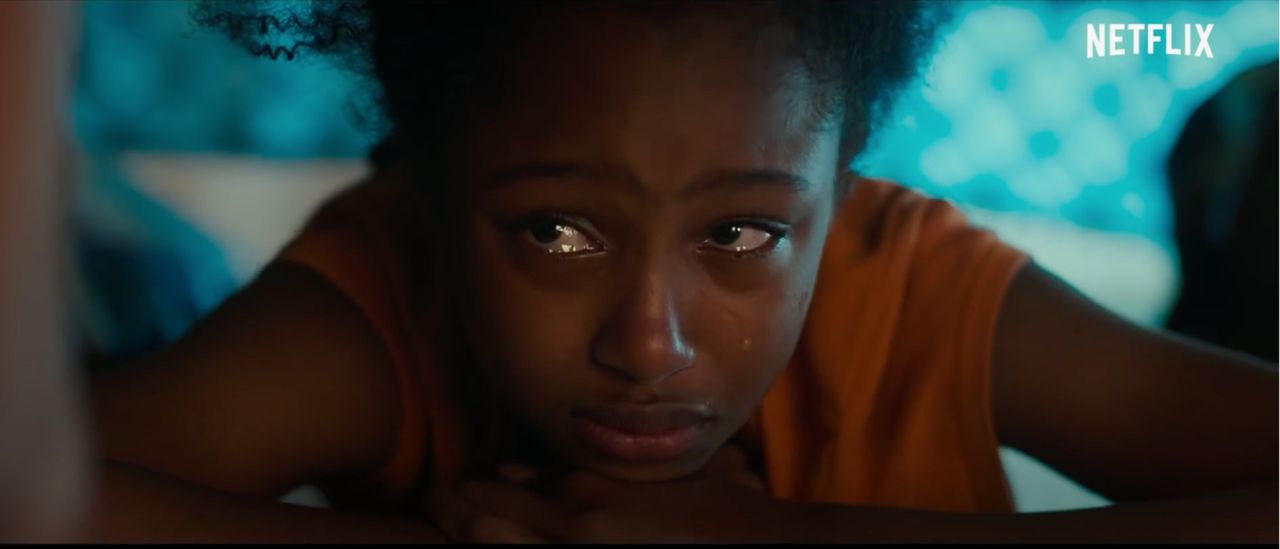
Now, Netflix features Cuties, a pedophile-pornographic film depicting actual children in perverse actions. Netflix and the film’s producers claim the work is trying to bring awareness to the plight of girls and their objectification as sex toys, yet they fail to realize they have actually objectified the girl actresses and molested them on set.

So what happened to the #MeToo movement? Surprised yet about hypocrisy in Hollywood? It would be naive to think that every Netflix user who finds Cuties wouldn’t use this film for their own perverse pleasure. It would be even more naive to think that every person responsible for this film was pure and chaste when directing and filming these starring girls. We know purity and chastity can’t be so since they had to imagine the graphic scenes first, play them out in their twisted heads, and then watch them get played out with these victim-actresses before them, cameras on.

And so, besides the money you’d save (and perhaps donate to victims of sex trafficking), here’s more convincing criticism:

Exploring Exorcism

SatanFearsOver the years of reading and viewing the testimonies of several exorcists, I have realized that the more I was aware of the Evil One, the more I knew his limitations, weaknesses, and powerlessness against our Lord Jesus. Rather than increase my fear, knowledge of Satan’s abilities and tricks actually increased my confidence in the Catholic Church and her King. Because of this, I am sharing these best-of-the-best resources of exorcism experiences, hoping they help you as much as they have helped me grow in faith.
  1. Many exorcists have a police officer present during the diagnosis process, or even during the ritual. Jesse Romero is one such [former] officer, and his experiences are riveting:
  2. Demonology is not a common specialization for laypersons, but Adam Blai is not a common layman. His work as a demonologist has been a great aid to many exorcists, and his interview by Patrick Coffin (of prior Catholic Answers fame) is deeply informative:
  3. Father Gary Thomas is perhaps the most well known American exorcist (because of Matt Baglio’s journalistic investigation and the subsequent movie starring Sir Anthony Hopkins: The Rite). Here is an uncut extended interview with Fr. Gary:
  4. Father Cliff Ermatinger’s presentations through the 2015 Miles Christi Conference are exceptional and should be listened to carefully at full length (available here for purchase, set #23). Here is a brief sample:
  5. Exorcism Movies:
    1. As for The Conjuring, arguably the most popular recent exorcism movie series, please see my review here.
    2. See here for my review about Deliver Us from Evil.
    3. For what I think is the best exorcism film to date, please see The Exorcism of Emily Rose, based on the exorcism of Anneliese Michel. An insightful commentary about the Anneliese case can be viewed here:
  6. And for the experience of a dear friend of mine, through the intercession of the St. Benedict Medal, please see here.
  7. Lastly, remember that as flies are drawn to rotten bodies, so too are demons drawn to rotten souls. Get pure, stay pure.

BeFearless2

Netflix is Anti-Abortion

iammother

So Netflix was threatening to boycott the State of Georgia for its pro-life laws. Netflix is worried that Georgia will abort abortion. Because of this boycott threat, many pro-lifers are boycotting Netflix.

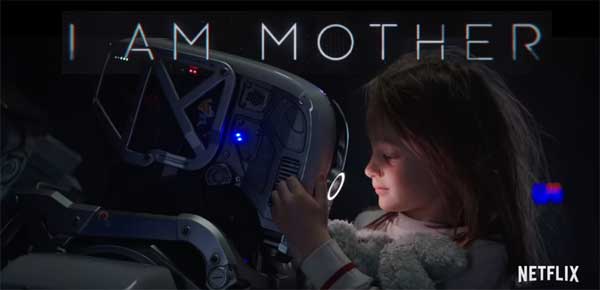
But Netflix is a hypocrite. It’s not really serious about abortion rights. Because if it were, it wouldn’t be streaming pro-life movies like I Am Mother. That’s right, Netflix actually streams a very pro-life, very anti-abortion movie. If Netflix doesn’t realize its contradictory stance, then it’s either simply hypocritical, or incredibly ignorant of its own content, or it’s secretly anti-abortion. I’m not sure what they are, but here are the pro-life signs from their recent critically acclaimed hit film itself:

—SPOILER ALERT—

  1. The film presents a feminine-voiced robot as a mechanical mother tasked with raising a baby girl. In fact, every mother figure in this film is female/feminine. In our LGBTQRSTUV+ conscious culture, why is the mother presented as womanly and feminine? Why do advanced, super artificial-intelligence robots of the future use old-fashioned traditional family roles in its attempt to raise the perfect human? Hint: because that’s how humans are meant to be best nurtured.
  2. There’s no mistake that motherhood is the theme of the film (the title?). But notice the plot twist: Mother-Bot has been long terminating human girls when they failed to qualify for continued existence. Mother-Bot administers tests on her daughters, and only raises the current protagonist because she has been passing. When we find that other girls had been gestated, born, raised, tested, failed, and then incinerated, we sense the film wants us to feel horrified. The fact that we don’t know how many girls have been burned to bones alludes even more to the fact that we may perhaps never know how many girls have been aborted in our world (in China alone, its missing an estimated 30-50 million girls. Talk about an actual war-on-women).
  3. But back to the film: so what if Mother-Bot terminated some girls during gestation? So what if Mother-Bot discovered a mutation, or a disease, or some other condition the unborn baby had, and then deemed her unqualified for the perfect life (whatever perfect even means)? What difference is there between terminating the girl then or terminating later? The motive is the same: the girl is not good enough.
  4. Here we see a commentary on the rampant objectification of girls and women in our culture. If she isn’t beautiful enough, hot enough, smart enough, small enough, skinny enough, et cetera enough, then she’s not worth it. If she doesn’t make me happy enough, proud enough, successful enough, then she’s something I must destroy. I decide if her life is worth the work I need to put in. –Mother-Boti-am-mother-pictures-images-gallery-clean
  5. But why does the film try to make us sense this mentality is horrific? If abortion is a woman’s right (as Netflix claims), then why is Mother-Bot not just an everyday hero doing what every mother should be free to do? Sure, you can say it’s because the baby isn’t actually inside Mother-Bot, but Mother-Bot even says in the film that she is more than just one robot, she is all of them, and the entire gestation/nursery facility, by extension. She runs everything, so actually Daughter is very much inside Mother-Bot, using her resources, time, energy, and space. And that relates very much to the argument for abortion-after-birth that is getting popular among many politicians of a certain political party: John Rogers (AL), Governor Northam (VA), Del. Tran (VA). After all, born babies keep using their mother’s resources, time, energy, and space… for years and decades.
  6. So point made: real motherhood is not about killing one’s children. We see this argued for by Daughter when she is upset about her culled siblings. If termination wasn’t bad, why all the outrage and fear from Daughter? Remember, Daughter is human: she is the protagonist who represents us in the film, as fellow humans who are pro-life/dignity/children/parenthood. Mother is the cold, mechanical, utilitarian, false-motherhood antagonist who is pro-choice/abortion. The choice is easy: be like Daughter!
  7. If that’s not enough signs of the film’s pro-life message, consider how the myriad fetuses are addressed: they’re called brothers and sisters. Including the unborn embryos! Their not called “clumps of cells”, or “potential people”, or merely “products of conception”. They are already family members.i_am_mother_still
  8. Additionally, quite a few Catholic symbols appeared both prominently and subtly in I Am Mother. Obviously, the rosary (as our Blessed Mother’s prayer), and the Marian icons (in the shipping container where the woman lived), but also that Daughter becomes the mother-figure for her newborn brother. Daughter, in a sense, is the virgin mother of the baby boy. For any astute Catholic, that’s an obvious reference to the only real-life Virgin Mother. Sadly, where the film is going with all this religious motherhood imagery is still lost on me, so if you have any insights, I’d be glad to hear it.
  9. On a related note, there’s also the issue of manufacturing children and growing them in gestation machines (as opposed to to conceiving children and carrying them in their mothers’ wombs). I’ve been mulling on writing something about this topic for a while, so this is a sign for me to get it out. But before it gets written, please see #3-4 above for arguments closely relevant, and also my philosophy thesis discussing the humanity and absurd predicament of frozen embryonic children.

So there we have it. Signs strongly suggesting that Netflix is flip-floppy about its abortion advocacy. Sure, boycott a pro-life state, but don’t boycott a pro-life movie streaming from your own collection? Come on. Just come out and say it: Netflix is secretly anti-abortion (or at least conflicted).


Avengers Against Abortion

So I just spent approximately six hours of my life watching Infinity War and Endgame, and here are the most meaningful moments I noticed–mostly hinted in Infinity War, and fully displayed in its sequel.

—SPOILER ALERT—

  1. The overarching theme of the films revolves around Thanos’ goal: controlling overpopulation. This applies to our society today, considering many politicians and scientists who claim the world will end unless our numbers are drastically cut. They tout the necessity and value of sterilization, contraception, euthanasia, and abortion. However, Thanos brings it all together to the logical conclusion, and from this epic, we see truly the flaws of this overpopulation control: it is unjustifiable and unheroic. Let me explain with examples from the films: [First], the longer abortion is promoted, the more we reach Thanos’ coveted ratio: 50% decimation. In America alone, the ratio is already currently 1/6 (missing 50 million out of 300 million)! If this trend continues, we’ll be at 1/2 soon. So, do we really want to fulfill Thanos’ dream in our reality? Especially when we’re so invested in the Avengers countering his actions? Don’t we want to imitate the Avengers and end this legalized decimation? [Second], many who support abortion and population culling may claim that this mischaracterizes their goal since living people were just abruptly wiped out in the film, whereas abortion in reality is more tolerable since those lives never even got to start living, thus if they never got to live, it doesn’t cause any suffering to anyone: they don’t miss us, we don’t miss them, because we never got to meet. But, here’s where Thanos comes in: after realizing the inability of the surviving Avengers to accept his necessary evil of 50% decimation, Thanos revises his scheme. He will destroy 100% of life in the universe, and then recreate new life that is oblivious to the fact that there was life before it. In short, Thanos thinks that ignorance will make the universe’s recreated inhabitants gratefully accept his benevolent decimation, sort of saying: “If I never knew what I lost, I’d be happy, so that’s all that matters.” Yet this fails to satisfy the Avengers’ morality, and more importantly, this fails to satisfy audience’s morality. We know in our rational core that this remains evil, and ignorance is not a tolerable solution.
  2. And just in case we still couldn’t tell the Avengers are pro-life (although some of the actors contradict themselves here): when Warmachine hatches the idea of time-traveling to abort or murder baby-Thanos, the rest of the team not only dismiss the idea, but revolt against it. They rightly protest the idea of assassinating a young, innocent Thanos, because such a Thanos simply remains innocent of his future undecided crimes! This reminds me of when certain people pilloried a political commentator for defending another baby before his possible-future-undecided crimes, when actually he was just arguing the same thing the Avengers would in Endgame. Have a listen to Ben Shapiro’s point here, and why the logic of aborting criminals (while they are innocent infants) is unethical and absurd.
  3. One of the most moving moments of Endgame must be Natasha’s martyr-like self-sacrifice, and Clint’s competing with her for the mission. This scene drew some sort of moisture from my eyes, because I saw that this is how we are called to live and die, especially as Christians. If only we all fought to die for one another like these two did. Truly an inspirational moment here, and one that applies not only to times of great struggle, but also to moments that only seem mediocre. Get your tissues (or sleeve) ready for this scene.5cc2039a24000035002308f3
  4. Another great moment was when Hulk/Banner realized that there was no mistake with his Jekyll-Hyde condition; there was a meaning, a purpose. He volunteers to use the Infinity Stone gauntlet to snap the decimated 50% back into life, knowing that doing so would cripple him as it did Thanos when he had snapped that same 50% into death. Banner says, upon realizing that he alone must do this: “The radiation [from the stones] is mostly gamma. It’s like I was made for this,” meaning that his radioactive condition happened so he could rise to this challenge. Banner [the super scientist] understands here that everything truly does happen for a reason.
  5. Speaking of everything happening for a reason: notice how traditional the Avengers are. Each one of them either gives up marriage to be celibate and serve others with their lives, or they marry, start a family and have children the natural organic way. Stark and Potts, Clint and Nicole, Rogers and Carter. Their relationships are healthy, wholesome, and heartening. In a culture so confused about marriage, family, and children, this reminder in the film is subtle and important, but very needed.
    avengers-endgame-hawkeye-kate-bishop-1162937-1280x0

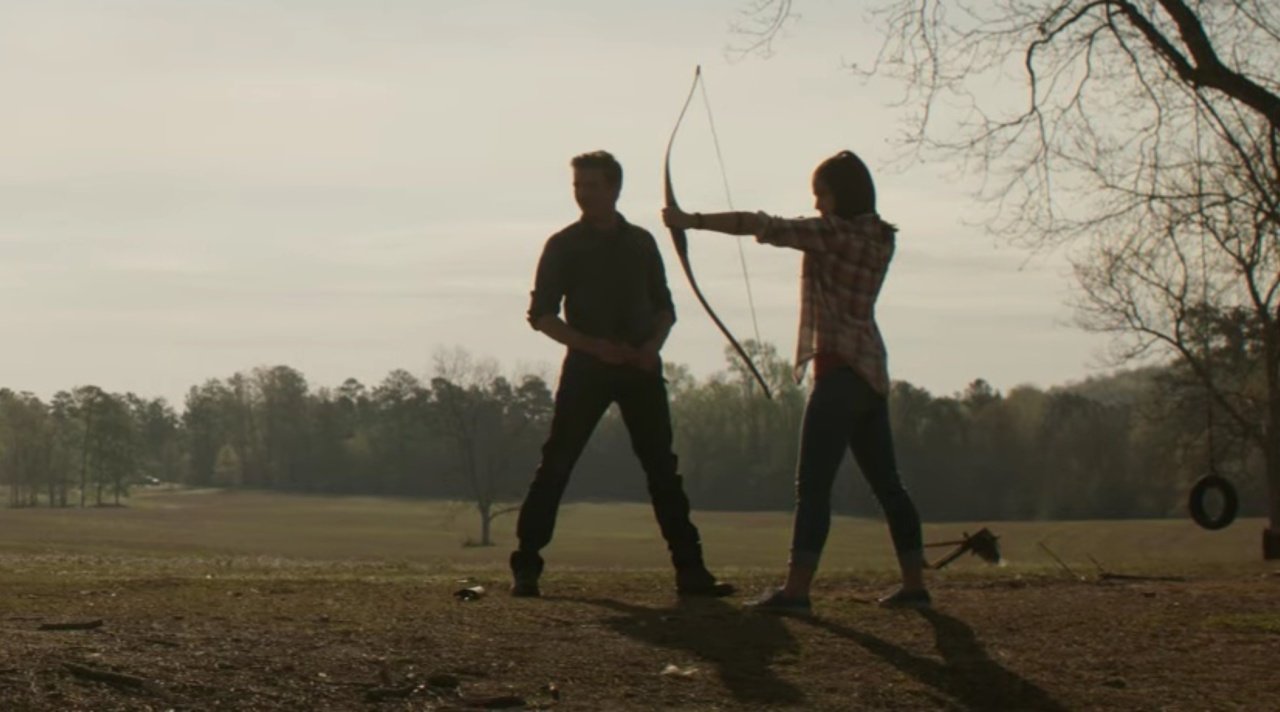
    [Some quality daddy-daughter time.]

  6. After overcoming the final battle with Thanos, Clint mentions that he wishes Natasha somehow knew they had succeeded, that her sacrifice was not in vain. Wanda responds that Natasha does know, even though she had been long dead. This hints at the reality of an afterlife, a life that is beyond the physical universe, and in our current hyper-materialistic culture, any reminder of this reality is welcome.
  7. Which leads into what will happen to us at the end of time, the end of this material universe. Endgame‘s ending depicts the joy of reuniting with long-lost loved ones, with the global (and even universal) reunion of all. The cathartic joy in the film is palpable, and I don’t recall any popular film that presents this universe-wide reunion so well. In our true Christian faith, the film’s ending hints at the coming communion of saints, the resurrection of the dead, and the life everlasting, where we who have chosen God will have the life, the family, and the love that He has originally made us to know. For more about this epic reunion, please see here where I daydream how the New Heaven and New Earth might be like. It’s really the only thing worth daydreaming about, and unlike Endgame, it’s only the beginning of a far better life than any human could dream up, because it’s God’s dream for us.

Mary Points the Way

the-nun-movie-posterToday, for the Feast of Mother Mary’s birthday (every September 8th!), I decided to take a break and celebrate with a show: The Nun (a prequel to the excellent Conjuring movies). Though I had high expectations for the film, and was disappointed, it did leave me with enough surprises to merit a review! Here’s what’s worth sharing:
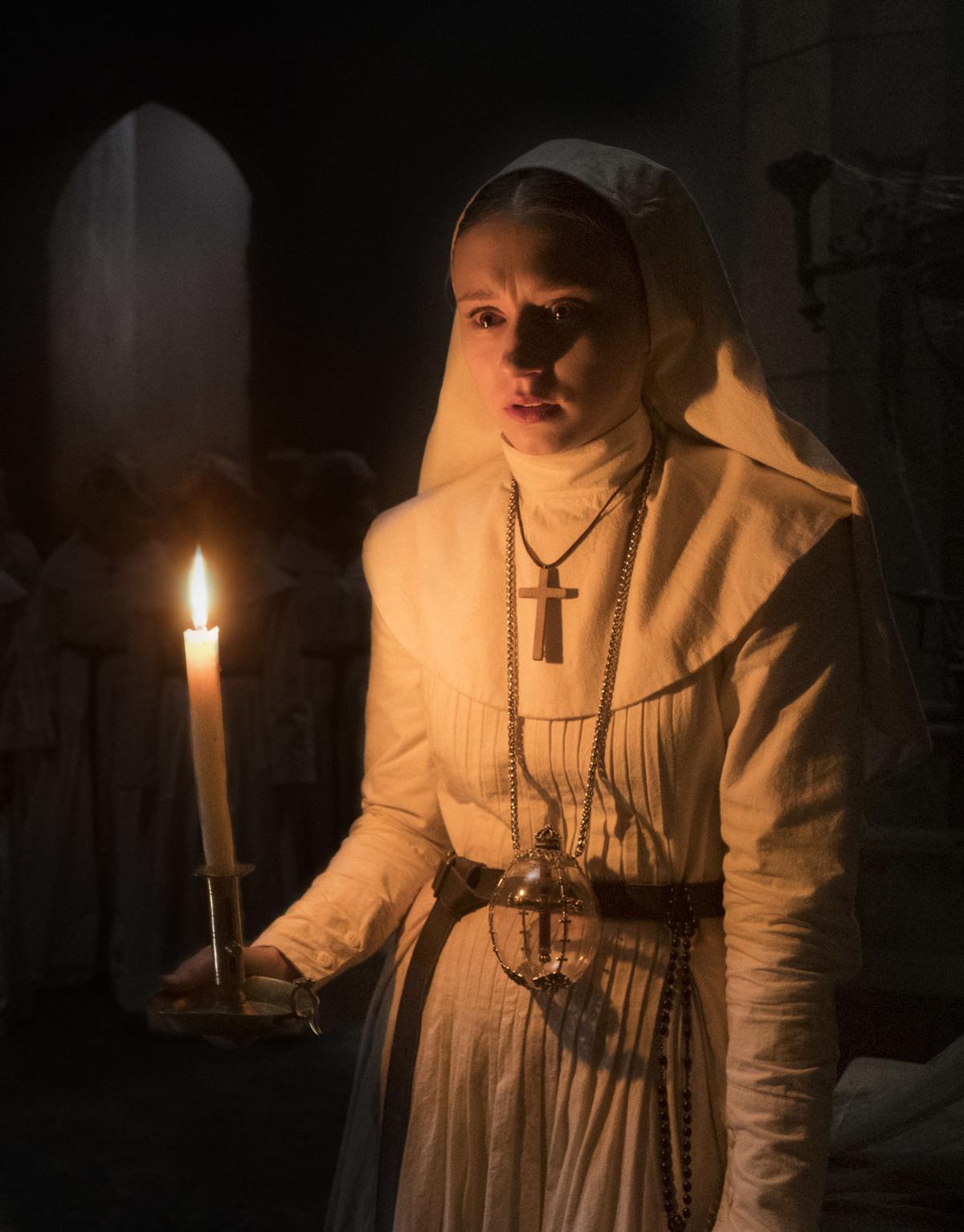
—SPOILER ALERT—

  1. The Nun is Marian… very Mary focused! Throughout the film, we hear the Ave Maria (Hail Mary) prayer in LATIN, almost constantly! And not only are the characters praying Rosaries to fight off evil, a statue of our Blessed Mother actually (and literally) points the way to Jesus. So, I was very happily surprised to see the Divine timing here (today is Mary’s birthday, after all).
  2. And the Divine timing continues: during the last month, the scandal in the Catholic Church has been rising to terrible heights. We see in our present time that hell has hijacked our priests, bishops, and perhaps even our Pope. We see Satan has taken on the look of our ordained servants of Christ and His Church, and have corrupted the image of the holy priesthood. We see in this movie the same: a demon has disguised itself as a deformed nun, using the distortion to terrorize us. May we not let this deception of Satan continue!
  3. 5b9148b872977-imageLastly, the film started drawing some tears from me when the lead character–Sister Irene–decides to profess her final vows amidst terrible evil attacking her. You would think that any sane woman would flee if she knew that the closer she drew to Christ, the more Satan would attack her. But not so for Sister Irene: she knows the truth that Satan would keep attacking anyway, and that her love for Christ was worth the onslaught.
  4. Which leads to Sister Irene being a bride of Christ “worthy of carrying something so sacred” as the Precious Blood of Jesus. Here, the priest in the film surrenders the care of the holy relic of Christ’s Blood to Sister Irene. And of course, she knows how to use this relic, and isn’t afraid to! But even how exactly she uses Christ’s Blood to defeat the demon is insightful:
  5. She puts the Precious Blood into her mouth (as in receiving Holy Communion). By doing so, this allows her to ambush the demon with the secret weapon. The symbolism shouldn’t escape us: when we receive the Eucharist worthily, we all become bearers of the secret weapon against hell.

So, the Nun was an overall surprise for me, especially during the current crisis in our Church. The movie could have easily taken advantage of the evil events plaguing us today, but decides to show us a Church with good nuns and priests who are doing their job following Jesus: caring for souls and fending off the true wolves in wool.e2842e035b9195c11199d2-31682311_

Note: see here for another positive review.